Oxford, UK – 10 September 2026: A new paper published today in Science sets out an agenda for strengthening implementation science in education – the study of how evidence-based policies, programmes and practices are put into practice, how well they work in different settings, and how they can be improved and sustained at scale.
While education research has become increasingly effective at identifying what works, much less is known about what happens when those approaches move beyond individual studies and into the complex systems where education is actually delivered. The authors argue that understanding implementation should be treated as an essential part of finding solutions to the global learning crisis, rather than an afterthought.
The paper, “An agenda for implementation science in education,” brings together researchers from across the What Works Hub for Global Education and its wider consortium, spanning disciplines including economics, political science and education. It is the work of the Hub’s Academic Leadership Team and central team: Noam Angrist, Michelle Kaffenberger, Clare Leaver, Stefan Dercon and Sharnic Djaker – alongside co-authors from across the Hub consortium.
While education research has generated increasingly strong evidence based on what works to improve learning, knowing that an intervention can be effective is only part of the challenge. Policymakers and practitioners also need to understand what happens when evidence-based approaches are implemented through real education systems – including how implementation can be measured, adapted and sustained as programmes reach more schools, teachers and learners.
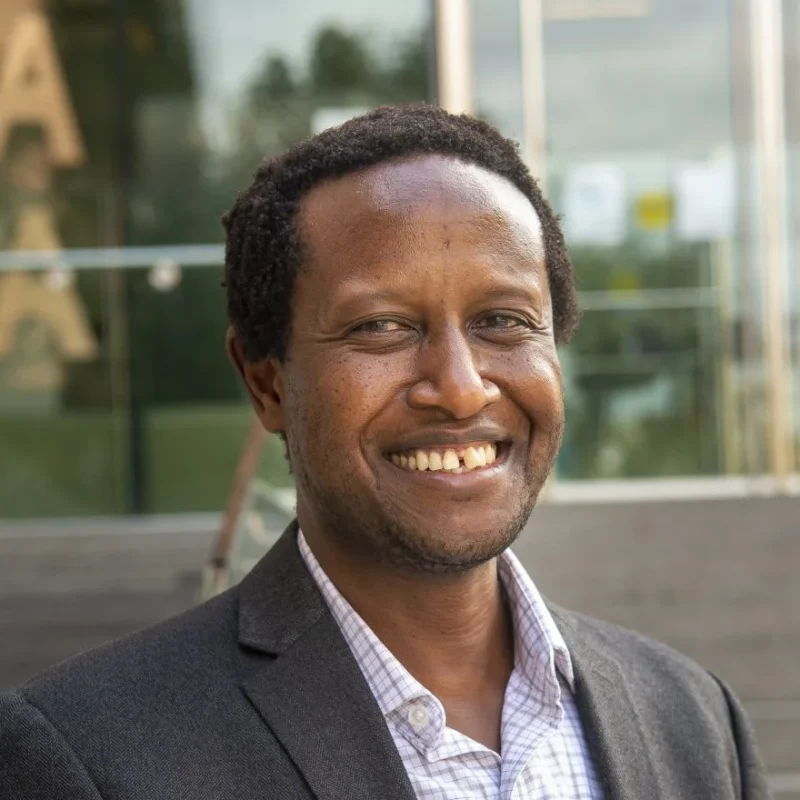
Noam Angrist, lead author and Academic Director of the What Works Hub for Global Education, Blavatnik School of Government, University of Oxford, said:
“We have learned a great deal about how to improve learning. The next frontier is understanding how those approaches can be implemented effectively in real-world education systems and sustained at scale.”
The authors argue that implementation should not be viewed simply as the final stage after an effective intervention has been identified. Instead, implementation itself requires rigorous study: researchers need to understand the conditions that enable programmes to work, how implementation changes as interventions move to scale, and how evidence can inform decisions about adaptation and delivery.
The authors propose a new framework for implementation science in global education, building on approaches developed in health research. The framework maps the journey from evidence to impact: from the point at which research is taken up by governments and other decision-makers, through delivery by education administrators, school leaders and teachers, to its ultimate effect on children’s learning. It is designed to help researchers and policymakers answer a crucial question: not simply whether an approach works, but what it takes to make it work in the real world, effectively, and at scale.
For governments, this means looking beyond identifying effective approaches to understanding how they can be embedded in education systems and sustained over time. By making implementation itself a focus of research, the framework aims to help close the gap between evidence, policy and what happens in classrooms.
The paper also reflects the breadth of the What Works Hub for Global Education’s research community. Its authors bring together expertise and perspectives from across disciplines and organisations, creating a shared agenda around an emerging area of research. The collaboration is notable for bringing economists, political scientists, education researchers and government practitioners together around a common question: how can evidence translate into effective implementation at scale?
“An intervention that works in a controlled study may face very different challenges when implemented through government systems, across thousands of schools and teachers”, says lead author Noam Angrist, “Implementation is not simply a final step after identifying an effective intervention. It is something that needs to be measured, understood, and improved. It needs its own evidence base.”
The publication comes as implementation science is becoming increasingly important to global efforts to improve foundational learning. For governments working to improve learning outcomes at scale, the challenge is not simply identifying effective interventions, but building the systems, capabilities and evidence needed to deliver and sustain them.
Improving implementation should be the next frontier for education research and practice, argue the researchers. This will require greater institutional efforts to develop a concrete research agenda and demonstrate how it can be applied; establish stronger standards for reporting and measurement, including among funding bodies and academic journals; and build institutions dedicated to advancing this work.
The paper ‘An agenda for implementation science in education’ is published in Science on 10 September 2026 and will be available through the journal’s press package and publication platform. The research is funded by UK’s Foreign Commonwealth and Development Office (FCDO), the Gates Foundation, the Jacobs Foundation, the Hempel Foundation, Norwegian Agency for Development Cooperation (Norad), and the Australian Department of Foreign Affairs and Trade (DFAT).
Read the press releases published by the Blavatnik School of Government and the Centre for the Study of African Economies.
Media enquiries
Noam Angrist
noam.angrist@bsg.ox.ac.uk
What Works Hub for Global Education Communications team
comms.wwhge@bsg.ox.ac.uk