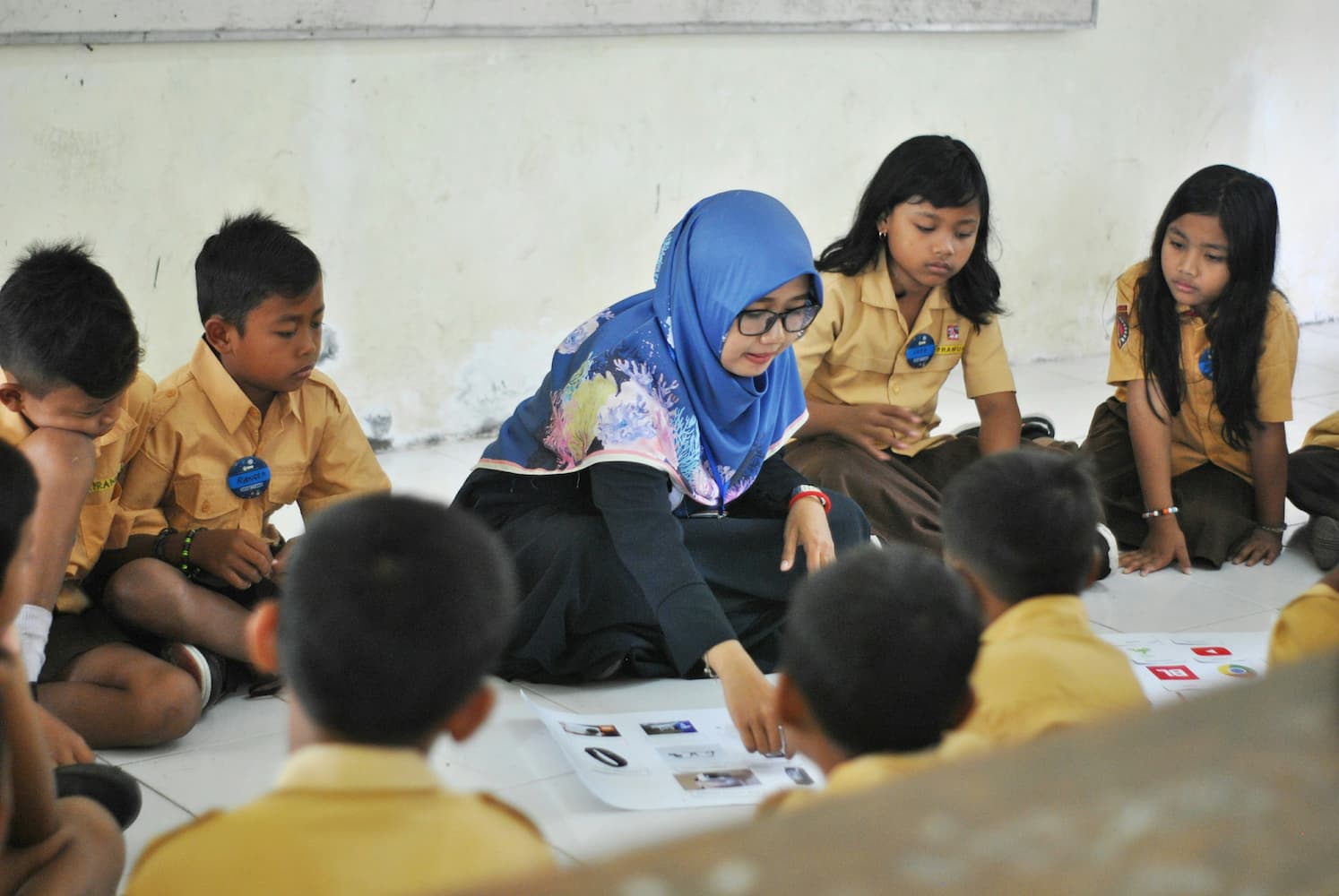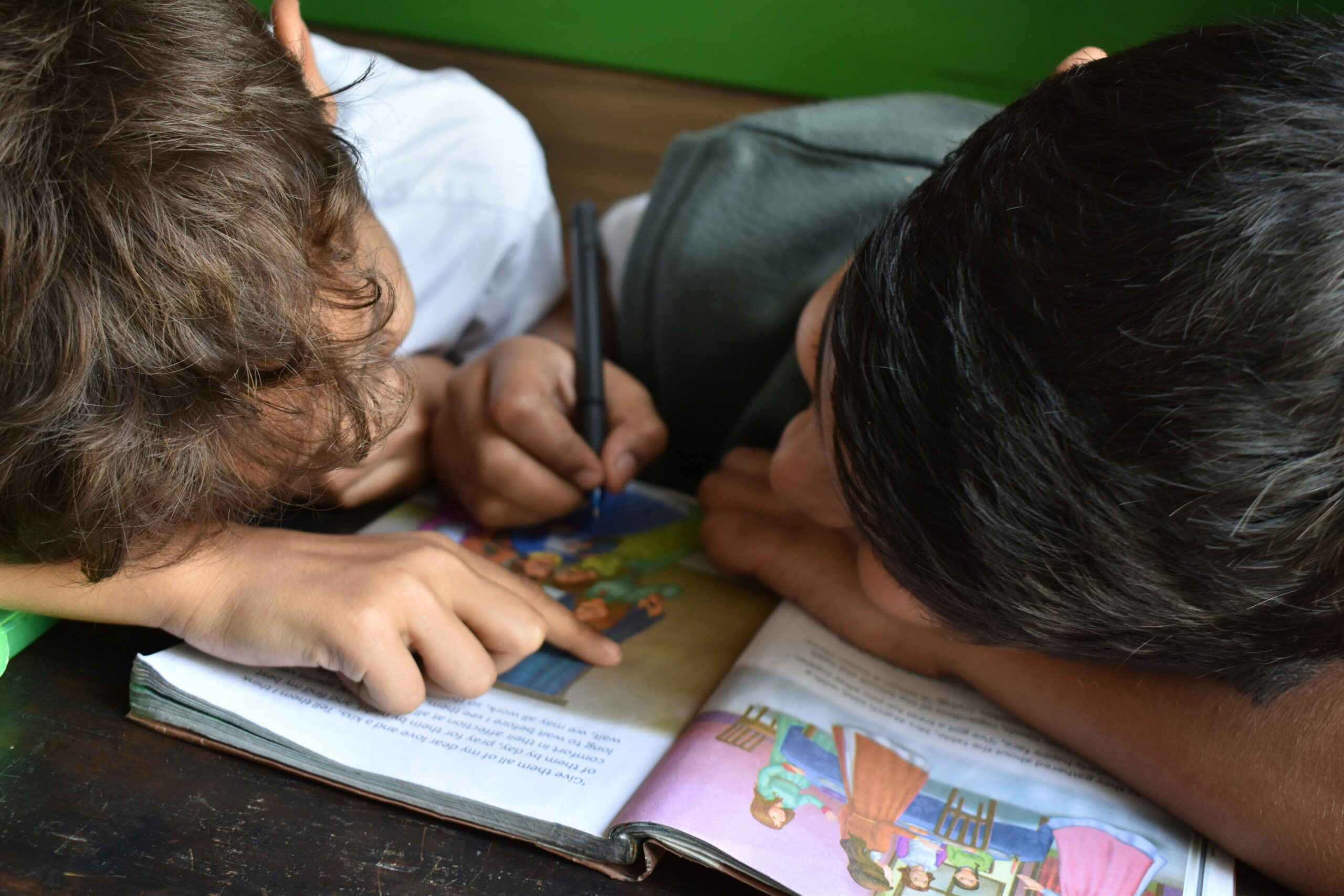
The What Works Hub for Global Education is an international partnership studying and advancing implementation of effective education reforms at scale. The Hub’s ultimate goal is to improve foundational learning in low- and middle-income countries. Our 2026 conference brought together rigorous research with practical policy and implementation experience to drive improved knowledge and practice.
Conference photos
A selection of photos from the 2026 What Works Hub for Global Education Conference.
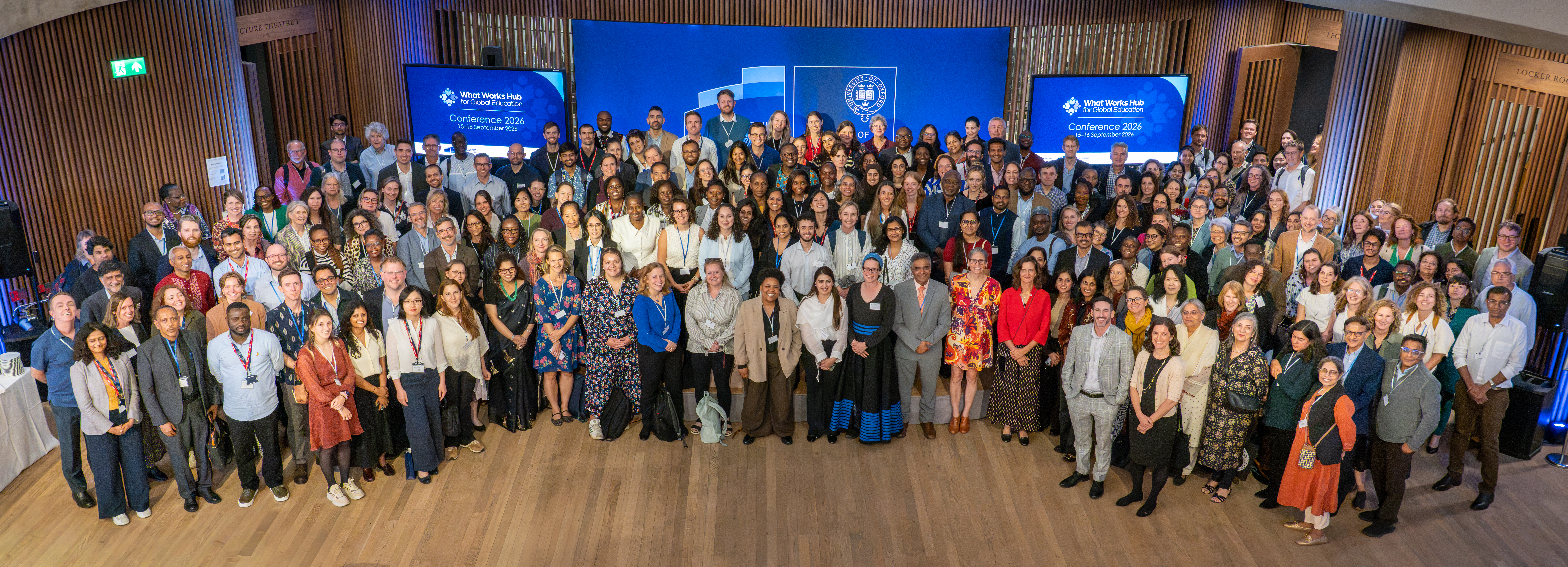
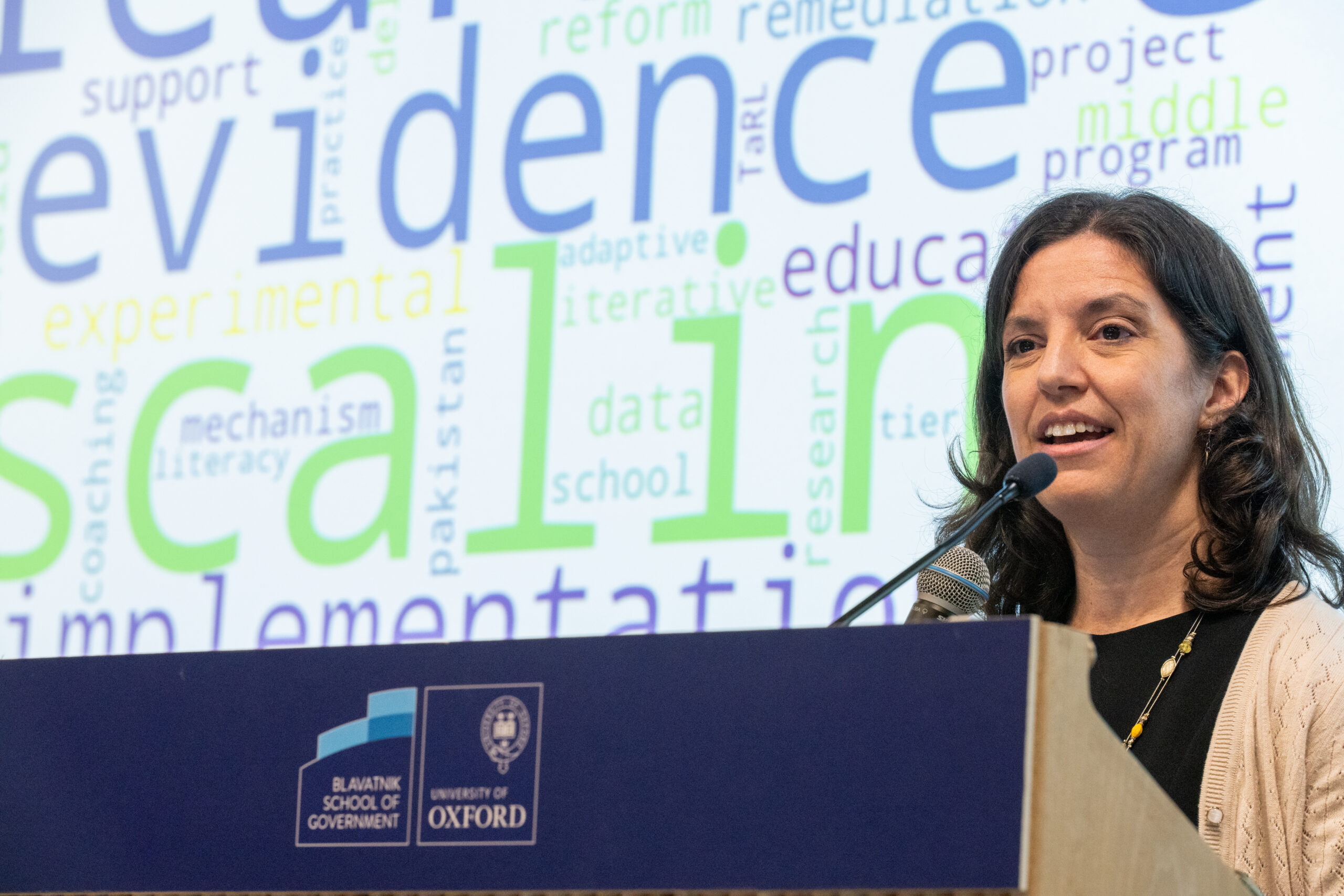
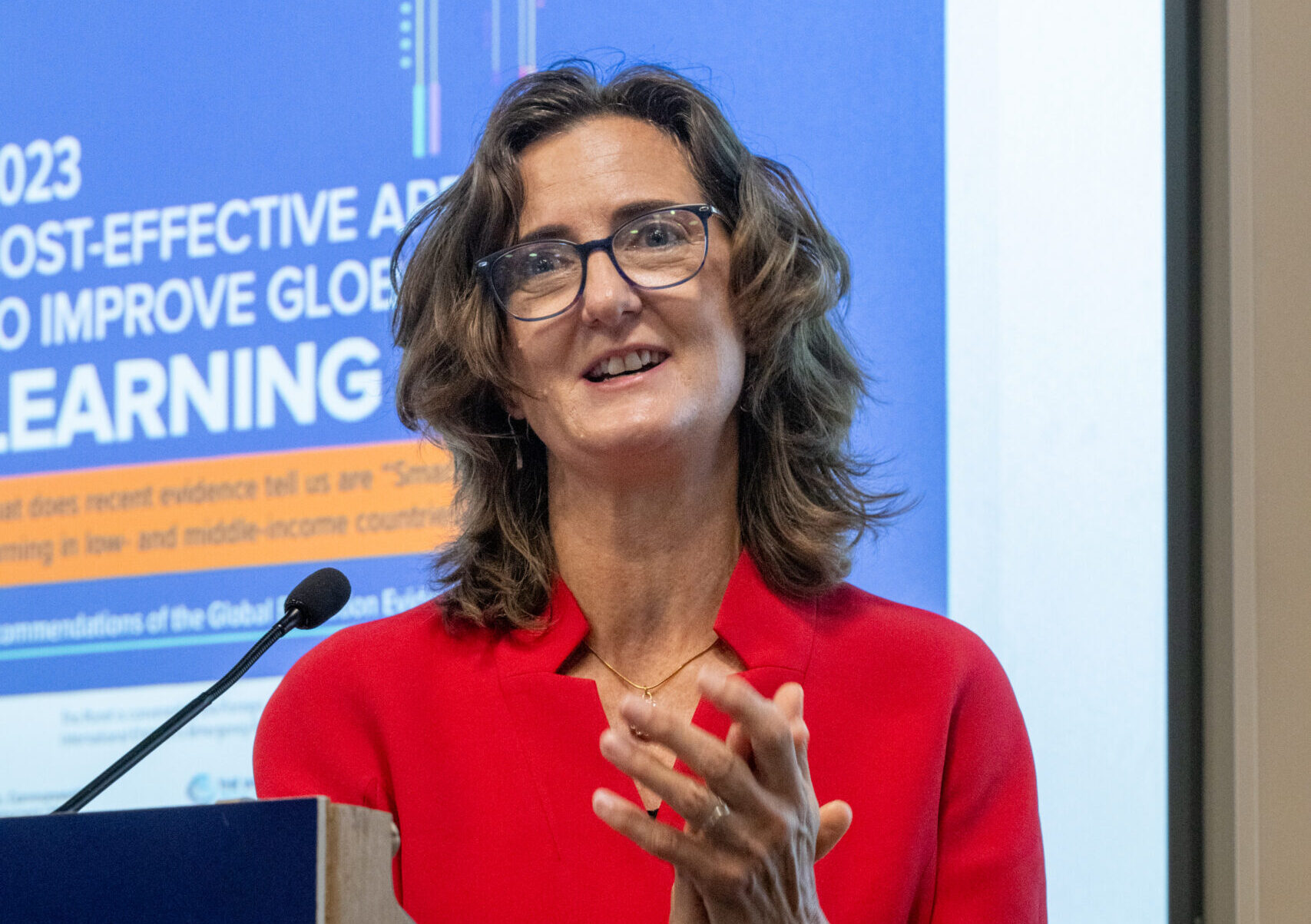
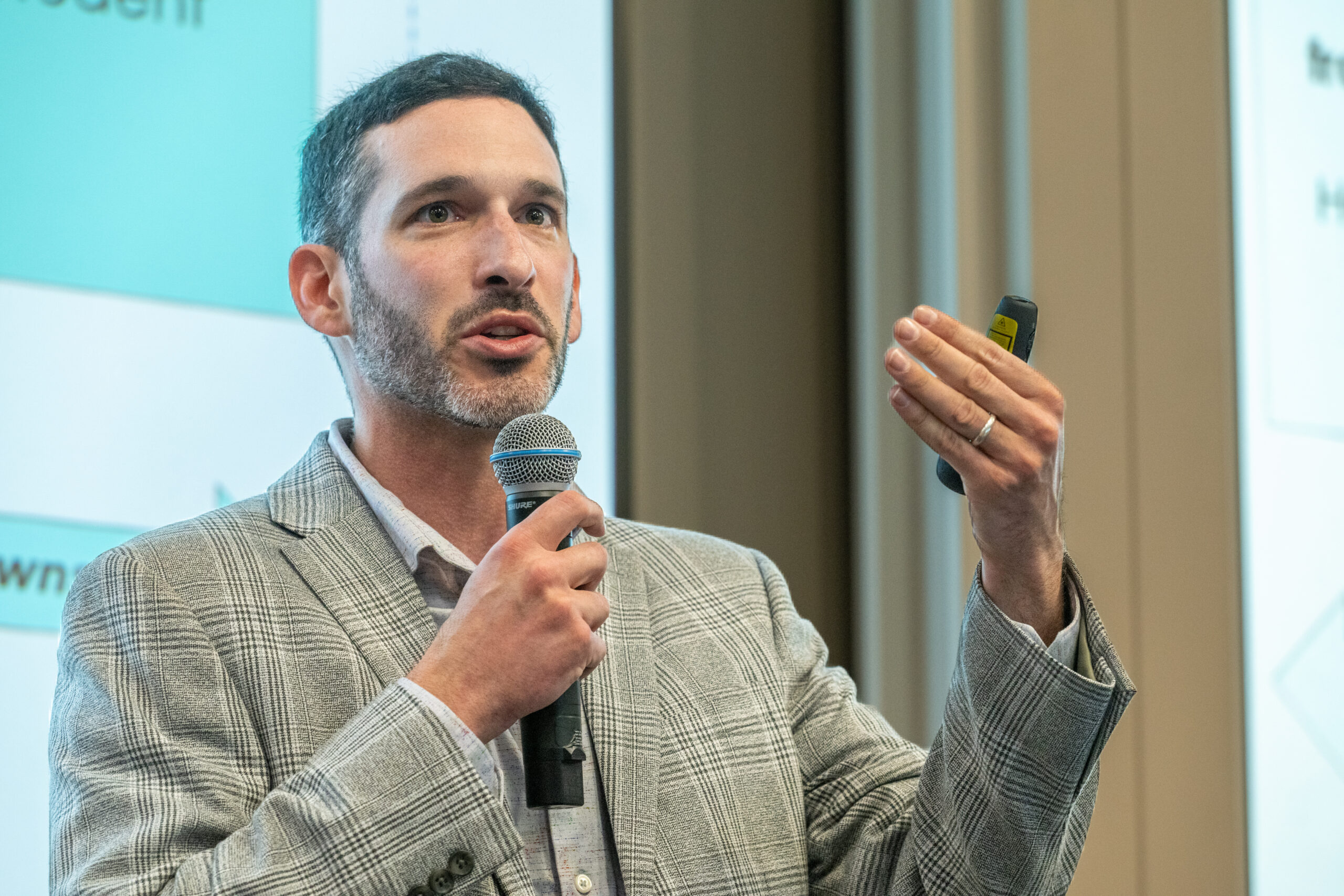
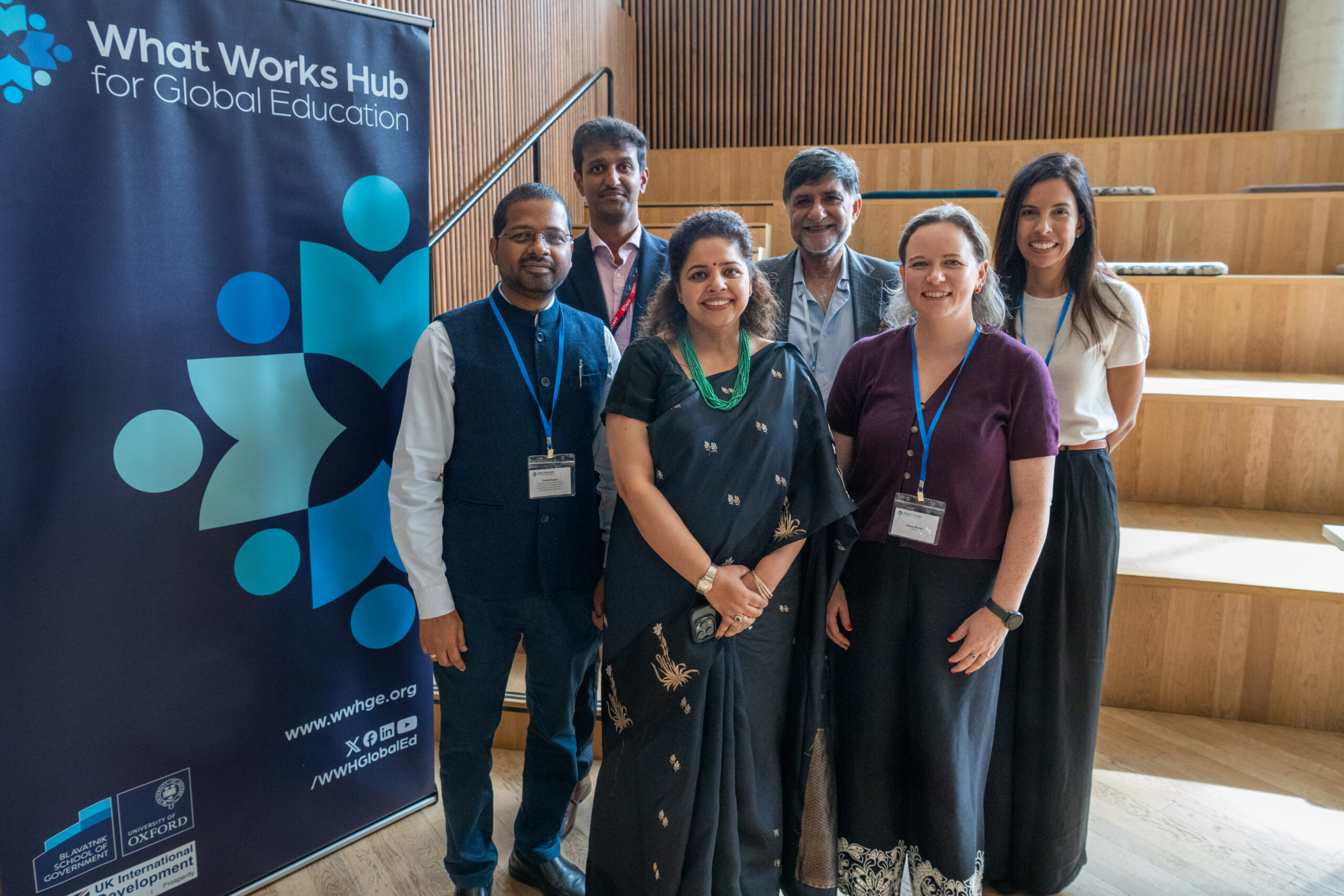
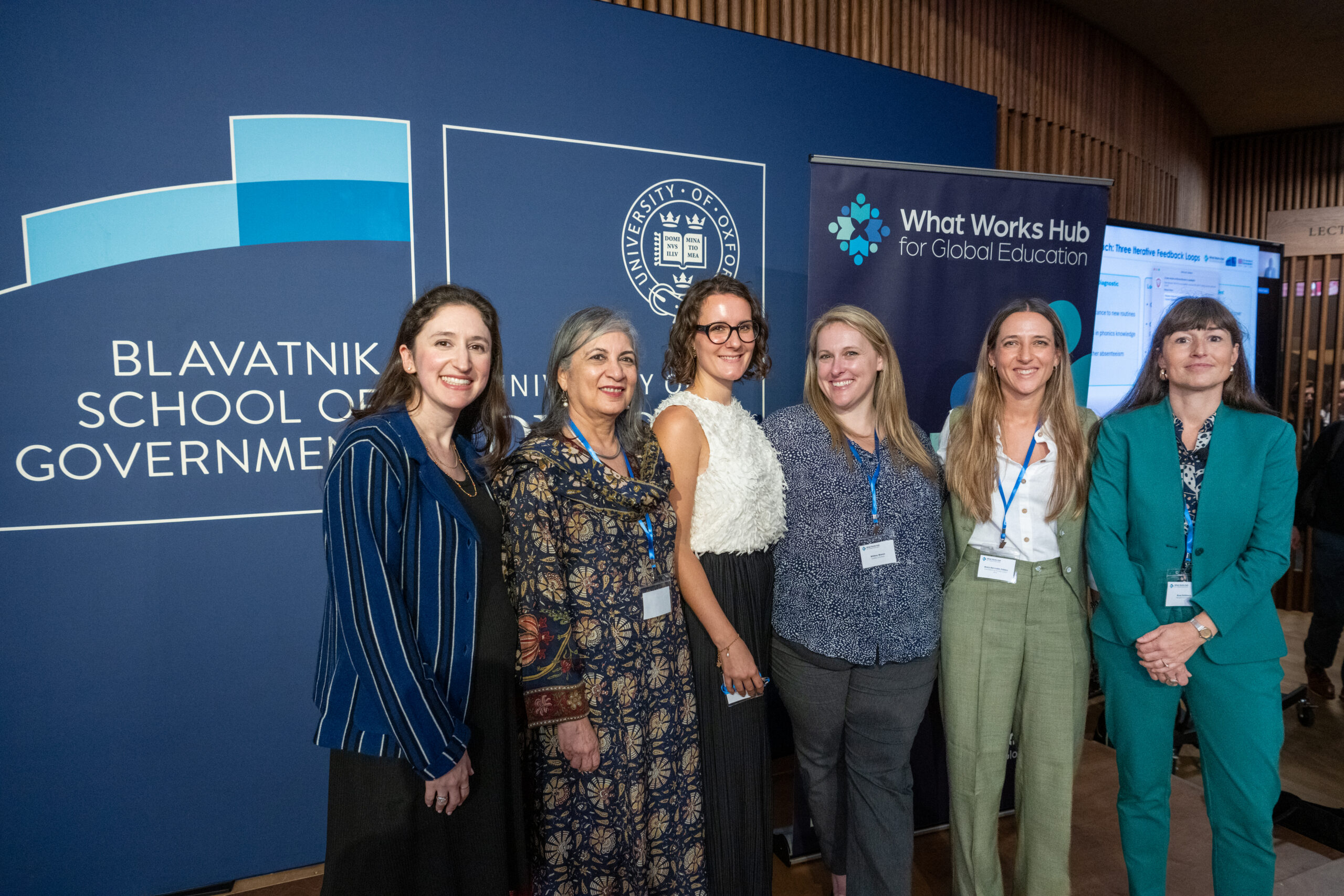
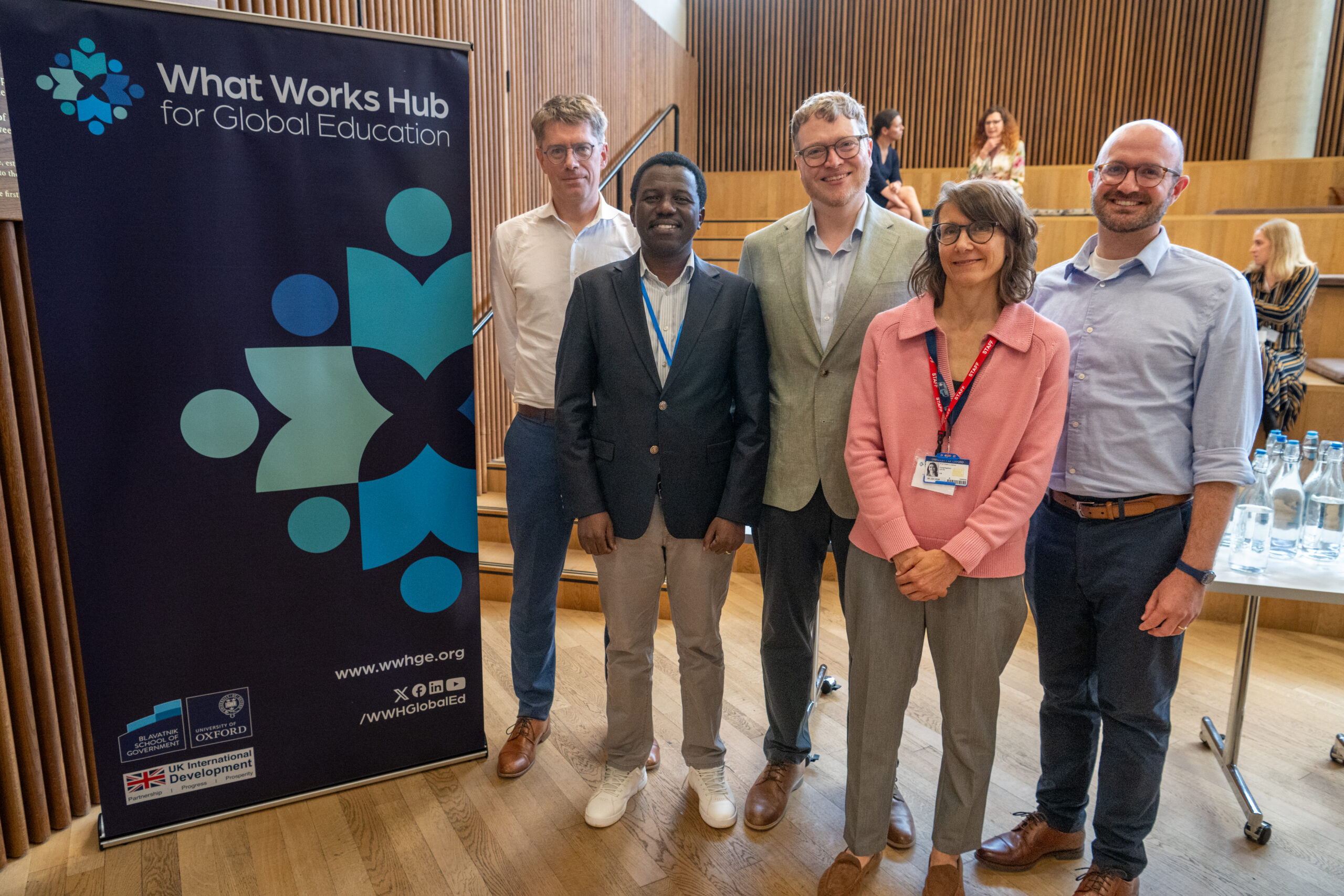
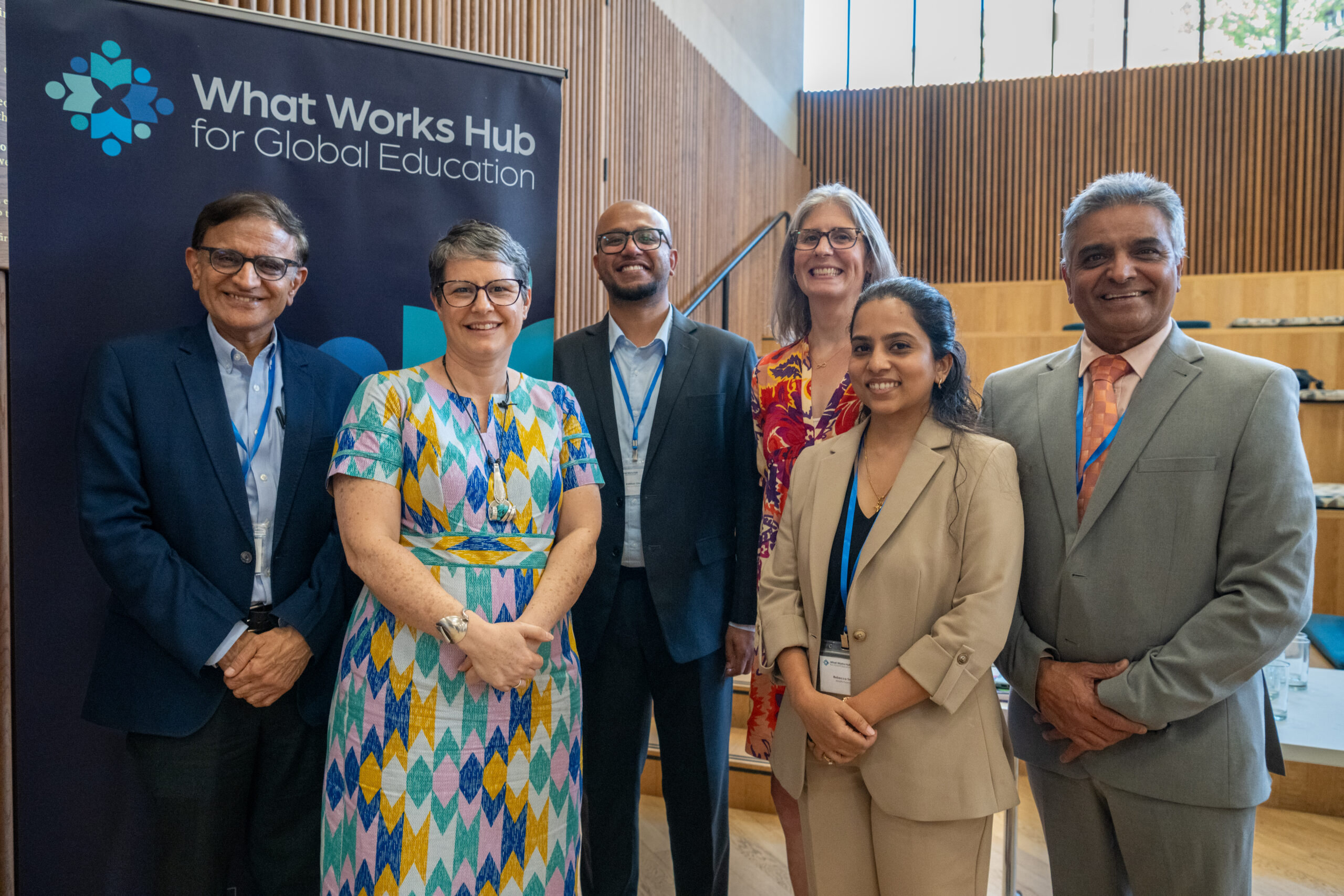
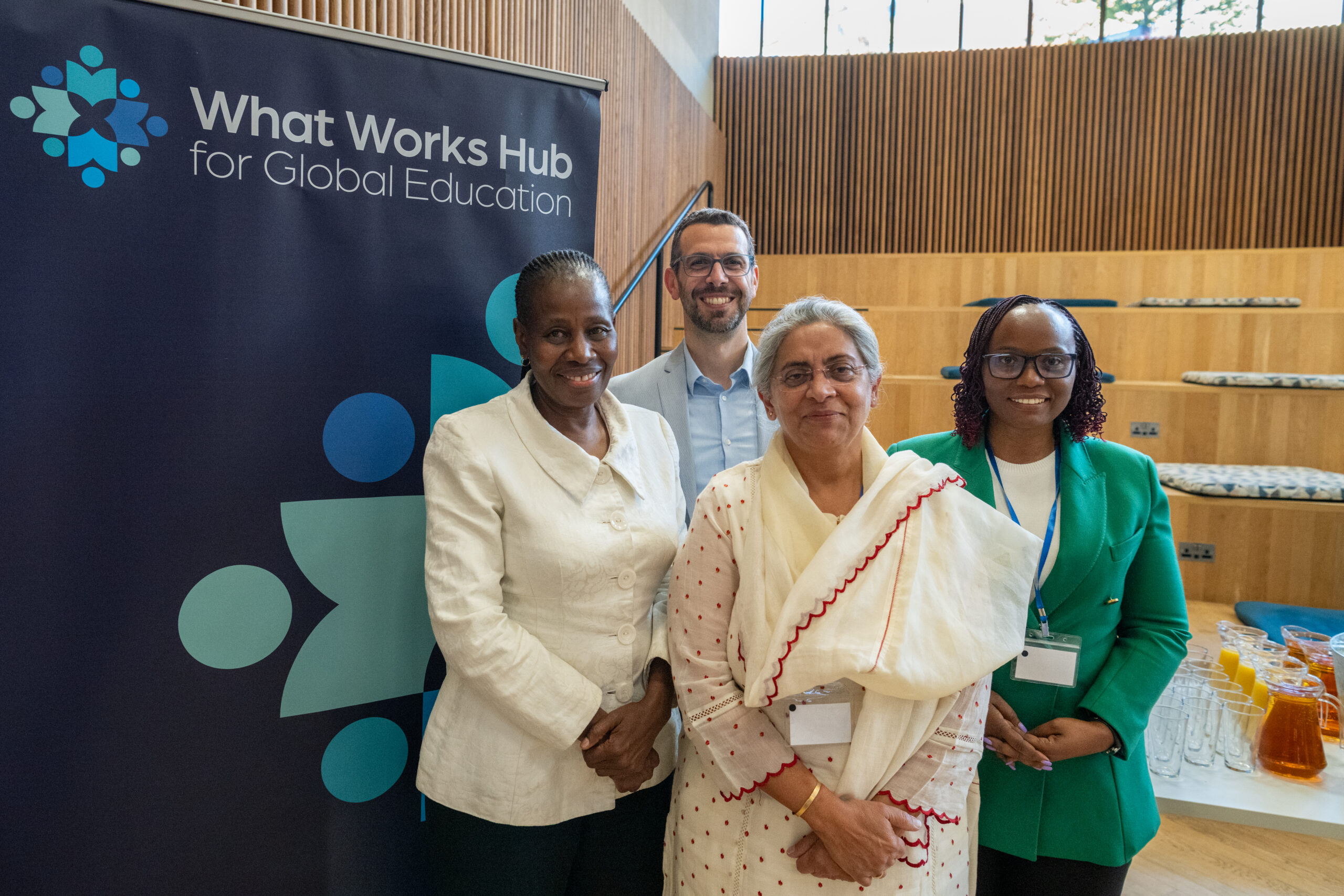
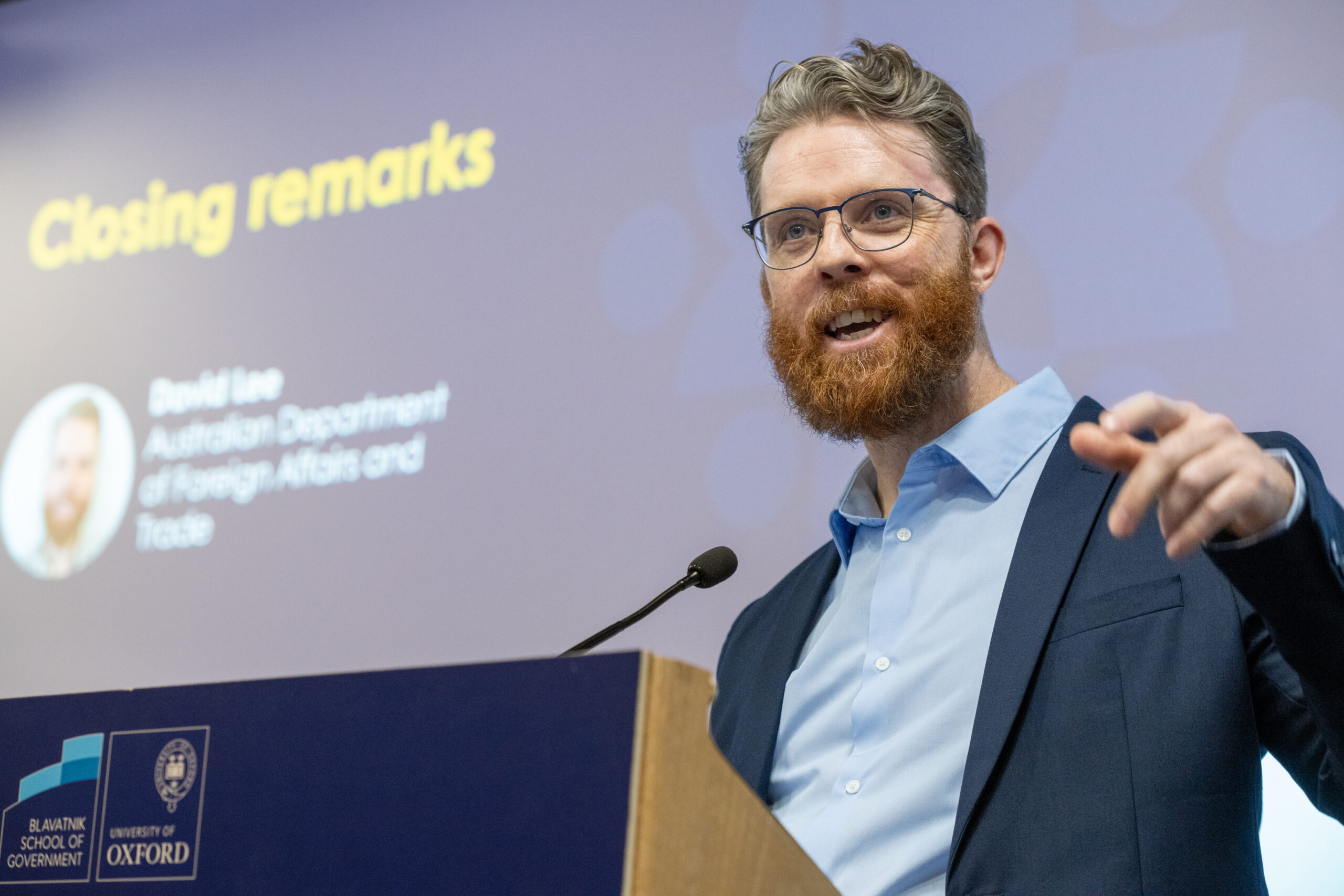
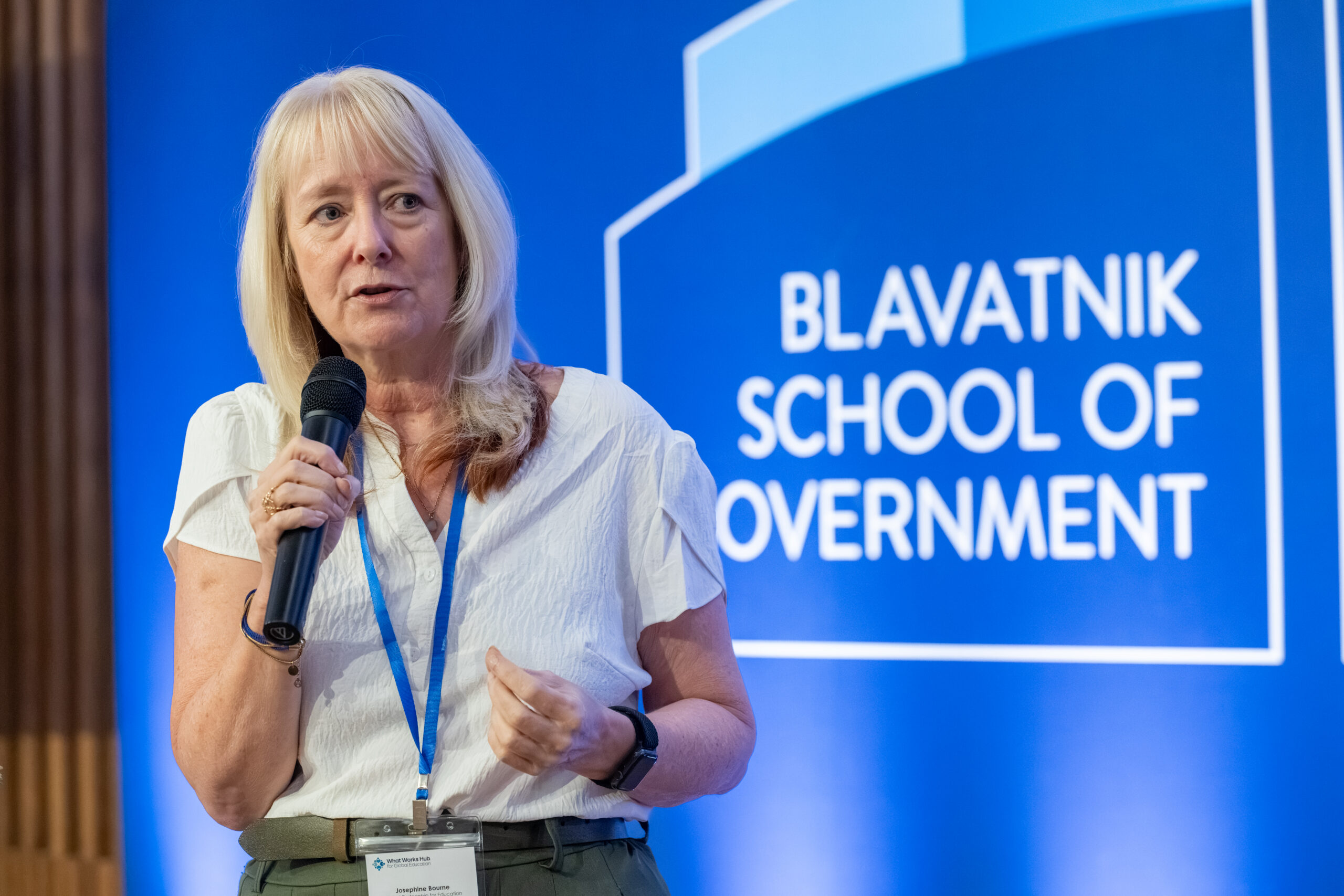
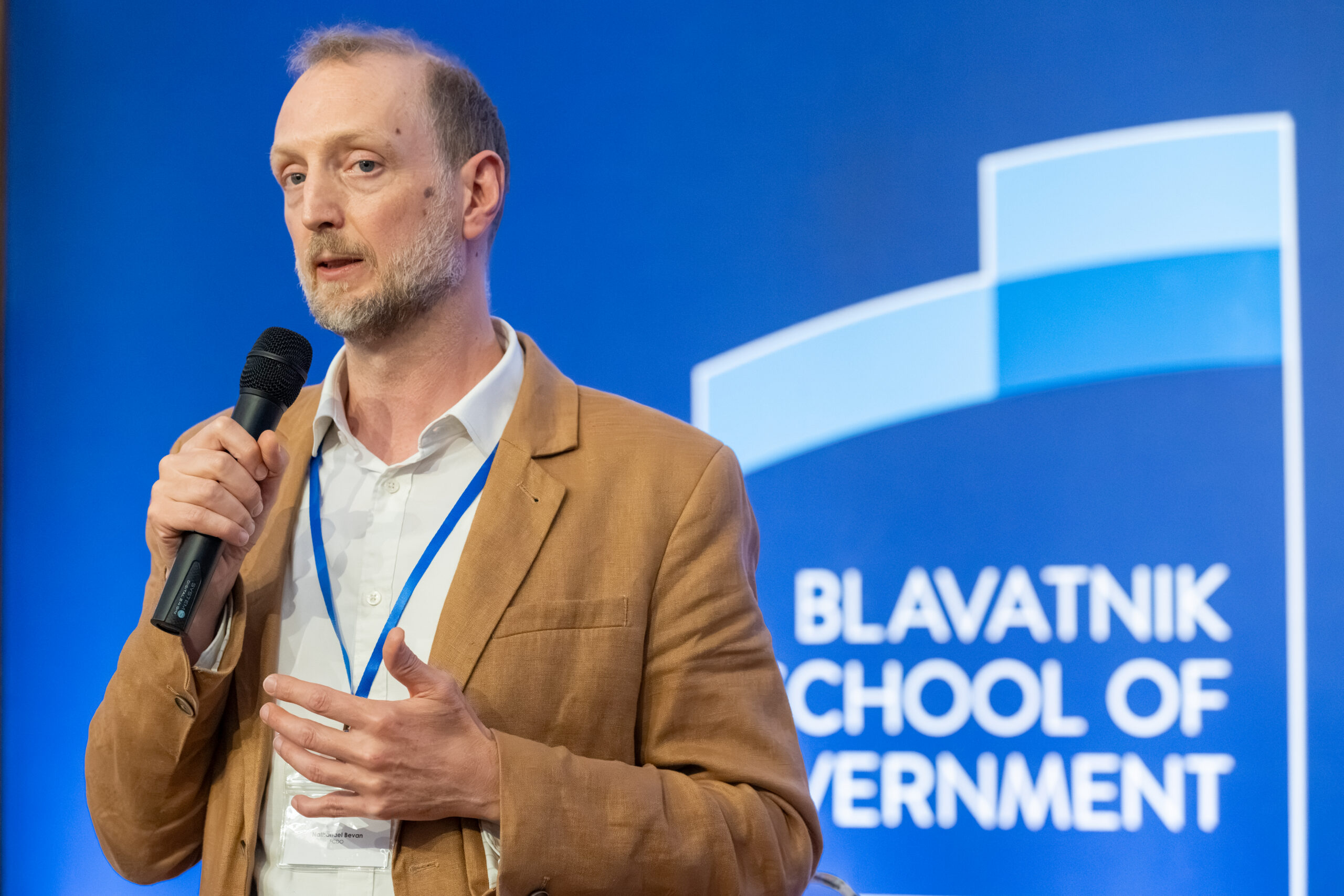
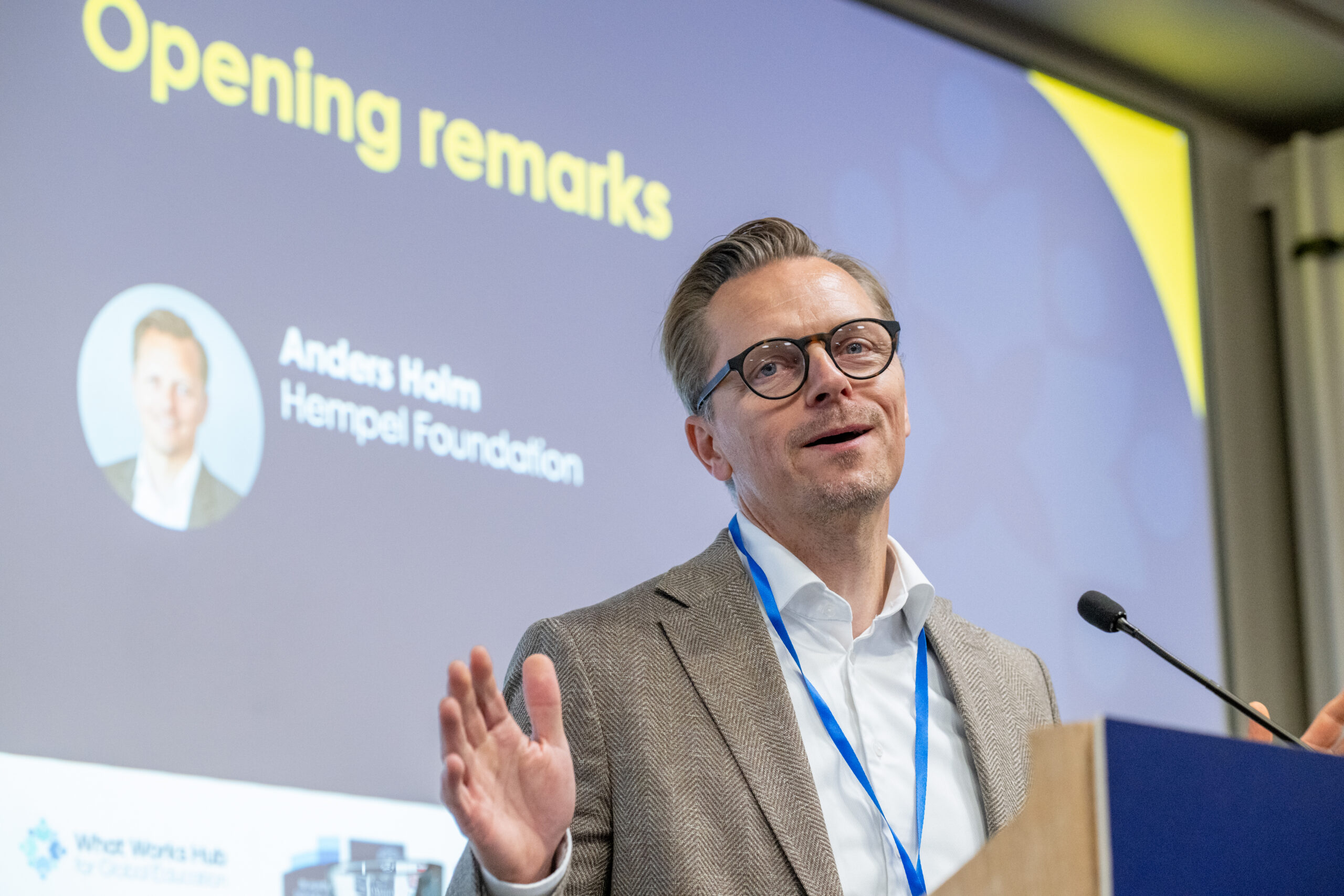
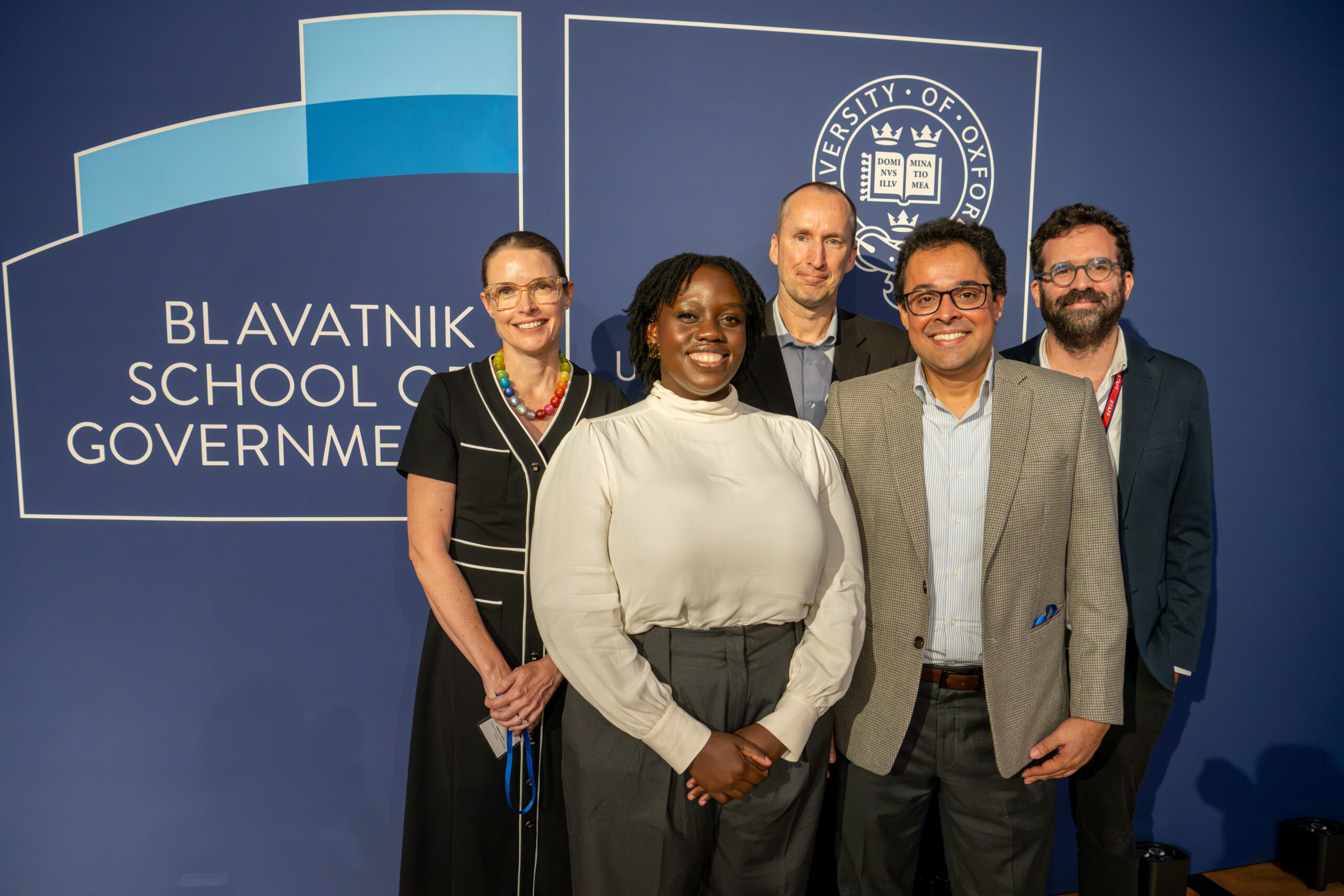
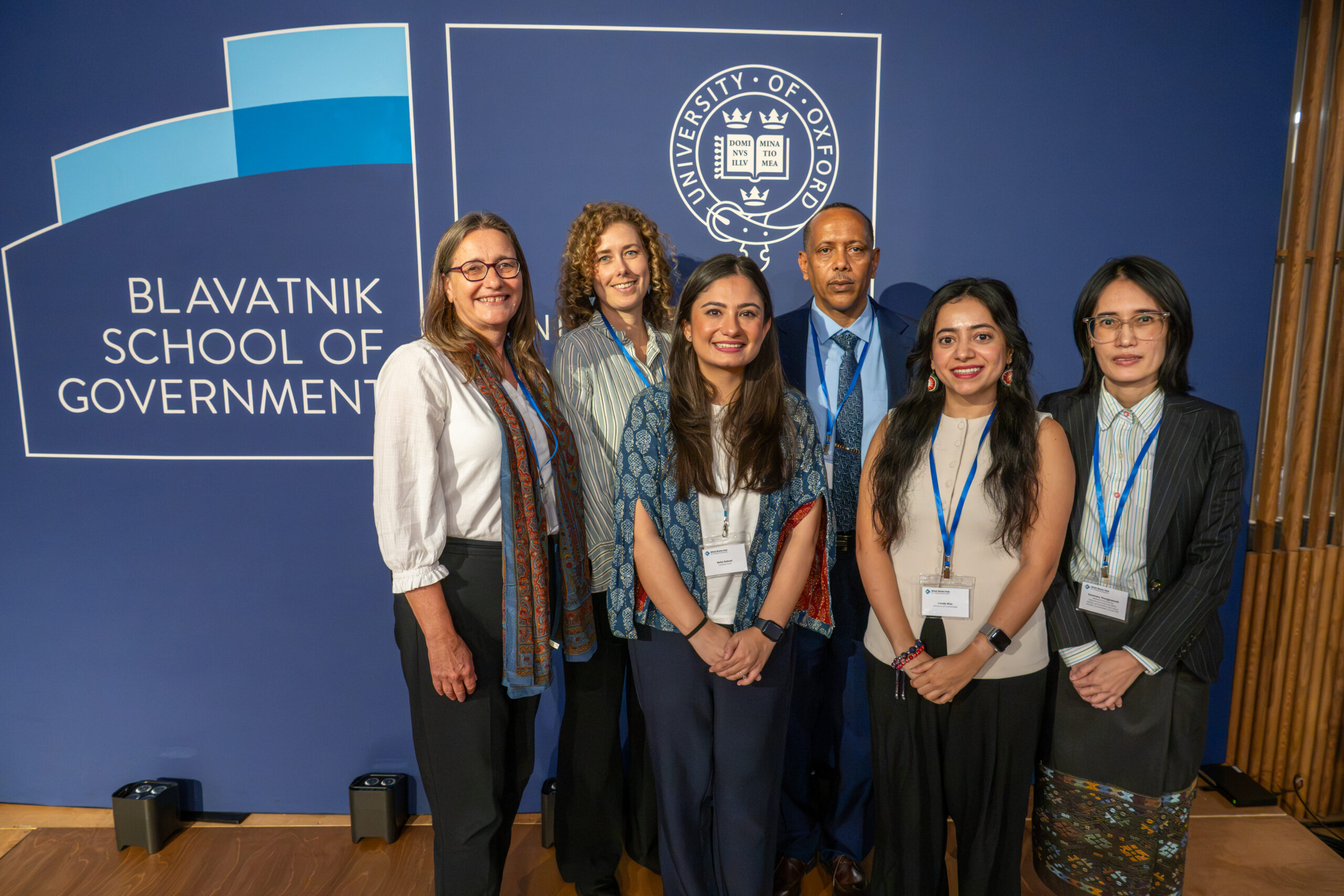
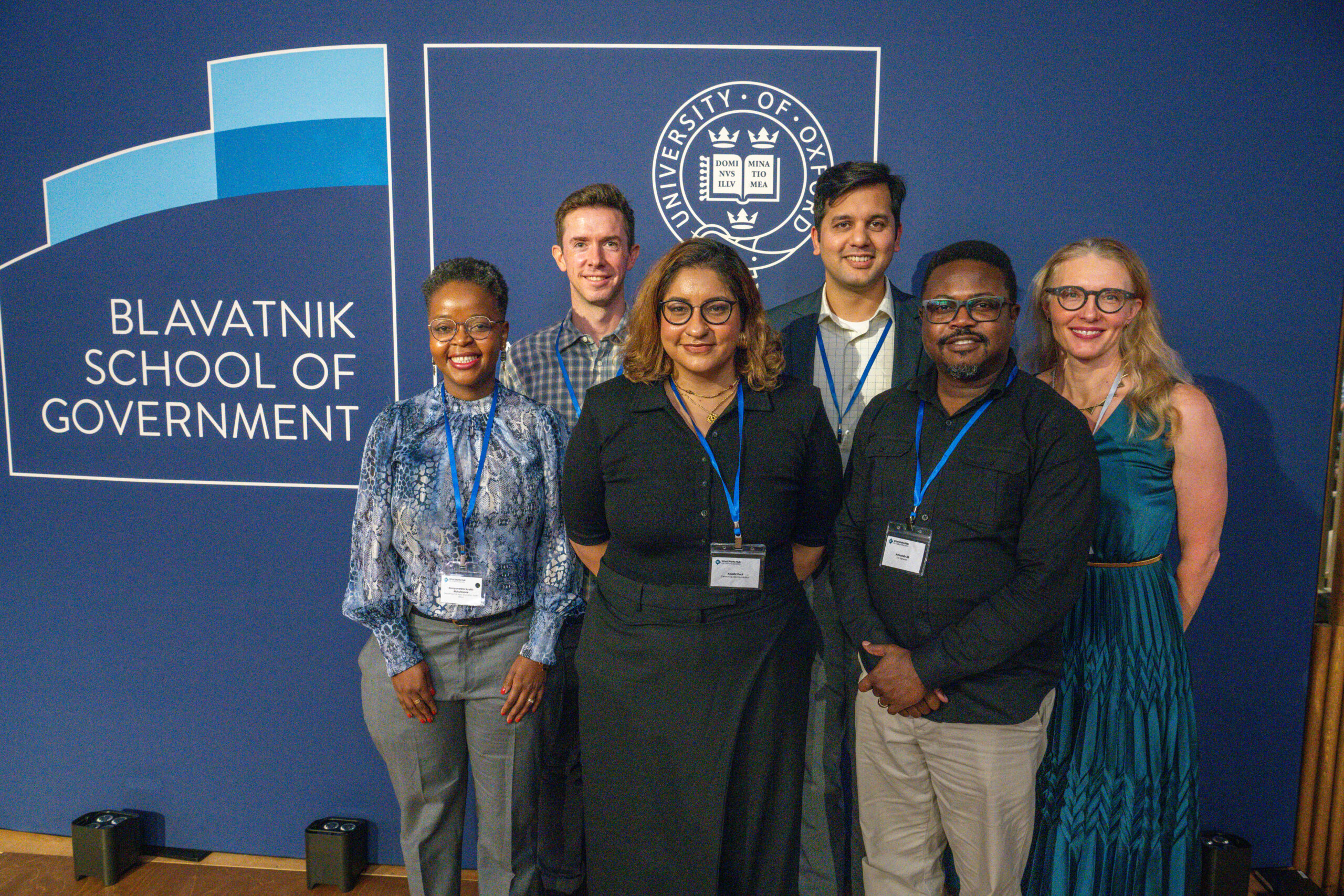
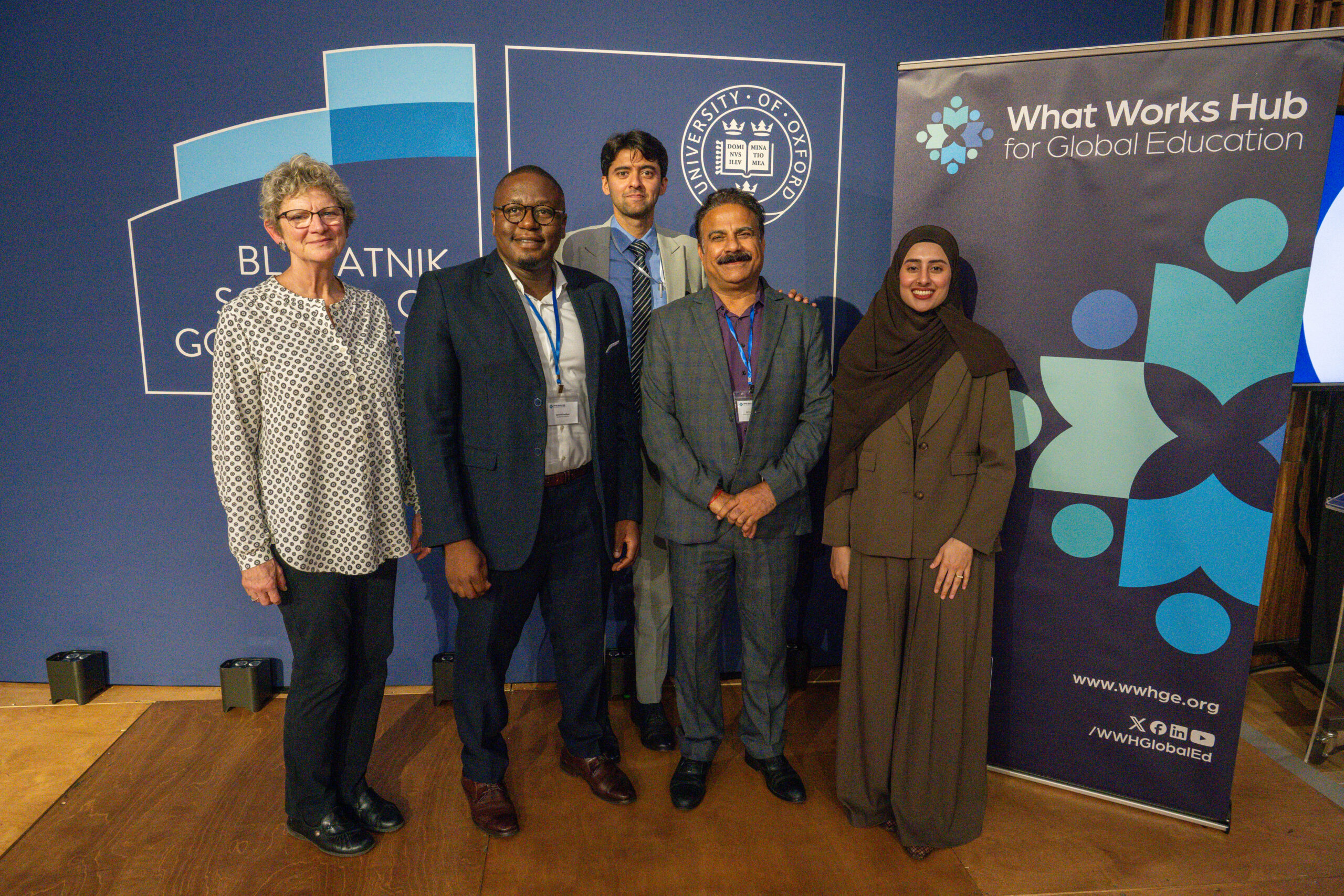
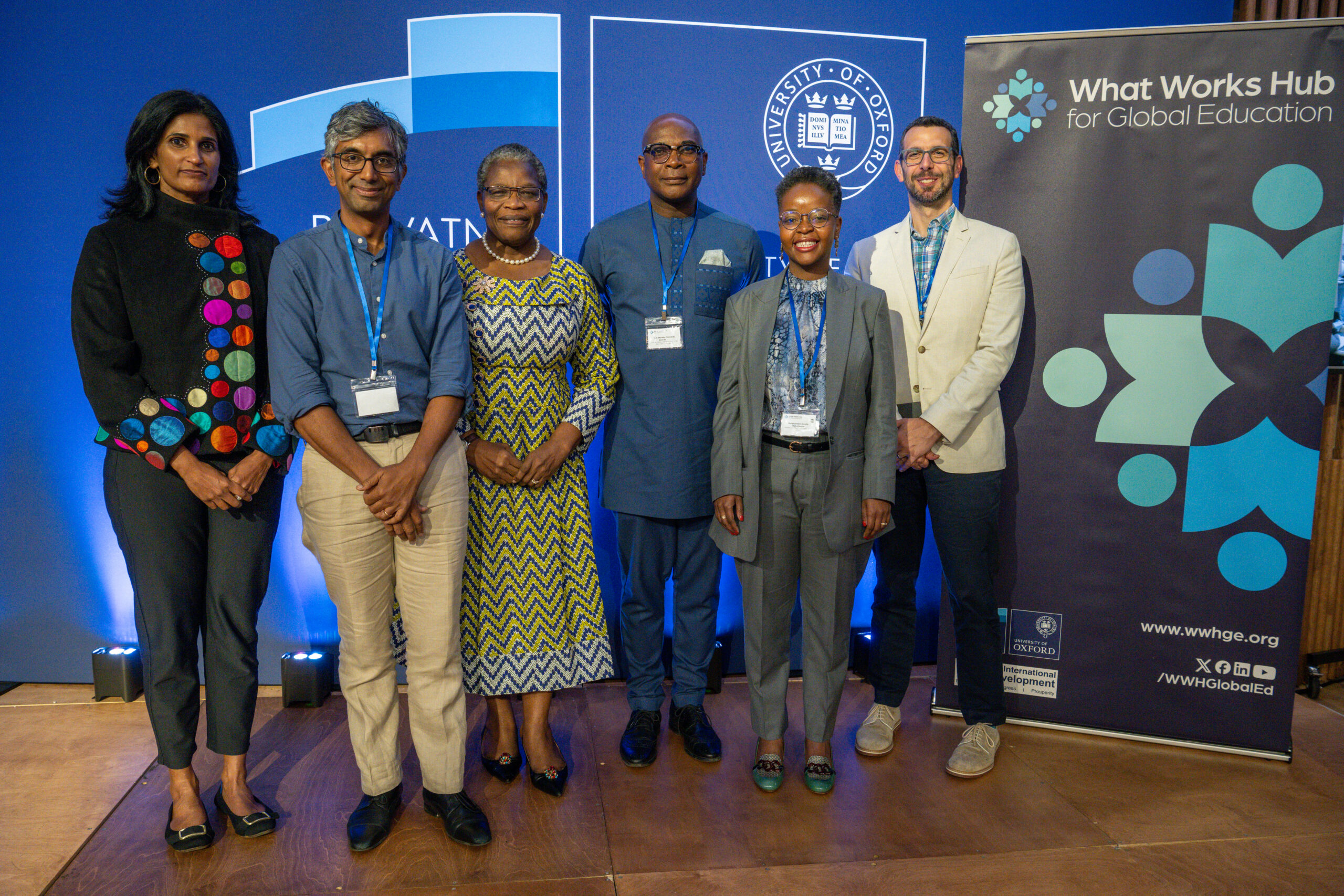
Photo copyright: © The What Works Hub for Global Education
Recordings and livestream
The conference took place at the Blavatnik School of Government, Oxford, UK from 15–16 September 2026. The conference was hybrid, with attendees joining in person and online.
You can view the full playlist of conference recordings on YouTube or simply watch our YouTube livestreams below.
Also, take a look at our playlist of video lightning talks that played during the conference breaks.
Conference programme
Day 1: Tuesday, 15 September
08:00 - 09:00: Registration
09:00 - 09:20: Opening remarks
Michelle Kaffenberger · What Works Hub for Global Education
Rachel Hinton · UK Foreign, Commonwealth & Development Office
09:20 - 09:40: Implementation science and implementation measurement
Implementation science and implementation measurement (PDF)
Noam Angrist · What Works Hub for Global Education
09:45 - 11:00: Panel session – Measuring and accounting for implementation
Chair: Sabina Morley · UK Foreign, Commonwealth & Development Office
Sharnic Djaker · What Works Hub for Global Education
Measuring implementation quality vs quantity (PDF)
Poornima Garg · Room to Read, India & Shashi Ranjan · Jharkhand Education Project Council, Government of Jharkhand
State Project Management Unit (SPMU) for quality improvement in primary grades, Jharkhand (PDF)
Fernanda Soares · University of Notre Dame
High fidelity, uneven impacts: when observed program delivery and mechanism activation diverge (PDF)
Tahir Andrabi · Pomona College
Free to choose: introducing technology for foundational learning in Pakistan (PDF)

11:00 - 11:30: Break
11:30 - 12:30: Lightning talks – Iteration for improved effectiveness and efficiency
Chair: Rosa Robinson · Hempel Foundation
Wilima Wadhwa · Pratham Education Foundation
What kind of teacher support improves foundational learning? Evidence from iterative A/B testing in Uttar Pradesh’s government school remedial programme (PDF)
Sophie Ochmann · Youth Impact
Teacher coaching made cost-effective: evidence from two A/B tests in Namibia (PDF)
Marla Spivack & Ama Anaman · World Bank
Building in the feedback loop: experimental evidence on scaling differentiated learning in Ghana (PDF)
Whitney Warren · Building Tomorrow
Iterative implementation research to improve literacy programming in Uganda (PDF)
Mercedes Sidders · Innovations for Poverty Action
Adaptive learning cycles for scaling: evidence-informed approaches to government-led remediation. FCDO Scaling Access and Learning in Education (SCALE), Malawi TaRL-informed remediation innovative partnership (PDF)
12:30 - 13:30: Lunch
13:30 - 14:45: Panel session – Evaluating implementation through government systems
Chair: Clare Leaver · Blavatnik School of Government and University College, University of Oxford
Leo Mfura · Georgetown University Initiative on Innovation, Development and Evaluation
Scaling teacher performance contracts: an adaptive experimental study in Rwanda (PDF)
Guthrie Gray-Lobe · Development Innovation Lab, University of Chicago & Alex Eble · Teachers College, Columbia University
Targeted learning without deep remediation: experimental evidence from India (PDF)
Andreas de Barros · University of California, Irvine & Theresa Lubozha · VVOB
Targeting foundational skills at scale: skill specificity and transfer (PDF)
Wayne Sandholtz · Nova School of Business and Economics
Information and the politics of school quality: evidence from a nationwide reform in Brazil (PDF)
14:45 - 15:15: Break
15:15 - 16:15: Lightning talks – Implementing with and through the middle tier
Chair: Dhir Jhingran · Language and Learning Foundation
Abhinav Ghosh · Harvard University
Middle, but not central? Bureaucrats implementing FLN instructional support (PDF)
Deborah Kimathi · The Learning Generation Initiative, Education Development Center
Translating research into practice: strengthening the middle tier for effective implementation of foundational learning reforms (PDF)
Elizabeth Adelman · FHI 360
Making coaching work at scale: how middle-tier actors can enable school-based teacher support (PDF)
Rebecca Swittens · Madhi Foundation
Building the middle tier – insights from three Indian states (PDF)
Raj Misser · Gauteng Education Department, South Africa
From credibility to consequence: government-led learning data in Gauteng, South Africa (PDF)
16:15 - 16:45: Break
16:45 - 17:45: Keynote panel – Real talk with education leaders on implementing foundational learning at scale
Grace Muzila · Former Permanent Secretary, Ministry of Education and Skills Development, Botswana
Flora Mutezigaju · Deputy Director General, Rwanda Basic Education Board
Rukmini Banerji · Senior Advisor and former CEO, Pratham Education Foundation
17:45 - 17:55: Closing remarks
David Lee · Australian Department of Foreign Affairs and Trade
18:00 - 20:00: Day 1 Buffet Reception with remarks by:
Jo Bourne · Global Partnership for Education
Nathanael Bevan · UK Foreign, Commonwealth & Development Office
Day 2: Wednesday, 16 September
08:00 - 09:00: Registration
09:00 - 09:15: Opening remarks
Anders Holm · Hempel Foundation
09:15 - 10:30: Panel session – Evaluation at scale
Chair: David Evans · Center for Global Development
Abhijeet Singh · Stockholm School of Economics
Adapting for scale: experimental evidence on technology-aided instruction in India (PDF)
Jennifer Opare-Kumi · What Works Hub for Global Education
Randomized evaluation of markets for impact in Ghana and Sierra Leone basic education sectors (PDF)
Pedro Freitas · What Works Hub for Global Education
Evaluating education interventions at scale: quasi-experimental and experimental results from India (PDF)
Adrienne Lucas · University of Delaware
Scaling down costs to scale up effective programs: evidence from two randomized interventions (PDF)
10:30 - 11:00: Break
11:00 - 12:00: Lightning talks – Ensuring effectiveness for all
Chair: Pauline Rose · REAL Centre, University of Cambridge
Ahmed Mohamed · Street Child UK
Teaching at The Right Level (TaRL) in crisis: learning from Somalia & Somaliland (PDF)
Emilie Berkhout · Youth Impact
Stories that shape us: evidence from a gender-empowering literacy program (PDF)
Laraib Niaz · REAL Centre, University of Cambridge
Advancing gender equality, disability and social inclusion in education: insights from What Works Hub for Global Education focus countries (PDF)
Keomany Thongpaseuth · Research Institute of Educational Sciences, Ministry of Education and Sports, Lao PDR
From pilot to policy: scaling spoken Lao to strengthen foundational learning for ethnic minority students (PDF)
Neha Raheel · Luminos Fund
Scaling structured pedagogy with government in Ethiopia (PDF)
12:00 - 13:00: Lunch
13:00 - 14:15: Panel session – Better measurement and use of student learning data
Chair: Armando Ali · PAL Network
Jack Rossiter · Independent Education Researcher
The illusion of comparability among standardised effect sizes: Why education evaluations should report raw effects (PDF)
Akashi Kaul · Central Square Foundation
Using system assessment data for policy decisions in states to improve student learning outcomes (PDF)
Nompumelelo Nyathi-Mohohlwane · Department of Basic Education, South Africa
Funda Uphumelele National Survey (PDF)
Nishant Baghel & Amanda Beatty · Pratham International
Making expert practice visible: a data-driven approach to understanding effective TaRL implementation (PDF)
14:15 - 14:45: Break
14:45 - 16:00: Panel session – Government use of evidence and data
Chair: Samuel Kembou · Jacobs Foundation
Akash Shankar · Government of Karnataka, India
Data, discipline, and delivery: a decentralised mechanism to improve learning outcomes in Chitradurga (PDF)
Hamna Tariq · Centre for Economic Research in Pakistan
Teacher capacity vs. system capacity: lessons from scaling the Targeted Instruction Project (TIP) in Pakistan (PDF)
Barbara Trudell · SIL Africa & Ansu Sanyang · Ministry of Basic and Secondary Education, The Gambia
Language-in-education reform to improve foundational learning in The Gambia: design and implementation (PDF)
Parmod Kumar · Department of School Education – Haryana, India
Optimizing structured pedagogy in Haryana: high-impact teaching strategies for improved implementation fidelity (PDF)
16:00 - 16:30: Break
16:30 - 17:30: Keynote panel – From policy to action: driving evidence-based policymaking and implementation
Chair: Nompumelelo Nyathi-Mohohlwane · Director for Reading, Department of Basic Education, South Africa
Hon. Minister of Basic and Senior Secondary Education Conrad Omalikeh Sackey · Sierra Leone
Dr. Obiageli ‘Oby’ Ezekwesili · Founder & President, Human Capital Africa
Jonathan Stern · Deputy Director of Global Education, Gates Foundation
Elizabeth Ninan Dulvy · Group Manager for Education and Skills, World Bank
Ranil Dissanayake · Deputy Chief Economist, UK Foreign, Commonwealth & Development Office
17:30 - 17:45: Closing remarks
Michelle Kaffenberger · What Works Hub for Global Education
Noam Angrist · What Works Hub for Global Education