Home > Who we are > People > Michelle Kaffenberger
Michelle Kaffenberger

Michelle Kaffenberger

Director of Evidence Translation

Michelle Kaffenberger is the Director of Evidence Translation at the What Works Hub for Global Education, where she leads efforts to connect research, policy and practice in support of improved foundational learning outcomes. She specialises in synthesising and translating evidence to make research more actionable for policymakers and practitioners and strengthen evidence-informed decision-making in education.

Previously, Michelle served as Deputy Director of Research with the RISE Programme at the University of Oxford, where she led research on aligning education systems for learning and oversaw the programme’s strategic and research activities. She has also been a Senior Research Advisor at the World Bank, helping to launch a global partnership for scaling the graduation approach through government social protection systems.

Michelle has advised bilateral and multilateral organisations, philanthropic foundations, NGOs and private sector actors. Her research has been featured in The Economist, Financial Times, CNN, and national newspapers in Kenya, Tanzania and Indonesia. She holds a PhD in Global Development from the University of East Anglia and an MA in Development Economics from Vanderbilt University.

Related resources

Blog

From evidence to action: SEA-PLM provides new data for informing policy
3 August 2026

Manzer Imam, Yue-Yi Hwa and Michelle Kaffenberger

Evidence translation
The Southeast Asia Primary Learning Metrics (SEA-PLM), conducted across six Southeast Asian countries, measures learning outcomes at the end of primary school and provides valuable insights into children's proficiency in reading and mathematics.  This blog explores the findings from the SEA-PLM 2024 results and their policy implications. Read more

Blog

Adopting and adapting ‘what works’: Core components as a guide
10 July 2026

Noam Angrist and Michelle Kaffenberger

Implementation science
How do we ensure evidence-based approaches get adopted and implemented with fidelity to the evidence? How do we adapt approaches across contexts, preserving evidence-based principles while localising them to differing contextual realities? Enter core components, a guide to doing both and finding the sweet spot. Read more

Blog

‘Systems strengthening’ in education: A core components approach
3 June 2026

Michelle Kaffenberger

Cross-country, Implementation science
We’ve been analysing the evidence to identify the core components of targeted instruction and structured pedagogy – the components that are most essential for achieving impact at scale and in government systems. This blog explores how core components support systems strengthening and implementation at scale. Read more

Insight note

Measuring implementation in education
27 March 2026

Noam Angrist, Sharnic Djaker, Sam Ho, Michelle Kaffenberger, Guillermo Romero and Kate Sturla

Implementation science
This note puts forward a practical framework for measuring and reporting implementation in education. It also shares a toolkit and resource package the What Works Hub for Global Education is developing to support implementation measurement. Read more

Blog

Universal foundational learning could unlock $196 trillion in GDP
23 January 2026

Brad Wong, Bryce Everett, Michelle Kaffenberger and Victoria Egbetayo

Cross-country, Global
This blog explores how a new insight note models the transformative economic and social impacts of achieving near-universal foundational literacy. Read more

Insight note

Achieving universal foundational learning could increase global GDP by $196 trillion over 20 years
19 January 2026

Michelle Kaffenberger, Brad Wong, Bryce Everett and Victoria Egbetayo

Cross-country, Global
This study models the global impacts of achieving universal foundational learning, defined as 90% of children able to read at minimum proficiency by age 10, across 114 countries between 2031 and 2050. The analysis projects major benefits on economic growth, tax revenue generation, education, employment, health and gender equality. Read more

Working paper

Core components of teaching at the right level
14 January 2026

Michelle Kaffenberger, Noam Angrist, Yue-Yi Hwa, Heather Leigh Kayton, Matthew Jukes and Jonathan Stern

This working paper unpacks the black box of proven teaching at the right level programmes into a set of ‘core components’ by systematically combining multiple sources of rigorous evidence with implementer insights. Read more

Feature

Prioritizing and improving foundational learning
21 November 2025

Michelle Kaffenberger

Cross-country
In this FreshEd podcast, Michelle Kaffenberger discusses how to strengthen foundational learning in low- and middle-income countries, highlighting evidence-based strategies and system-level change. This episode was recorded at the Development and Education Conference in Melbourne, Australia. Read more

Blog

Ensuring education policy translates into practice: the role of the middle tier in government
18 November 2025

Bea Ani-Asamoah, Clio Dintilhac, Noam Angrist, Michelle Kaffenberger, Felicity Burgess, Joe DeStefano and James Wilkinson

Cross-country
This blog introduces the Middle Tier Implementation Research Initiative, a  partnership between Brink, the What Works Hub for Global Education and the Gates Foundation that aims to bring the middle tier into focus. Read more

Blog

Scale, sustainability and supporting the system: reflections on maximising impact when resources are tight
20 October 2025

Noam Angrist, Rachel Hinton, Dhir Jhingran, Michelle Kaffenberger, Anustup Nayak, Armando Ali, Marla Spivack, Jonathan Stern, Titus Syengo, Cath Elliston, Rebecca Trupin and Swathi Attavar

Cross-country
Challenges around foundational learning have persisted for decades, but new fiscal pressures have brought added urgency to the task of improving education outcomes. Alongside the 2025 UKFIET conference in Oxford, experts from our Community of Practice working across the global education sector shared their reflections. Read more

Discover more

Young female student with notebook. Photo by Apex 360, Unsplash.

What we do

Our work will directly affect up to 3 million children, and reach up to 17 million more through its influence.

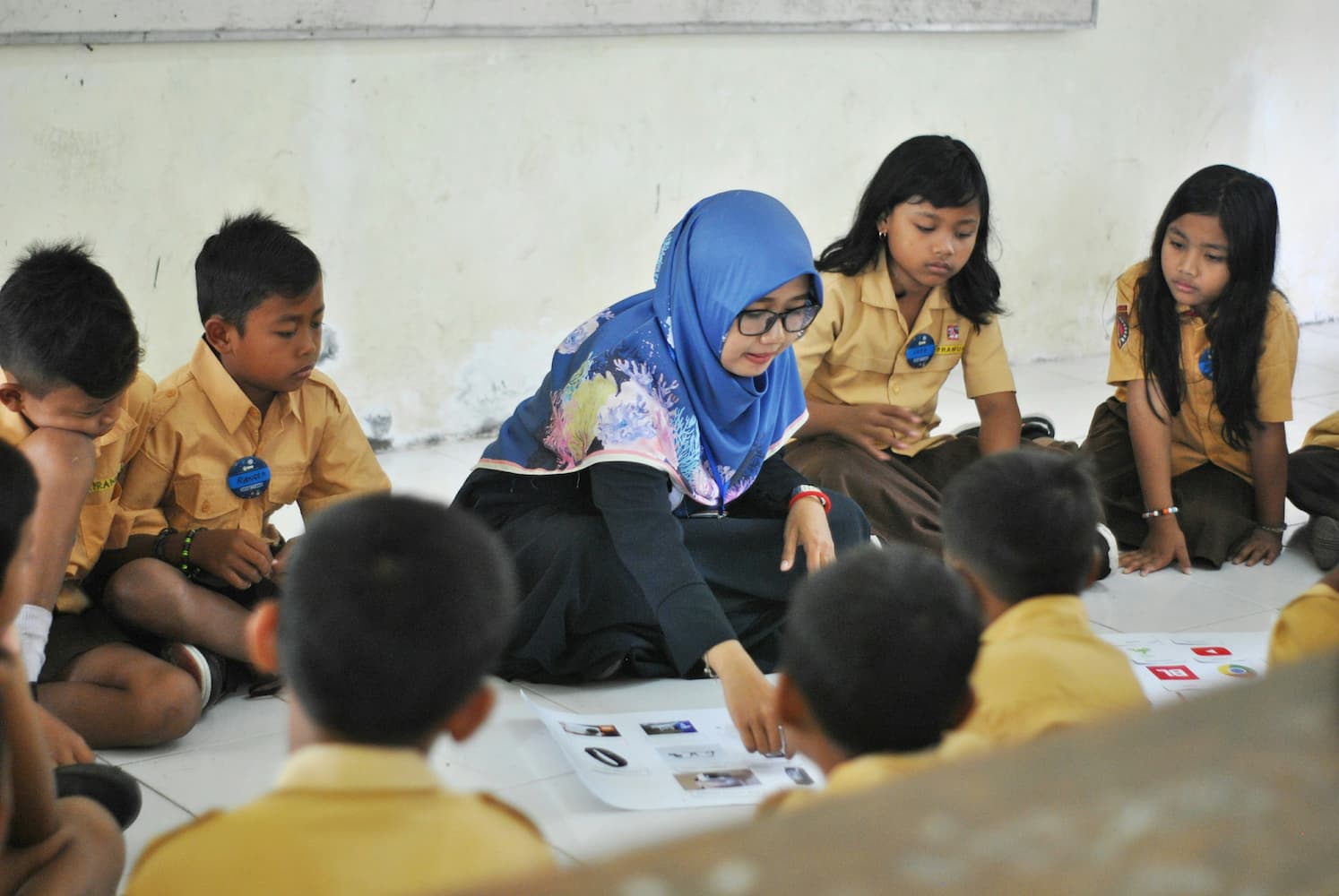
Teacher sits on the floor with group of students. Photo by Husniati Salma, Unsplash.

Who we are

A group of strategic partners, consortium partners, researchers, policymakers, practitioners and professionals working together.

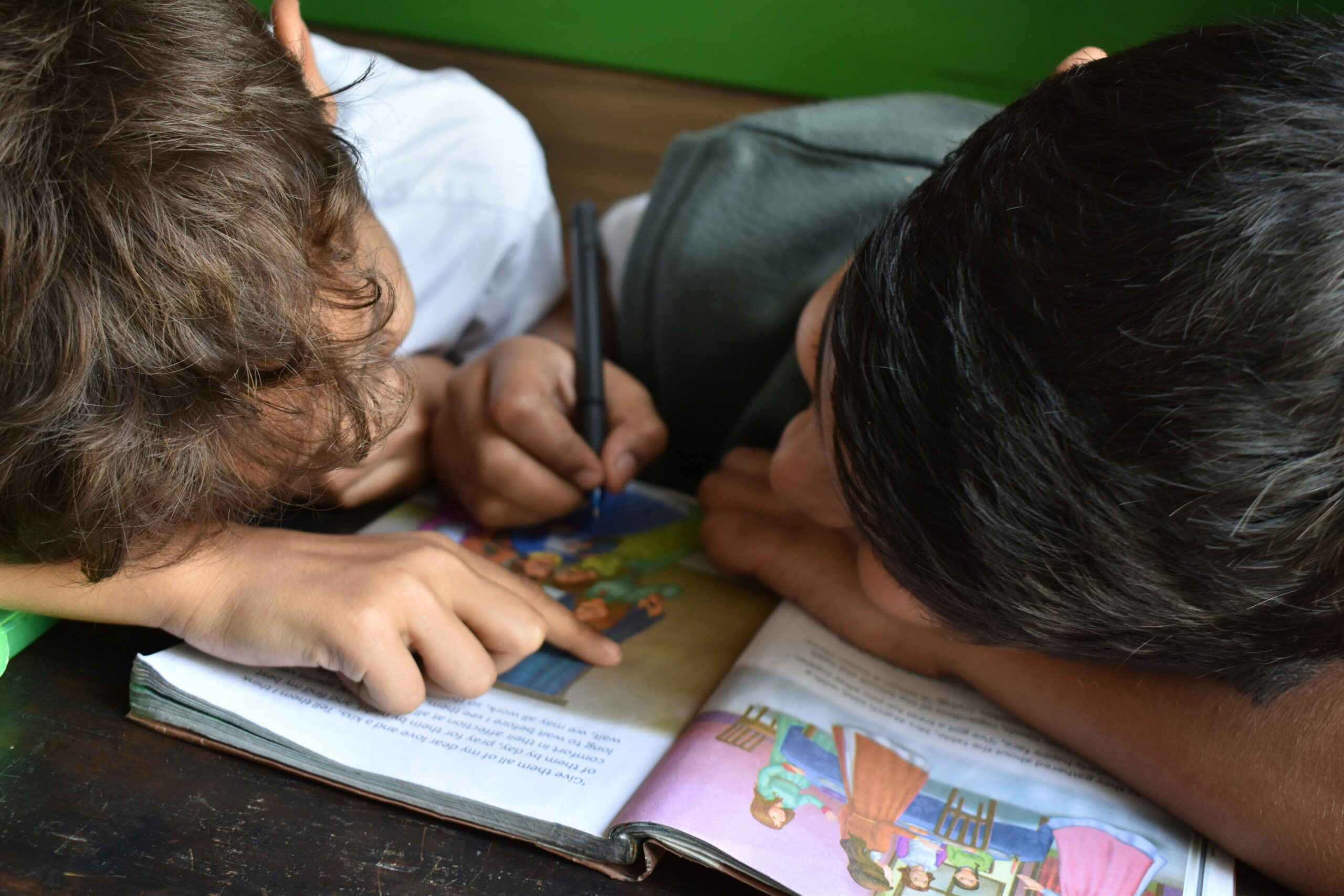
Children reading. Photo by Andrwe Ebrahim, Unsplash.

Get involved

Share our goal of literacy, numeracy and other key skills for all children? Follow us, work with us or join us at an event.

Loading...
Privacy Overview

This website uses cookies so that we can provide you with the best user experience possible. Cookie information is stored in your browser and performs functions such as recognising you when you return to our website and helping our team to understand which sections of the website you find most interesting and useful.