
Blog
What Works Hub for Global Education at the Education World Forum 2026: advancing evidence-informed education reform
Rachel Hinton, Manzer Imam and Becky Hatch
Hinton, R., Imam, M. & Hatch, B. (2026). What Works Hub for Global Education at the Education World Forum 2026: advancing evidence-informed education reform. What Works Hub for Global Education. https://doi.org/10.35489/BSG-WhatWorksHubforGlobalEducation-BL_2026/026
At a time when global education systems face unprecedented pressure, the Education World Forum (EWF) 2026 provided a critical platform with support from across Whitehall to strengthen partnerships and advance evidence-informed reform. With as many as 272 million children out of school globally and a significant annual financing gap for education, the scale of the challenge is stark. Against this backdrop, EWF under the stewardship of the Times Higher Education (THE) brought together ministers and leaders from over 100 countries to address the practical realities of building inclusive, resilient and high-quality education systems fit for the future.
The Education World Forum remains a unique opportunity to deepen international partnerships and showcase world-leading expertise in education as a driver of growth, skills and opportunity. This year’s Forum was particularly timely, reflecting a renewed focus on education as central to international development and foreign policy objectives, and to addressing shared global challenges.
The What Works Hub for Global Education with strategic partners from UK’s Foreign, Commonwealth and Development Office (FCDO), the British Council, the Global Education Evidence Advisory Panel (GEEAP), World Bank, the Learning Generation Initiative (LGI), UNICEF, Gates Foundation and Jacobs Foundation played a central role in convening and shaping strategic engagements across the Forum. These engagements focused on linking global evidence to policy dialogue and supporting governments to translate research into practical, scalable reform. These included discussions with ministerial and technical delegations from Malawi, Nigeria, Pakistan, Sierra Leone, and ASEAN countries, alongside convenings such as the African Ministerial Breakfast on Foundational Learning, the education evidence labs (Ed Labs) session, artificial intelligence (AI) capability building and an accelerated learning discussion.
A clear shift emerged across discussions: from identifying what works, to strengthening how evidence is used within government systems to deliver sustained impact at scale. This shift was evident across the Education World Forum as a whole, and formed the overarching theme of the Africa Foundational Learning Exchange (FLEX) conference, in Malawi this July – ‘From commitments to results: delivering foundational learning at scale’.

Plenary session on enhancing evidence use in education policy and practice at the Education World Forum 2026
Strengthening foundational learning through system reform – spotlight on Malawi
An evidence dialogue with the Government of Malawi focused on strengthening foundational literacy and numeracy. The meeting brought together senior government leaders, technical experts and What Works Hub for Global Education strategic partners. The discussion centred on Malawi’s National Mathematics Curriculum Reform and a Teaching at the Right Level (TaRL)-informed remediation pilot. The conversation highlighted Hub’s ongoing work on identifying the core components required for TaRL and implementing structured pedagogy at scale. The meeting also served as an important opportunity to engage on Malawi’s leadership of the FLEX 2026 conference, which Malawi has just hosted in its capital city Lilongwe.
Several key lessons emerged including the critical importance of context and the processes of implementation within real-world systems – requiring early buy-in, government champions, sustained collaboration, high level political leadership and a strong focus on delivery.
Implications for scaling what works includes:
- Prioritising government-led reform agendas that integrate proven approaches such as structured pedagogy and targeted remediation
- Investing in interventions that combine learning impact with cost-effectiveness evidence to inform scale-up
- Identifying champions to strengthen long-term partnerships that align global evidence with national systems and delivery realities
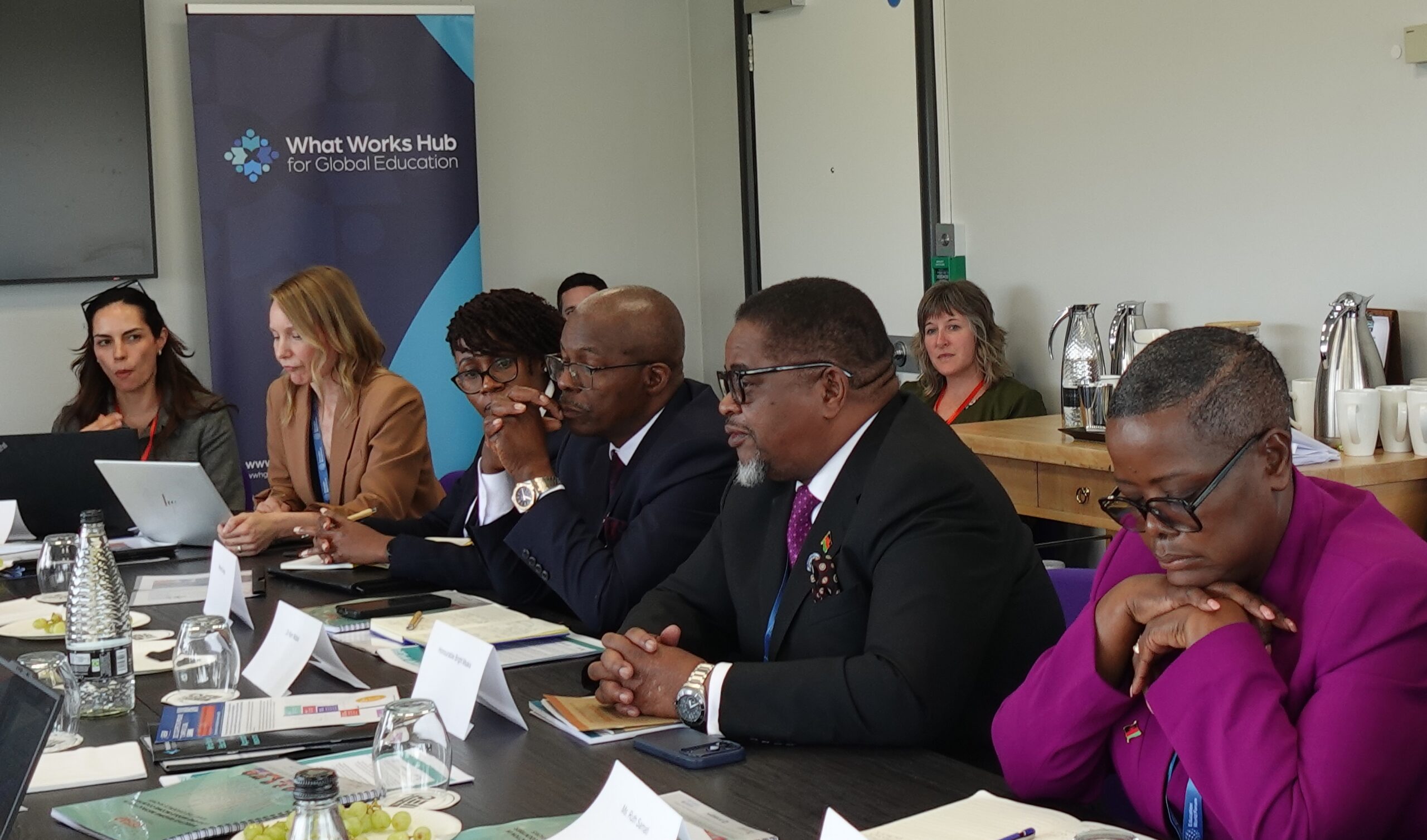
Evidence dialogue with Malawi government officials at the Education World Forum 2026
Ed Labs: strengthening evidence use in government systems
Another key engagement at the Education World Forum 2026 was an Ed Labs side event, hosted by the What Works Hub for Global Education and the Jacobs Foundation, with support from UK’s FCDO and Innovations for Poverty Action (IPA). The session focused on strengthening the use of data and evidence to inform both policy and practice within government systems, and the valuable role that Ed Labs are playing in this. Examples highlighted how sustained political ownership and investment in data systems can transform small technical units into core system functions supporting sector-wide reform.
A strong consensus emerged from the session that Ed Labs functions, and the impact they can have in strengthening government systems, matter more than the specific form or structure they take. This emphasis on ‘function over form’ reflects Hub’s broader efforts to strengthen the use of data and evidence through embedded partnerships, institutional collaboration and cross-country learning. The session also reinforced the importance of peer exchange and South-South collaboration in advancing evidence-informed education reform globally.
This reflects a broader global shift towards strengthening the ‘plumbing’ of education systems: the institutions, incentives, and capabilities that enable reform to be sustained over time.
Implications for governments:
- Government leadership to invest in institutional mechanisms that embed evidence use within government systems
- Prioritising long-term system strengthening over short-term pilot interventions
- Supporting peer learning and South-South collaboration to accelerate uptake of effective approaches
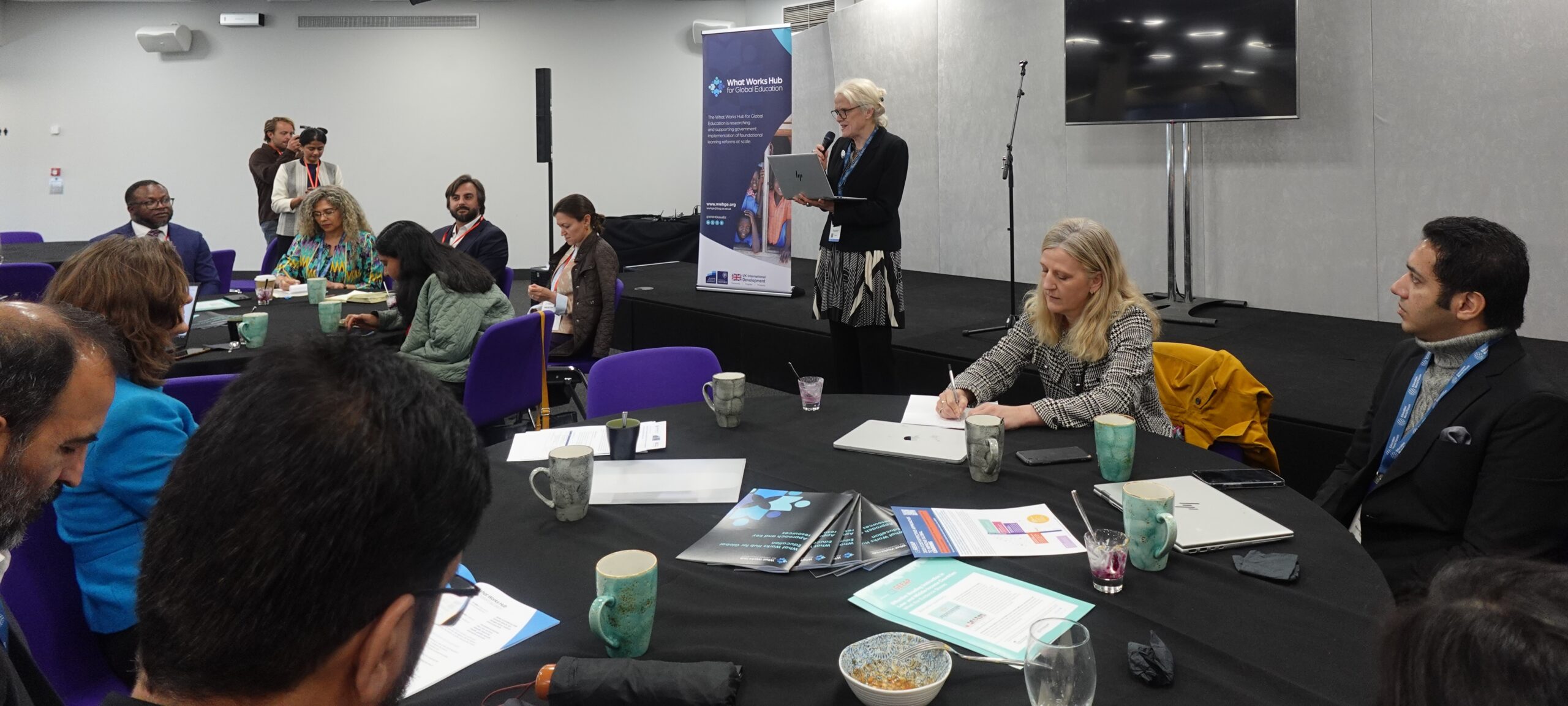
Ed Labs session at the Education World Forum 2026
The focus on equity and inclusion
Beyond country specific technical engagements, the Education World Forum 2026 reinforced several key global priorities. Discussions highlighted the importance of political leadership in tackling shared challenges, including improving foundational learning outcomes, addressing violence in and around schools, and supporting girls’ education globally. The Forum also explored the opportunities and risks associated with artificial intelligence and education technology, with ministers emphasising the urgent need to build capability for key decision makers to guide policy making and ensure safeguarding and inclusive access. These issues are central to building safe, inclusive education systems and to advancing wider development goals.
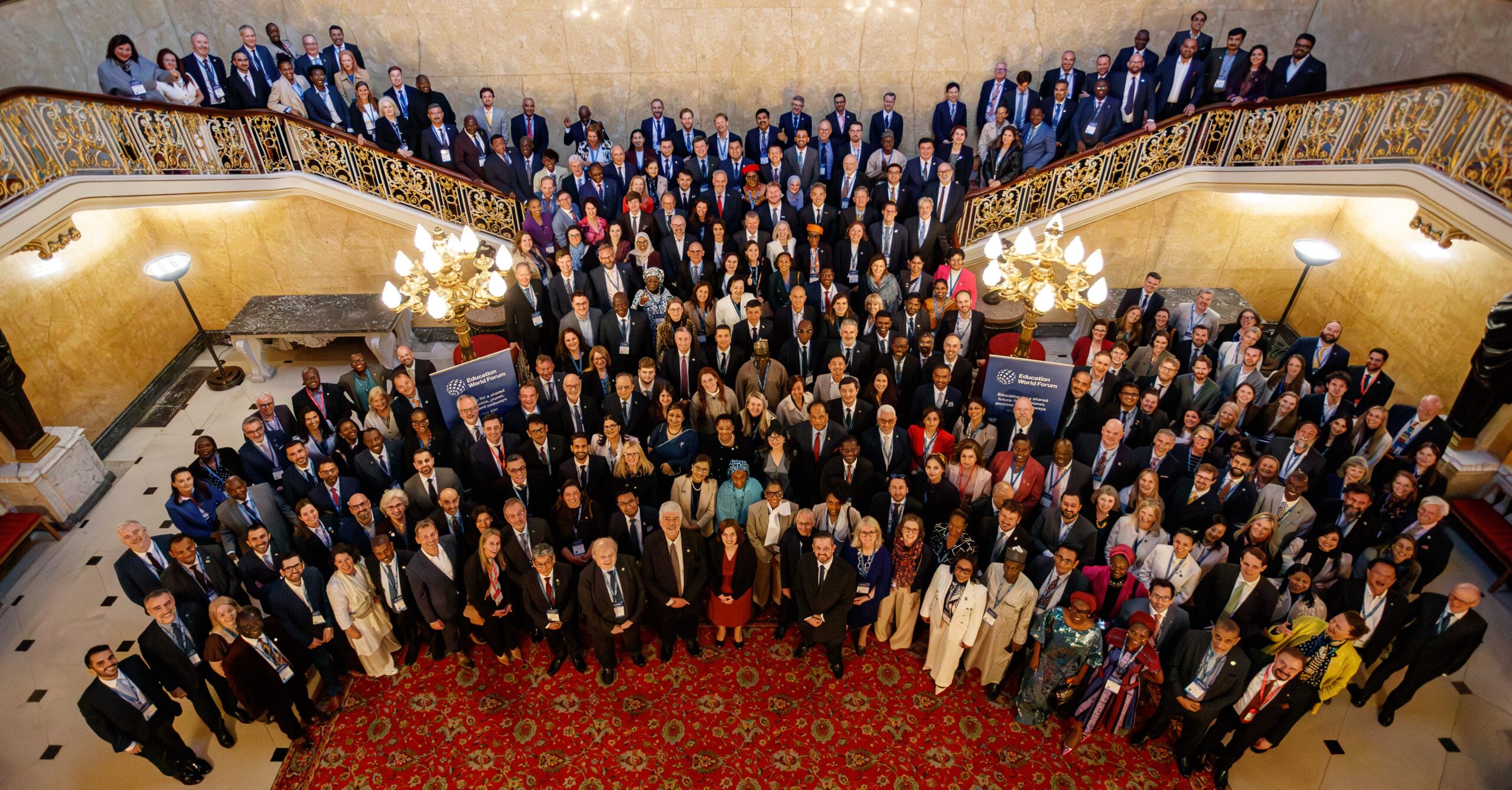
Official government reception at the Education World Forum 2026
Looking ahead
The Education World Forum (EWF) 2026 demonstrated the value of bringing governments together to share evidence and insights. The debates highlighted the growing global momentum around evidence-informed education reform and the importance of sustained collaboration between governments, researchers, donors and implementation partners.There was shared recognition that addressing the global learning crisis requires not only identifying effective solutions, but building the systems needed to deliver them sustainably within government systems and local contexts.
This includes deepening partnerships in priority countries, supporting key global moments such as FLEX 2026 convened by the Association for the Development of Education in Africa (ADEA), the African Union Commission, World Bank, Gates Foundation, Hempel Foundation, FCDO, UNICEF and Human Capital Africa to ensure that investments are informed by robust evidence and deliver measurable impact at scale.
The discussions at EWF 2026 also highlighted an important evolution in the global education landscape: a growing focus not only on generating evidence, but on embedding evidence use within government systems, financing structures, and implementation processes. Across countries, there was increasing recognition that sustainable education reform requires long-term institutional capacity, stronger coordination mechanisms, and systems that can continuously learn and adapt based on data and evidence.
As the What Works Hub for Global Education continues to engage with governments and partners globally, these conversations remain critical to ensuring that evidence translates into meaningful and lasting improvements in teaching and learning outcomes for children around the world.



Discover more

What we do
Our work will directly affect up to 3 million children, and reach up to 17 million more through its influence.
Who we are
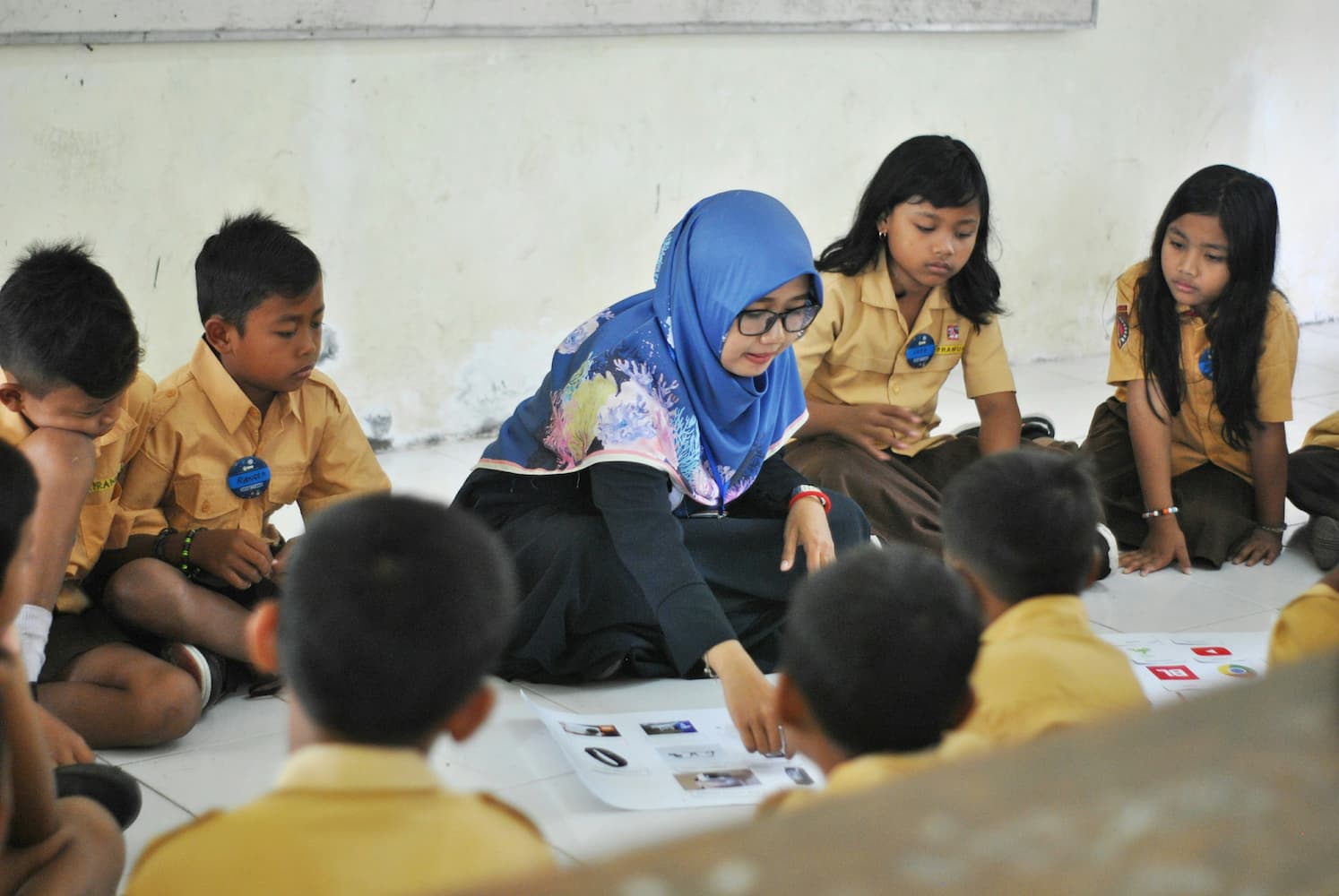
A group of strategic partners, consortium partners, researchers, policymakers, practitioners and professionals working together.
Get involved
Share our goal of literacy, numeracy and other key skills for all children? Follow us, work with us or join us at an event.