Home > Who we are > People > Manzer
Manzer

Manzer

Senior Manager

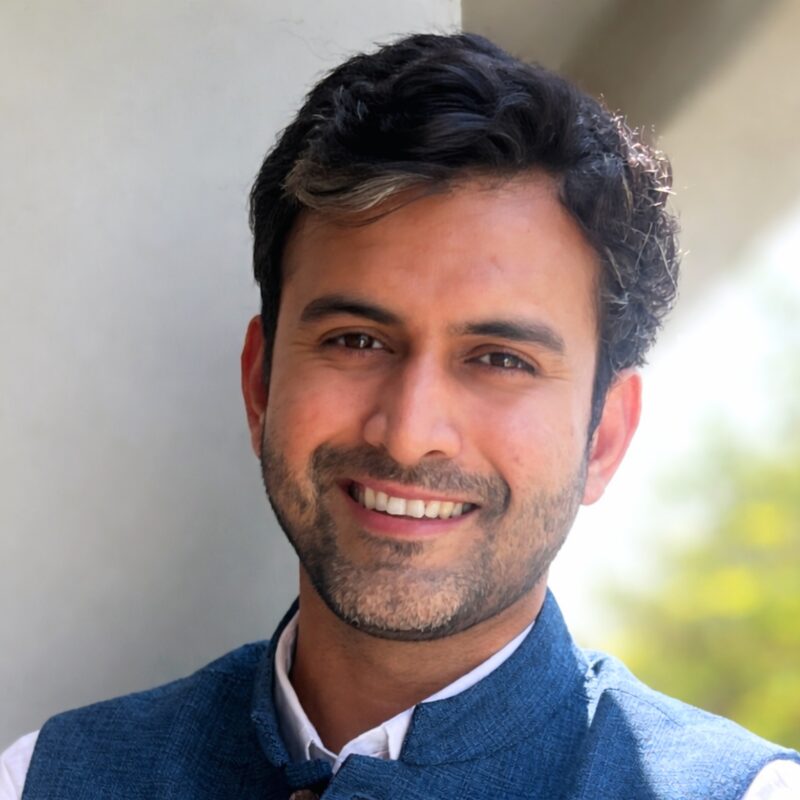
Manzer is a Senior Manager at the What Works Hub for Global Education, where he works on the technical workstreams such as technical assistance in support of evidence uptake and use, advancing measurement workstreams in support of rapid, real-time evidence generation and use.

Previously, Manzer worked as a Project Manager at Fairwork, an action-research initiative based at the Oxford Internet Institute that evaluates and certifies fair work practices in the gig economy. In this role, he oversaw project implementation across 40+ countries, ensuring effective sequencing of priorities, and delivering high-quality outputs, while also contributing to the design and expansion of new projects.

Prior to this, he was a Policy Manager at J-PAL South Asia, where he worked closely with governments in India to support the scale-up of poverty alleviation programmes, focusing on the Graduation Approach. His experience also includes leading the Research and Development team at ImpactDash, where he managed evaluations of social and environmental impact across multiple sectors. Earlier in his career, he worked as a development consultant with NABARD Consultancy Services, conducting monitoring and evaluation studies for several state and central government programmes in India.

Manzer is also the founder of Bridge Scholarships, a social enterprise that works to prevent dropouts in higher education by providing need-based scholarships and long-term mentorship to students from marginalized communities across India.

A Chevening Scholar, Manzer holds an MSc in Evidence-Based Social Intervention and Policy Evaluation from the University of Oxford, and a Master’s degree in Social Work with specialization in Livelihoods and Social Entrepreneurship from the Tata Institute of Social Sciences, Mumbai.
Related resources

Blog

Progress is possible in government systems at scale: new PASEC early grade reading results
13 November 2026

Clio Dintilhac, Manzer Imam and Michelle Kaffenberger

Cross-country, Senegal, Côte d'Ivoire, Chad, Congo-Brazzaville, Gabon, Guinea
The latest PASEC results show impressive gains in early-grade reading across several sub-Saharan African countries. This blog examines progress in Côte d’Ivoire and Senegal, where evidence-backed programmes such as structured pedagogy have been implemented, and explores how PASEC data can inform further research, policy and practice. Read more

Blog

Green shoots in global learning: lessons from the Philippines, Cambodia and Zambia’s PISA results
23 October 2026

Noam Angrist, Manzer Imam and Michelle Kaffenberger

Cambodia, Zambia, Philippines
For many countries, the Programme for International Student Assessment (PISA) results offer a sobering picture of global learning. This blog explores the experiences of the Philippines, Cambodia and Zambia, highlighting how these countries have achieved substantial improvements in learning outcomes over a relatively short period. Read more

Blog

What Works Hub for Global Education at the Education World Forum 2026: advancing evidence-informed education reform
7 August 2026

Rachel Hinton, Manzer Imam and Becky Hatch

Evidence use
This blog summarises What Works Hub for Global Education's engagements at the Education World Forum (EWF) 2026, including discussions with government delegations, an education evidence labs (Ed Labs) session and other activities throughout the Forum. Read more

Blog

From evidence to action: SEA-PLM provides new data for informing policy
3 August 2026

Manzer Imam, Yue-Yi Hwa and Michelle Kaffenberger

Evidence translation
The Southeast Asia Primary Learning Metrics (SEA-PLM), conducted across six Southeast Asian countries, measures learning outcomes at the end of primary school and provides valuable insights into children's proficiency in reading and mathematics.  This blog explores the findings from the SEA-PLM 2024 results and their policy implications. Read more

Discover more

Young female student with notebook. Photo by Apex 360, Unsplash.

What we do

Our work will directly affect up to 3 million children, and reach up to 17 million more through its influence.

Teacher sits on the floor with group of students. Photo by Husniati Salma, Unsplash.

Who we are

A group of strategic partners, consortium partners, researchers, policymakers, practitioners and professionals working together.

Children reading. Photo by Andrwe Ebrahim, Unsplash.

Get involved

Share our goal of literacy, numeracy and other key skills for all children? Follow us, work with us or join us at an event.

Loading...
Privacy Overview

This website uses cookies so that we can provide you with the best user experience possible. Cookie information is stored in your browser and performs functions such as recognising you when you return to our website and helping our team to understand which sections of the website you find most interesting and useful.

Strictly Necessary Cookies

This website writes one strictly necessary cookie. This cookie lets the site remember whether you have accepted or rejected cookies. You may disable this cookie but doing so will mean that the site will continue to ask you to update your cookie preferences.

Analytics

This website uses Google Analytics to collect anonymous information such as the number of visitors to the site, and the most popular pages.

By default, analytics cookies are disabled. If you enable analytics cookies we'll be able to use analytics data to help us improve this site.

3rd party

Youtube. Some pages of this site may contain embedded Youtube videos. Youtube writes a number of cookies when a video is displayed and these cookies are required in order to display videos.

Google Maps. Some pages of this site may contain embedded Google maps. Google writes a number of cookies when a map is displayed and these cookies are required in order to display maps.

By default we block these 3rd-party cookies, however if you would like to view any embedded Youtube videos or Google maps you should enable 3rd-party cookies here.