
Blog
Adopting and adapting ‘what works’: Core components as a guide
Noam Angrist and Michelle Kaffenberger
Angrist, N. & Kaffenberger, M. (2026). Adopting and adapting ‘what works’: Core components as a guide. What Works Hub for Global Education. https://doi.org/10.35489/BSG-WhatWorksHubforGlobalEducation-BL_2026/022
There is growing interest in using evidence-backed approaches to help prioritise scale-up efforts by governments and donors. Influential reviews by the Global Education Evidence Advisory Panel have helped to generate evidence menus which highlight cost-effective approaches to improve learning. Multilaterals and bilaterals such as the World Bank and FCDO have taken notice, with an uptick in projects mentioning these menus and approaches in large-scale government partnerships, including two of the most prominent ‘great buys’ in global education: structured pedagogy and targeted instruction.
Figure 1: An uptick in referencing ‘what works’ in global education
As menus of evidence-based approaches gain traction, two central questions arise around how to both adopt and adapt them:
- Adopt: How do we ensure these evidence-based approaches get adopted and implemented with fidelity to the evidence?
- Adapt: How do we adapt approaches across countries and contexts, preserving evidence-based principles, while localising them to differing contextual realities?
Enter core components, a guide to doing both and finding the sweet spot.
Core components can help adopt what works, by laying out clearly the essential elements of an effective approach, unpacking the black box. For example, as shown in Figure 2 below, in the case of teaching at the right level, we have identified 5 core components in the classroom, 2 components for pedagogical support by middle-tier government officials, and 2 components at higher policy levels. This spelling out of specific components can enable government policies, World Bank project appraisal documents, and FCDO business cases, among other programme and policy planning documents, to ensure these core components of effective approaches are captured.
Core components can also help adapt what works, by laying out what is and is not essential, with a goldilocks level of specificity – not too much, not too little.
For example, one core component includes ‘regular assessment to identify current learning levels.’ In terms of what to adopt, this core component makes specific and clear that regular assessment is crucial. Once-off or ad-hoc assessment would not count as adoption of the core component, resulting in less effective programming, based on the evidence to date. In terms of what to adapt, this component deliberately does not specify the exact type of assessment to use. For example, a common assessment used in the literature has been oral one-on-one ASER assessments. Yet emerging innovations show that other forms of assessment and grouping can generate learning gains too, such as paper and group classroom ASER assessments, and might scale more easily in government systems.
This goldilocks approach helps ensure that the evidence-based component – ‘regular assessment to identify current learning levels’ – is adopted with fidelity, while also leaving room for it to be adapted to local realities. Figure 3 conceptualises how core components help find the sweet spot of adoption and adaptation. This is consistent with careful thinking on the generalisability of evidence, adapting evidence-based principles, rather than activities, across settings.
Table 1 lists several examples of evidence-based core components, and how they can both be adopted with fidelity to work in principle, while being adapted to the context to work in practice, building on several case studies.
Figure 2: The core components and causal principles of teaching at the right level
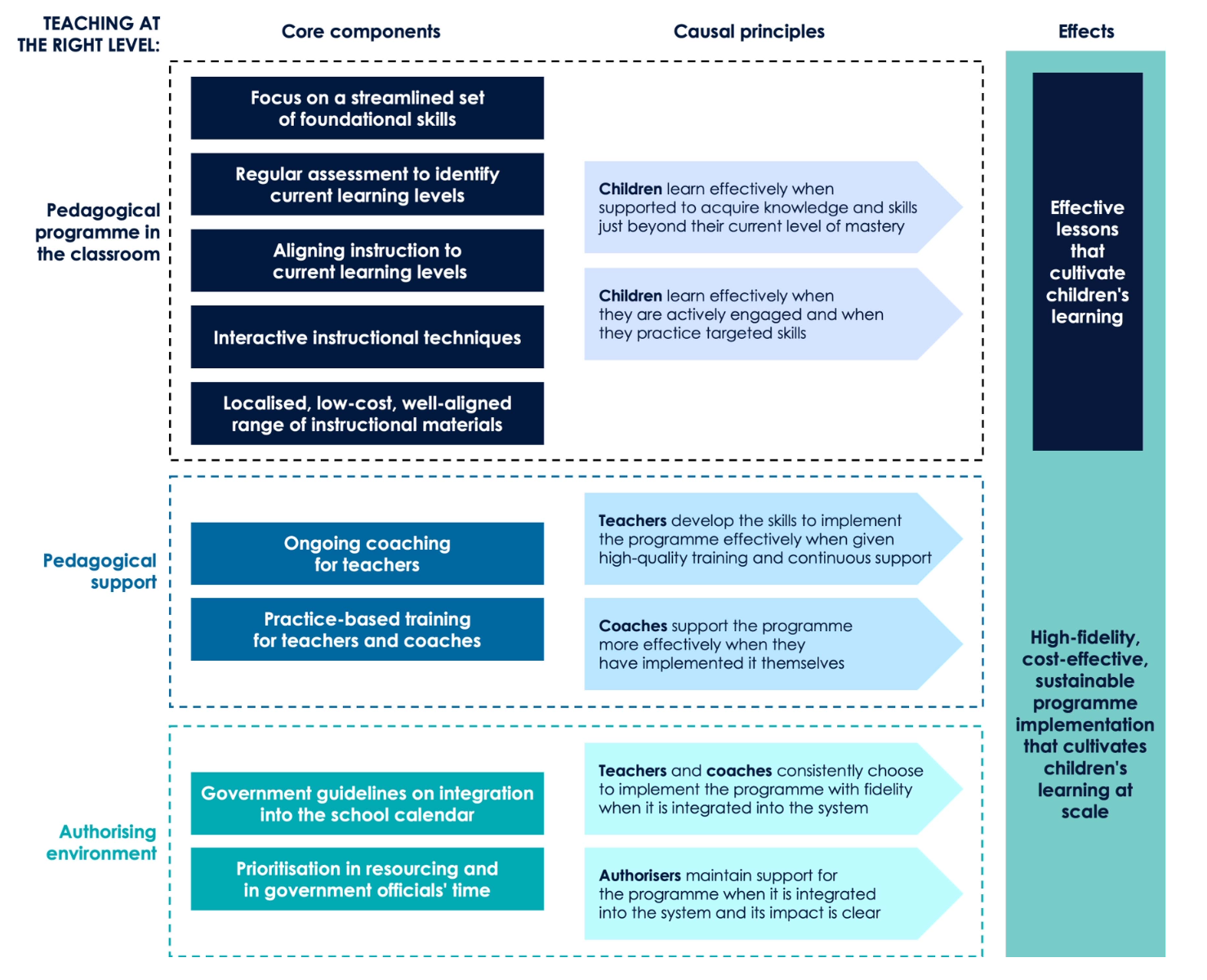
Figure 3: Adopting and adapting core components of an evidence-based approach
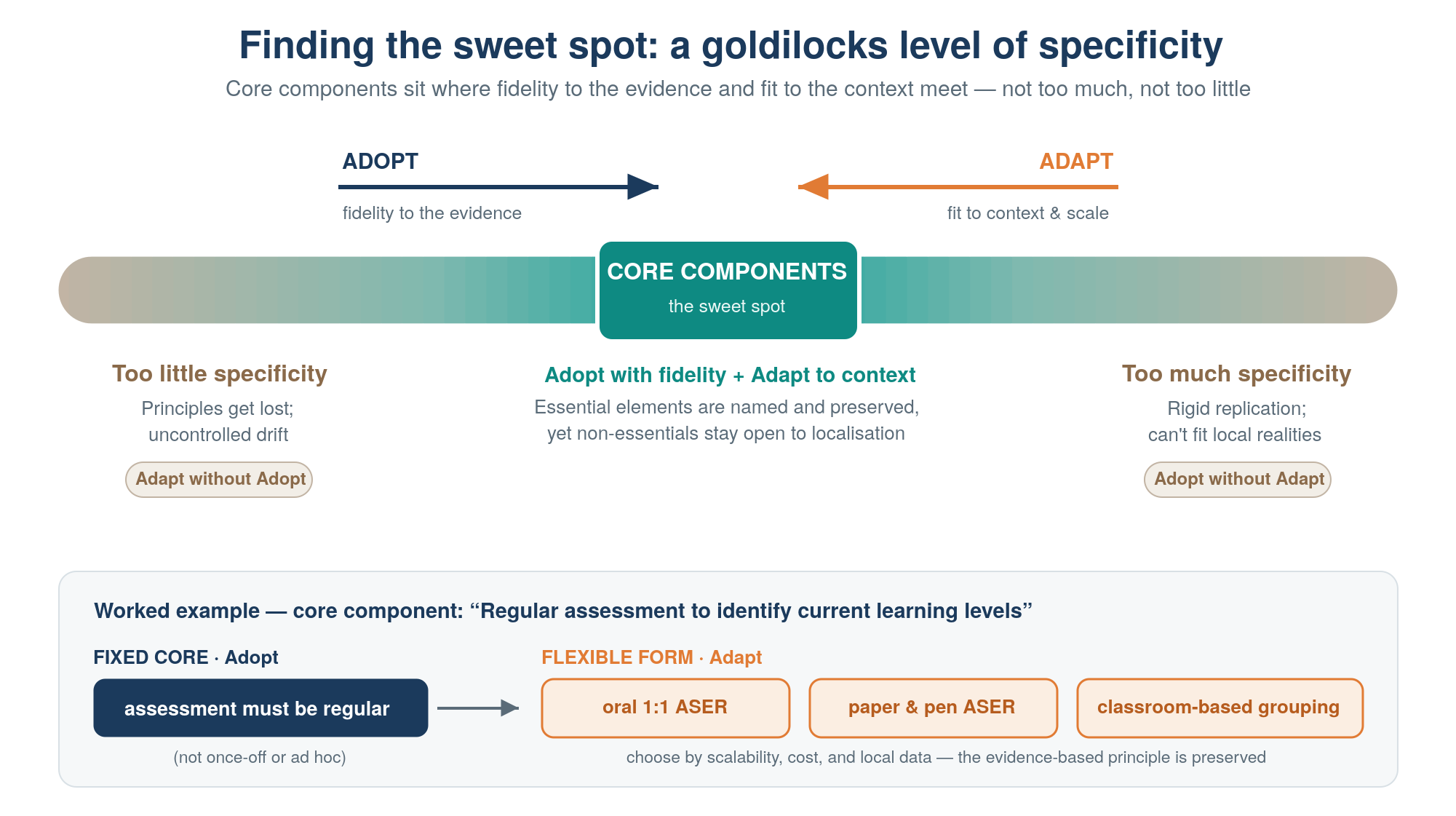
Table 1: Adopting and adapting core components of teaching at the right level
| Core component | Adopted (example) | Adapted (example) | Reason for adaptation |
|---|---|---|---|
| Pedagogical programme in the classroom | |||
| Focus on a streamlined set of foundational skills | Focus on core foundational skills (eg basic operations) rather than adjacent skills (eg geometry) | Start with numeracy over literacy | Political sensitivities on language of instruction |
| Regular assessment to identify current learning levels | Termly regular assessment rather than once-off annual assessments | Using paper and pen tests rather than oral one-on-one assessments | Scalability and cost |
| Aligning instruction to current learning levels | Group students by specific levels and proficiencies rather than by broad-based categories | Group by basic operations rather than digit recognition | Local data shows gaps in one level over another |
| Interactive instructional techniques | Students are placed in small groups and get individual practice, rather than teachers lecturing the whole class | Introduce additional songs and dance | Add political salience through public and visible enjoyment |
| Localised, low-cost, well-aligned instructional materials | Use cheap sticks & stones found in the community for activities rather than complex centralised procurement of expense material kits | Provide structure to materials through guidelines and story banks | Quality-control and reducing teacher workload |
| Pedagogical support | |||
| Ongoing coaching for teachers | Ensure officials regularly mentor teachers, not just monitor | Try low-cost phone calls not just school visits | Scalability and cost |
| Practice-based training for teachers and coaches | Officials practice delivering the approach during training, rather than a generic abstract training | Shorten training days to a feasible number of days for the government | Scalability and cost |
| Authorising environment | |||
| Government guidelines on integration into the school calendar | Find time to implement in the regular school day | Use a shortened time slot (30-45 minutes rather than a full hour) to fit into an available slot | Feasibility at scale |
| Prioritisation in resourcing and in government officials’ time | Official memos are sent out indicating prioritisation of the approach, rather than only a high level announcement | Leveraging in-kind resourcing, such as reallocating teacher time more efficiently, rather than new line items | Feasibility at scale |
The way forward
These examples of what gets ‘adopted’ and what gets ‘adapted’ are just the beginning. As calls grow for more evidence-backed solutions and prioritisation, the list of lessons on how to best adopt and adapt evidence is bound to grow. We look forward to continuing to learn what works in principle and in practice.
References
Akyeampong, K., Andrabi, T., Banerjee, A., Banerji, R., Dynarski, S., Glennerster, R., Grantham-McGregor, S., Muralidharan, K., Piper, B., Ruto, S., Saavedra, J., Schmelkes, S. & Yoshikawa, H. (2023). Cost-effective approaches to improve global learning: What does recent evidence tell us are smart buys for improving learning in low- and middle-income countries? Global Education Evidence Advisory Panel. Washington, D.C.: World Bank Group. https://geeap.org/wp-content/uploads/2025/10/Cost-Effective-approaches-to-improve-Global-Learning-2023-English.pdf
Anaman, A., Sabarwal, S., Masood, S., Angrist, N. & Spivack, M. (2026). Improving implementation while scaling: Differentiated Learning in Ghana. What Works Hub for Global Education. https://doi.org/10.35489/BSG-WhatWorksHubforGlobalEducation-RI_2026/003
Angrist, N., Bedasso, B., Crawfurd, L., Hameed, M. & Ritchie, E. (2026). Are aid agencies paying attention to what works in education? Center for Global Development. Blog. 23 March. https://www.cgdev.org/blog/are-aid-agencies-paying-attention-what-works-education
Angrist, N. & Meager, R. (2023). Implementation matters: Generalising treatment effects in education. What Works Hub for Global Education. Working Paper 2023/001. https://doi.org/10.35489/BSG-WhatWorksHubforGlobalEducation-WP_2023/001
Curtiss Wyss, M., Qargha, G.O., Arenge, G., Mukoyi, T., Elliott, M., Matsheng, M. & Clune, K. (2023). Adapting, innovating, and scaling foundational learning: Four lessons from scaling Teaching at the Right Level in Botswana. Washington, D.C.: Center for Universal Education at the Brookings Institution. https://www.brookings.edu/wp-content/uploads/2023/05/Scaling-TaRL-in-Botswana-_-Report-_-Web.pdf
Glennerster, R. & Bates, M.A. (2017). The generalizability puzzle. Stanford Social Innovation Review, 15(3), 50–54. https://doi.org/10.48558/EYY5-3S89
Kaffenberger, M., Angrist, N., Hwa, Y.Y., Kayton, H.L., Jukes, M. & Stern, J. (2026). Core components of teaching at the right level: Unpacking the black box of proven programmes into a set of ‘core components’ by systematically combining multiple sources of rigorous evidence with implementer insights. What Works Hub for Global Education. Core Components Synthesis 2026/001. https://doi.org/10.35489/BSG-WhatWorksHubforGlobalEducation-WP_2026/001
Angrist, N. & Kaffenberger, M. (2026). Adopting and adapting ‘what works’: Core components as a guide. What Works Hub for Global Education. https://doi.org/10.35489/BSG-WhatWorksHubforGlobalEducation-BL_2026/022


Discover more

What we do
Our work will directly affect up to 3 million children, and reach up to 17 million more through its influence.
Who we are
A group of strategic partners, consortium partners, researchers, policymakers, practitioners and professionals working together.
Get involved
Share our goal of literacy, numeracy and other key skills for all children? Follow us, work with us or join us at an event.