Home > Who we are > People > Noam Angrist
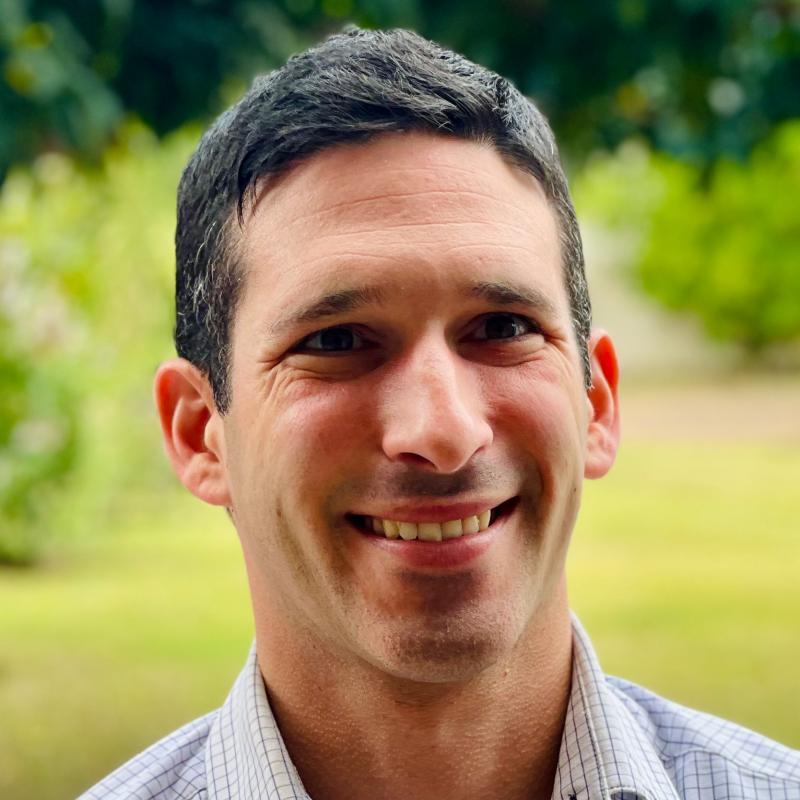
Noam Angrist

Noam Angrist

Academic Director

Noam Angrist is the Academic Director of the What Works Hub for Global Education. His interests focus on bridging the gap between evidence on ‘what works’ to enable young people to thrive and translation into scaled intervention and policy.

Noam has published in leading academic journals including NatureNature Human Behaviour, and the Journal of Economic Perspectives. In addition, he has published across disciplines, including education, economics, public health, and the natural sciences. His research includes primary research on programme and policy effectiveness via randomised trials and natural experiments, building global databases and public goods, and synthesising evidence to inform policy.

He has consulted for the World Bank Chief Economist, FCDO’s Chief Economist, and led key aspects of the development of the World Bank Human Capital Index education pillar. This includes the development of Harmonized Learning Outcomes and a new global measure of education, Learning-Adjusted Years of Schooling, which has been adopted as an indicator by the World Bank, FCDO and USAID to track education systems at the country level.

Noam led the development of UNICEF’s evidence menu for the Foundational Literacy and Numeracy Hub (FLN) hub in partnership with the Abdul Latif Jameel Poverty Action Lab (J-PAL). He also led the academic research underpinning the inaugural report of the Global Education Evidence Advisory Panel, which reviewed over 150 impact evaluations in education and provided timely recommendations on cost-effective ‘smart buys’ to improve learning outcomes in low- and middle-income countries.

He is the co-founder of Youth Impact, one of the largest NGOs dedicated to scaling-up health and education programmes backed by rigorous randomised trial evidence. Headquartered in Botswana, the organisation has scaled evidence-based programmes to over 100,000 youth across ten countries.

Youth Impact has pioneered the use of A/B testing in the social sector to optimise evidence-based programmes on the path to scale, conducting 25 rapid randomised trials in just 36 months, in addition to conducting multiple large-scale randomised trials in partnership with J-PAL and the World Bank. The organisation has solidified multi-year partnerships with UNICEF, USAID, and the Brookings Institution and signed an MOU with the Botswana government to scale-up evidence-based programmes nationally.

During Covid-19, Youth Impact produced the world’s first evidence on distance education, published in Nature Human Behaviour, and has since re-tested and scaled the programme in five additional countries (India, Kenya, Nepal, Uganda, and the Philippines) with governments, NGOs, and multilateral partners within 18 months. These efforts represent some of the largest, fastest, multi-country evidence bases ever generated in education.

Noam has a BSc in Mathematics and Economics from the Massachusetts Institute of Technology (MIT) and a PhD (DPhil) from the Blavatnik School of Government, University of Oxford. Angrist was a Fulbright and Rhodes scholar, and his work has been recognised by Forbes, the Skoll World Forum, and the World Economic Forum.
Related resources

Blog

Ensuring education policy translates into practice: the role of the middle tier in government
18 November 2025

Bea Ani-Asamoah, Clio Dintilhac, Noam Angrist, Michelle Kaffenberger, Felicity Burgess, Joe DeStefano and James Wilkinson

Cross-country
This blog introduces the Middle Tier Implementation Research Initiative, a  partnership between Brink, the What Works Hub for Global Education and the Gates Foundation that aims to bring the middle tier into focus. Read more

Working paper

Cheaper (and more effective) by the dozen: Evidence from 12 randomised A/B tests optimising tutoring for scale
20 October 2025

Noam Angrist, Claire Cullen and Janica Magat

Botswana, Implementation science, Randomised trial
This paper presents iterative randomised A/B tests of a mobile phone numeracy tutoring programme to optimise efficiency and scalability. Read more

Blog

Scale, sustainability and supporting the system: reflections on maximising impact when resources are tight
20 October 2025

Noam Angrist, Rachel Hinton, Dhir Jhingran, Michelle Kaffenberger, Anustup Nayak, Armando Ali, Marla Spivack, Jonathan Stern, Titus Syengo, Cath Elliston, Rebecca Trupin and Swathi Attavar

Cross-country
Challenges around foundational learning have persisted for decades, but new fiscal pressures have brought added urgency to the task of improving education outcomes. Alongside the 2025 UKFIET conference in Oxford, experts from our Community of Practice working across the global education sector shared their reflections. Read more

Blog

Investing in implementation science, so ‘what works’ actually works in practice
23 September 2025

Noam Angrist, Luis Benveniste, Nathanael Bevan and Judith Herbertson

Implementation science
The blog announces a new partnership – the Implementation Science for Education (ISE) programme between the World Bank Foundational Learning Compact (FLC) and the What Works Hub for Global Education. The partnership provides small, highly leveraged grants and technical assistance alongside World Bank investments to governments. Read more

Blog

Doing more with less: Why foreign aid should prioritise foundational learning now
3 September 2025

Noam Angrist, Pia Britto, Stefan Dercon, Michelle Kaffenberger, Dean Karlan and Ben Piper

Global, General
Cuts to global education funding will forgo at least $100 billion in lifetime earnings. Supporting national governments to leverage domestic financing to improve foundational learning should be a priority for the development assistance that remains, given that evidence-based education solutions offer huge returns. Read more

Blog

CIES 2025: A/B testing in education has arrived!
19 June 2025

Amanda Beatty, Vishal Sunil, Andrés Parrado, Noam Angrist, Clio Dintilhac, Kate Ross and Yue-Yi Hwa

Implementation science, General
A/B testing is becoming increasingly prominent in global education. This blog highlights key A/B testing work from What Works Hub for Global Education partner organisations, featured in the CIES 2025 panel, 'Educational technology and implementation science: Using A/B testing to iteratively improve and scale educational interventions'. Read more

Blog

New data and evidence on climate-resilient education
10 June 2025

Haogen Yao, Noam Angrist, Sarah Lane Smith and Katerina Ananiadou

Global, General
School disruptions are common and costly. This blog explores solutions for building more resilient education delivery during climate-related school disruptions and calls for improved data and evidence systems to support climate-resilient education. Read more

Blog

A clarion call for efficient and sustainable solutions to achieve foundational learning
1 May 2025

Ben Piper, Luis Benveniste and Noam Angrist

Cross-country, Global, General
Global education needs efficient and sustainable solutions to improve learning and to ensure scarce education funds are being used in the most effective way possible. That's why we're calling for contributions to a set of resources for improving efficiency and sustainability in the sector. Read more

Blog

Five ways we can transform global education in 2025
3 February 2025

Noam Angrist,  Jon Kay and Samuel Kembou

Global, General
In this blog, Noam Angrist, Academic Director of the What Works Hub for Global Education, Jonathan Kay, Head of Evidence Synthesis at the Education Endowment Foundation, and Samuel Kembou, Global Lead for Learning and Evidence at the Jacobs Foundation, share five key wishes for the coming year. Read more

Blog

Six insights on implementation challenges at scale – and how to fix them
22 January 2025

Noam Angrist, Ben Piper, Rukmini Banerji, Hafsatu Hamza, Laura Poswell and Yue-Yi Hwa

Cross-country, General
This blog features a selection of snippets from the panel titled ‘Implementation Matters: Where Do Things Break Down at Scale?’, held during the fifth anniversary of Teaching at the Right Level (TaRL) Africa Conference on 14-15 November 2024 in Nairobi, Kenya. Read more

Discover more

Young female student with notebook. Photo by Apex 360, Unsplash.

What we do

Our work will directly affect up to 3 million children, and reach up to 17 million more through its influence.

Teacher sits on the floor with group of students. Photo by Husniati Salma, Unsplash.

Who we are

A group of strategic partners, consortium partners, researchers, policymakers, practitioners and professionals working together.

Children reading. Photo by Andrwe Ebrahim, Unsplash.

Get involved

Share our goal of literacy, numeracy and other key skills for all children? Follow us, work with us or join us at an event.

Loading...
Privacy Overview

This website uses cookies so that we can provide you with the best user experience possible. Cookie information is stored in your browser and performs functions such as recognising you when you return to our website and helping our team to understand which sections of the website you find most interesting and useful.