
Insight note
The middle tier we think we know
Shveta Lall
Lall, S. (2026). The middle tier we think we know. What Works Hub for Global Education. https://doi.org/10.35489/BSG-WhatWorksHubforGlobalEducation-RP_2026/004
Abstract
The global education community has increasingly turned its attention to the role of middle tier in translating education policy into classroom practice. A recent review by the UNESCO International Institute for Educational Planning (IIEP) describes this layer of district and sub-district officers and academic supervisors as the vital link between central policy and classrooms (Tournier et al., 2025). In India, the Block Education Officer (BEO) occupies exactly this position. This study, conducted by the Language and Learning Foundation across seven districts of India’s Uttar Pradesh in 2024–25, with the support of the Government of Uttar Pradesh, examines how BEOs actually function within the education system. As India’s most populous state, with 826 blocks and nearly 880 BEO positions, Uttar Pradesh offers a concentrated window into dynamics that are recognisable across low- and middle-income country contexts but rarely examined at this level of granularity. The findings speak to the structural and supervisory dimensions that the existing literature identifies (Tournier, Chimier & Jones, 2023; Tournier et al., 2025), and add a third, under-explored layer: the individual behavioural dynamics through which people make sense of, and respond to, the systems around them.
Selected references
Aiyar, Y., & Bhattacharya, S. (2016). The post office paradox: A case study of the block level education bureaucracy. Economic and Political Weekly, 51(11), 61–69.
Honig, D., & Pritchett, L. (2019). The limits of accounting-based accountability in education (and far beyond): Why more accounting will rarely solve accountability problems. Research on Improving Systems of Education. https://doi.org/10.35489/BSG-RISE-WP_2019/030
Kahneman, D. (2011). Thinking, fast and slow. Farrar, Straus and Giroux.
Language and Learning Foundation. (2025). The 13-headed wrench: India’s Block Education Officers’ quest for purpose. Language and Learning Foundation. https://languageandlearningfoundation.org/wp-content/uploads/2026/07/BEO-Report-Digital-FINAL.pdf
Mullainathan, S., & Shafir, E. (2013). Scarcity: Why having too little means so much. Times Books.
Power, M. (1994). The audit explosion. Demos.
Thaler, R. H., & Sunstein, C. R. (2008). Nudge: Improving decisions about health, wealth, and happiness. Yale University Press.
Tournier, B., Chimier, C., & Jones, C. (Eds.). (2023). Leading teaching and learning together: The role of the middle tier. UNESCO-IIEP & Education Development Trust. https://doi.org/10.54675/WBUO9725
Tournier, B., Godwin, K., Cameron, E., & Lugaz, C. (2025). Leveraging the potential of the middle tier to improve education outcomes: The role of a capacity assessment framework. UNESCO-IIEP. https://doi.org/10.54673/pmrm1562
People
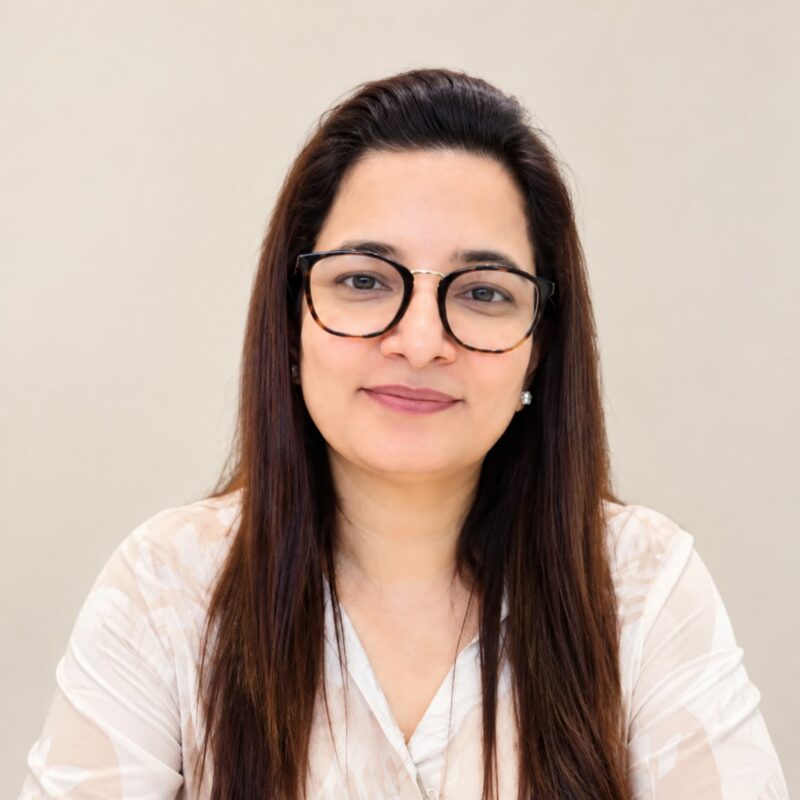
Shveta Lall
Organisation(s)
Discover more
What we do
Our work will directly affect up to 3 million children, and reach up to 17 million more through its influence.
Who we are
A group of strategic partners, consortium partners, researchers, policymakers, practitioners and professionals working together.
Get involved
Share our goal of literacy, numeracy and other key skills for all children? Follow us, work with us or join us at an event.