
Blog
TIE-EdLab: driving evidence-informed education in Tanzania
Aneth Komba, Anthony Mwambanga, Doreen Samuel and Onespho Sedekia
Komba, A., Mwambanga, A., Samuel, D. & Sedekia, O. (2026). TIE-EdLab: driving evidence-informed education in Tanzania. What Works Hub for Global Education. https://doi.org/10.35489/BSG-WhatWorksHubforGlobalEducation-BL_2026/030
The Tanzania Institute of Education (TIE), in collaboration with Georgetown University, the University of Dar es Salaam, and the University of Delaware, established the Tanzania Institute of Education Laboratory (TIE-EdLab) in December 2023. The EdLab is a space for embedded, government-led research that aims to generate actionable evidence for improving learning outcomes. Since its inception, the TIE-EdLab has demonstrated how a strong partnership between researchers and policymakers can accelerate the adoption of evidence-informed policies in Tanzania’s education sector.
The EdLab functions as a structured mechanism for connecting policy priorities with implementation learning. By embedding research within government systems, it strengthens decision making, accelerates adaptation, and supports the institutionalisation of evidence use.
This blog reflects on how the EdLab operates, its key achievements to date, the challenges it faces and its ambitions going forward. It also connects these efforts with international learning exchanges and events, showcasing how TIE-EdLab is positioning itself to support policy-relevant and data-driven reform.
How the TIE-EdLab works: structure and stakeholders
The Tanzania Institute of Education Laboratory (TIE-EdLab) operates as an embedded evidence lab within the Tanzania Institute of Education (TIE), strategically positioned to align research with government priorities and agenda. TIE is charged with the responsibility of designing and delivering curriculum and instructional materials that are critical for quality education at pre-primary, primary, secondary and teacher education levels (pre- and in-service teacher training). As the national agency responsible for curriculum and instructional materials, TIE is uniquely positioned to integrate research directly into policy design and implementation.
To ensure that interventions developed through the EdLab are effectively adopted and implemented, the EdLab continuously navigates coordination across the Ministry of Education, Science, and Technology (MoEST), Prime Minister’s Office, Regional Administration and Local Government (PMO-RALG) and other actors. Regular touchpoints – including Advisory Board meetings, technical working sessions and structured feedback loops – have proven essential for maintaining alignment. The Lab has learned that effective evidence uptake depends not only on data quality, but also on trust, timing and institutional relationships.
To translate evidence into decisions, the EdLab relies on structured and recurring engagement mechanisms, including PMO-RALG Friday Sessions, ad hoc consultations with senior management teams in MoEST and PMO-RALG, and targeted capacity-building training for officials. Findings are shared through policy briefs, technical presentations, and joint review sessions with directorates and implementing units. These engagements allow officials to interrogate results, contextualise them within operational realities, and co-design next steps. This iterative exchange strengthens ownership and increases the likelihood that evidence informs action rather than remaining analytical.
The EdLab comprises a multidisciplinary team of researchers, curriculum developers, and education specialists, supported by a robust network of local and international partners. MoEST and PMO-RALG co-chair the EdLab Advisory Board, which sets the EdLab research agenda. MoEST, through the TIE, formulates policies and guidelines, which TIE translates into effective curriculum programmes and instructional materials. PMO-RALG oversees the implementation of these policies at the regional and local levels, ensuring the delivery of high-quality education across pre-primary, primary and secondary education levels. This structure embeds data into routine decision-making processes across institutions.
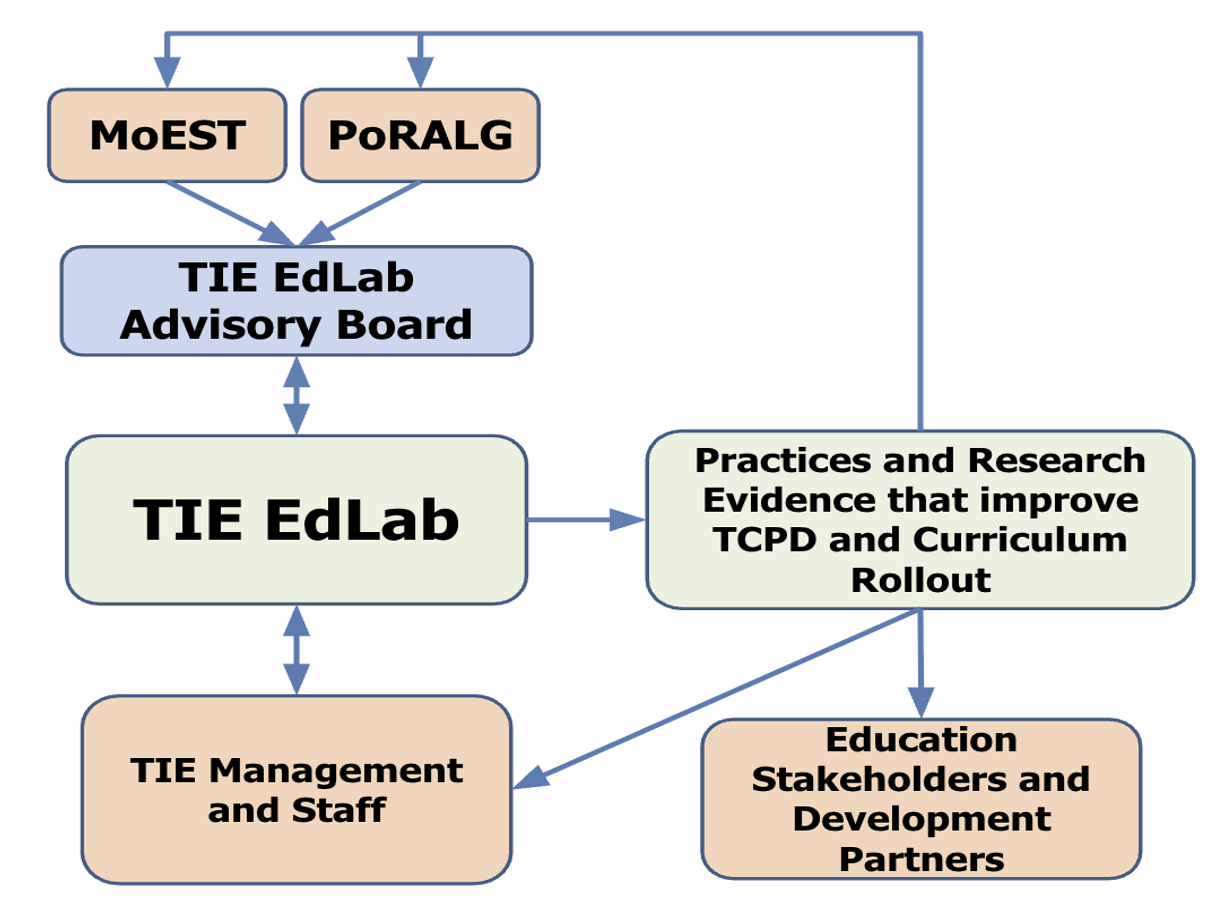
TIE structure
The Tanzania Institute of Education Laboratory (TIE-EdLab) Advisory Board Meeting, convened annually in February, is pivotal in guiding the strategic direction of the TIE-EdLab. Co-chaired by the Deputy Permanent Secretaries of the Ministry of Education, Science, and Technology (MoEST) and the Prime Minister’s Office, Regional Administration and Local Government (PMO-RALG), the board comprises representatives from the Teachers Service Commission (TSC), directors (School Quality Assurance, Teacher Education, Centre for Education Research and Professional Development, Policy and Planning, Research and Innovation), National Teacher Continuous Professional Development (TCPD) Coordinators from both ministries, Principals from Teachers Colleges, School Quality Assurance Officers (SQAOs), Regional Education Officers (REOs), District Education Officers (DEOs), development partners, and other key stakeholders. It reviews progress, evaluates results and insights, and provides strategic recommendations to ensure TIE-EdLab’s initiatives align with national education policies and priorities.
The Lab follows the Learning Cycle framework, a systematic approach that connects policy priorities with research strategies, which is inspired by the Innovations for Poverty Action (IPA)’s Embedded Lab framework, and is illustrated in the figure below. This cycle begins with identifying priority policy challenges, conducting rigorous research (eg impact evaluations and descriptive and predictive analyses), and culminates in delivering actionable evidence to decision-makers. By embedding this process within government structures, TIE-EdLab ensures that research is both relevant and actionable.
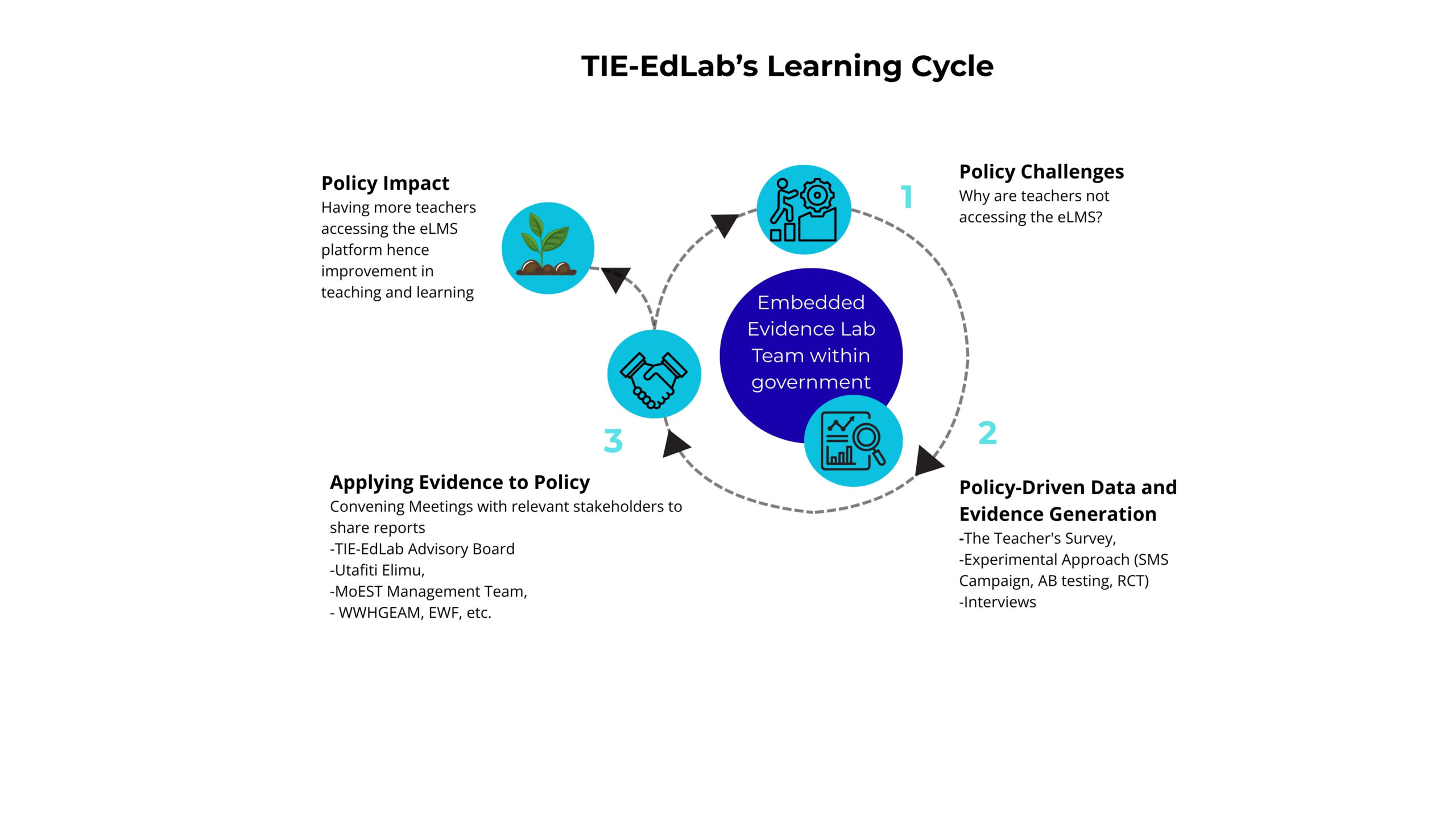
TIE-EdLab’s Learning Cycle framework
Activities and focus of TIE-EdLab
The Tanzania Institute of Education Laboratory (TIE-EdLab)’s current activities focus on generating evidence to inform educational policy and practice in Tanzania, with an emphasis on two key areas: the rollout of the revised 2023 curriculum and the 2020 National Framework for Teacher Continuous Professional Development (NF-TCPD). These initiatives aim to enhance instructional quality through student-centred pedagogy and technology-driven teacher training.
TIE-EdLab’s impact is evident in two ongoing government initiatives:
- Monitoring the rollout of the revised 2023 curriculum: Through phone surveys, EdLab tracks how schools and teachers are adapting to the curriculum changes, providing near real-time feedback to the Tanzania Institute of Education (TIE) and the Ministry of Education, Science, and Technology (MoEST). Key insights from the 2024 surveys included that while training participation was high, knowledge of the revised curriculum among teachers remained very low. Moreover, participation in training and duration of training had little to no correlation with higher curriculum knowledge. These insights gathered by the EdLab have helped identify implementation challenges and inform adjustments to support effective curriculum adoption.
- Teacher continuous professional development via online Learning Management System (LMS): The TIE-EdLab supports the implementation of the 2020 Teacher Continuous Professional Development (TCPD) framework by evaluating feasible strategies to increase utilisation of the online electronic Learning Management System (eLMS) for in-service teacher training. This work includes usability testing, adaptive experiments to select effective SMS campaigns, analysis of teacher feedback/perceptions through surveys, and the development of recommendations to improve engagement, especially given the currently low uptake by teachers. These efforts aim to enhance the platform’s effectiveness in delivering accessible, relevant and impactful professional development.
Building on the TIE Strategy Workshop in October 2025, the EdLab is advancing a set of system-strengthening proposals. These include expanding SMART Class to support blended Community of Learners (CoLs), integrating CoL reporting into the Mwalimu Data Lake and eLMS for improved system oversight, introducing automated LMS certification to align incentives, and applying a positive deviance approach to identify and scale effective MEWAKA (Mafunzo Endelevu kwa Walimu Kazini, or Teacher Continuous Professional Development) practices.
Navigating implementation challenges: what we’ve learned
As with any large-scale innovation in education, the implementation of the Tanzania Institute of Education Laboratory (TIE-EdLab)-supported initiatives has not been without obstacles. While our work on the electronic Learning Management System (eLMS) and curriculum monitoring has yielded some valuable insights and early successes, several practical and systemic challenges have emerged:
- Challenges with data access and quality: Outdated or incomplete teacher databases and delays in receiving requested datasets or approvals from relevant institutions have hindered the efficient targeting of communications, user experience studies, and experimentation cycles, ultimately slowing down feedback delivery.
- Connectivity and accessibility barriers: Some teachers and schools are located in extremely remote areas with limited or no mobile coverage. In such cases, phone calls are not possible, and teachers cannot access the eLMS via the internet. These geographic constraints limit equitable uptake and pose a serious inclusion challenge.
- Lack of clear guidelines for eLMS engagement: While the eLMS has been introduced as a tool for teacher professional development, there is still ambiguity on whether its usage is mandatory or optional. This lack of clarity affects teacher motivation and weakens enforcement or follow-up mechanisms at the school and district levels.
- Constraints of relying on government platforms: As a government-affiliated initiative, the TIE-EdLab adheres to public sector protocols, for example, using only government-approved platforms for sending bulk SMS messages to teachers (eGA platform). While this ensures alignment with national systems, it can sometimes be a bottleneck. Some of the services used for SMS dissemination or data management have experienced long delays in resolving technical issues, impeding the speed and responsiveness of our adaptive experiments.
These implementation realities have reinforced the importance of working within the system while identifying opportunities for flexibility, clearer policy directives and improved infrastructure. They also highlight the value of real-time monitoring, rapid feedback loops and collaboration across government units to ensure that good ideas do not stall at the execution phase.
In addition to operational constraints, the EdLab has also had to navigate the institutional realities of working across multiple government agencies. All these initiatives require close coordination between MoEST, PMO-RALG and their semi-autonomous institutions such as the Teachers Service Commission (TSC) and the National Examinations Council of Tanzania (NECTA), alongside quality assurance structures. The Advisory Board structure has proven critical in aligning priorities across these actors, creating a shared space where findings are discussed collectively and implementation trade-offs are negotiated. This cross-agency dialogue helps ensure that evidence does not privilege one institutional perspective over another but instead supports system-wide coherence and reduces fragmentation in reform implementation. These experiences illustrate that institutionalising evidence is not only a technical exercise, but a governance challenge requiring negotiation, alignment and sustained engagement across multiple layers of the system.
Policy engagements as opportunities
Over the past two years, the Tanzania Institute of Education Laboratory (TIE-EdLab) has engaged in global platforms, conferences and knowledge exchanges with other EdLabs, policymakers, researchers and education stakeholders. TIE-EdLab has participated and presented research findings in recent iterations of the Cross-Country Learning Exchange (CCLE) convened by the Innovations for Poverty Action (IPA) at Kampala, Uganda in 2024, and Nairobi, Kenya in 2025. These engagements have surfaced and reinforced key lessons: evidence use is iterative, relational and shaped by institutional realities in government. Through these events, TIE-EdLab is contributing to global learning on strengthening government data systems, embedding adaptive experimentation within public institutions, navigating implementation constraints, and institutionalising evidence use in decentralised education systems. Tanzania’s experience also offers practical insights on aligning research with reform priorities and sustaining evidence use within political and administrative realities.
On 17 June, 2025, at the occasion of the Tanzania Institute of Education’s 50th Anniversary celebration, the TIE-Edlab participated in the official launch of the eLMS platform by the Prime Minister of Tanzania, H.E. Mr. Kassim Majaliwa Majaliwa, leveraging national visibility to promote the use of the platform and boost teacher engagement. The video of this launch was disseminated across television channels like Tanzania Broadcasting Corporation, Taifa and ITV Tanzania and social media platforms to generate broader awareness, as a lack of eLMS awareness by teachers has been shown to be one of the barriers to the uptake.
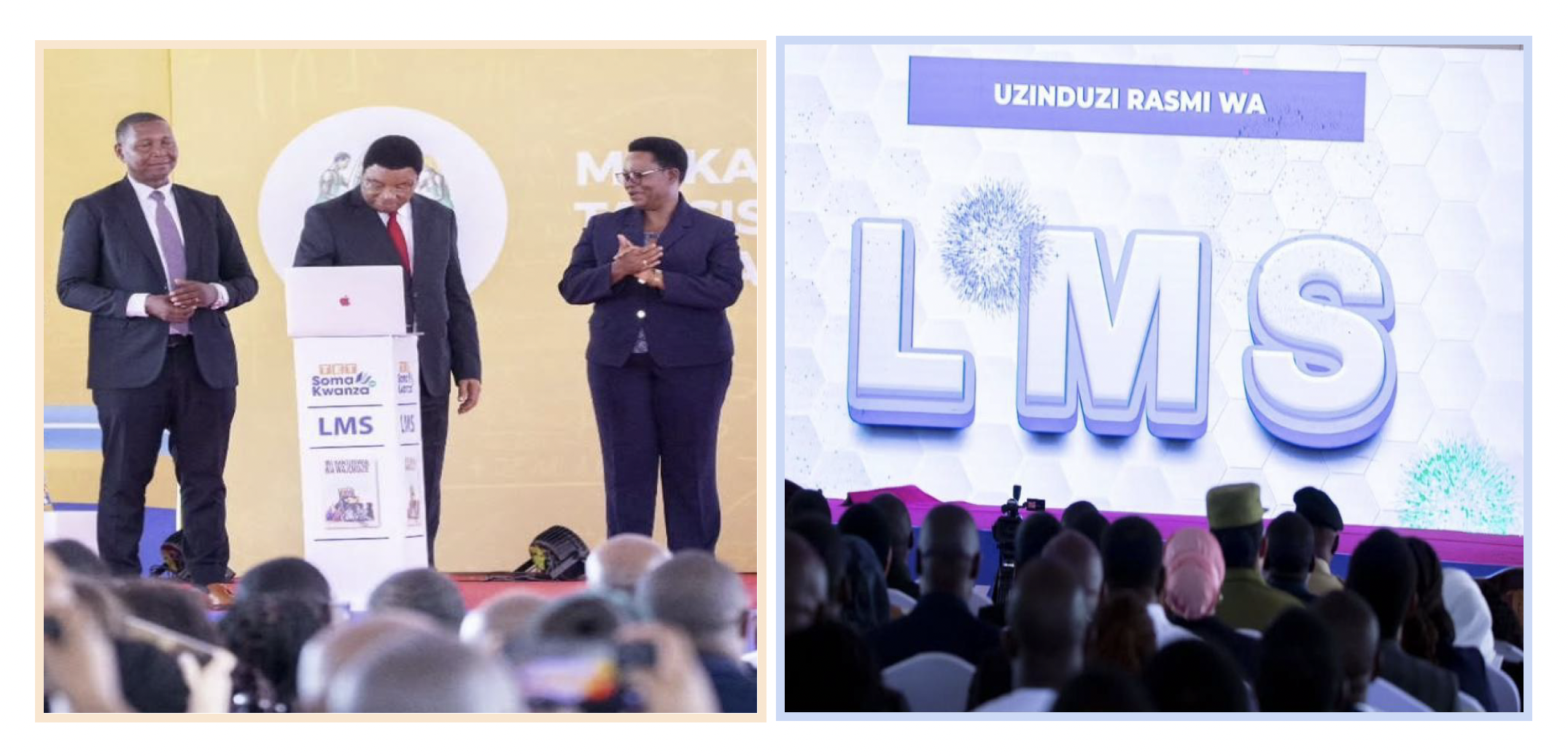
On 17 June, 2025, the TIE-Edlab participated in the official launch of the eLMS platform by the Prime Minister of Tanzania
This strategic use of a high-profile platform to promote an intervention is an example of how the TIE-EdLab blends communication and timing to drive policy change.
Ambitions for the future
The Tanzania Institute of Education Laboratory (TIE-EdLab) aims to deepen its impact and expand its reach with the following activities:
- Workshops: As part of the process of institutionalising the evidence use, TIE-EdLab has plans to establish quarterly stakeholder meetings in Dodoma or Dar es Salaam to sustain momentum and orient policymakers on evidence-informed practices, as recommended during the Cross-Country Learning Exchange (CCLE).
- Capacity Building: Prioritise training for government officials especially at TIE in evidence synthesis and analysis to enhance data utilisation and sustainability, as highlighted in the What Works Hub for Global Education Conference.
- Community of Practice: Establish a regional Community of Practice with EdLabs in Rwanda, Kenya, Uganda and beyond to facilitate peer-to-peer learning.
- Technology Integration: Develop digital tools for personalised teacher training and student assessment, leveraging eLMS and insights from the EdTech Hub collaboration on user experience studies.
- Global Collaboration: Strengthen partnerships with organisations like the Jacobs Foundation, What Works Hub for Global Education and Blavatnik School of Government through events like the Innovations for Poverty Action’s Cross-Country Learning Exchange (CCLE) to foster cross-country learning.
Since its inception, the TIE-EdLab has received funding from the What Works Hub for Global Education and the Abdul Latif Jameel Poverty Action Lab (J-PAL). While continuing to fundraise with international partners, TIE-EdLab aims to progressively be established with a dedicated funding stream as part of the government’s education budget, ensuring its sustainability.
Looking ahead, the EdLab is placing greater emphasis on strengthening a culture of evidence use within TIE and partner institutions. This includes building internal capacity in data synthesis and interpretation, facilitating joint analysis sessions between researchers and policymakers, and embedding rapid feedback loops into programme implementation. These efforts respond directly to broader questions in the global embedded education evidence lab learning agenda on how embedded labs can balance cross-ministerial demands, support institutional capacity, and sustain evidence-informed decision-making over time.
Conclusion
The Tanzania Institute of Education Laboratory (TIE-EdLab) is working steadily to support Tanzania’s education system by connecting research with policy. The Lab focuses on monitoring curriculum implementation and tackling challenges with the electronic Learning Management System (eLMS) engagement, using evidence to guide its efforts. It works closely with government, local and international stakeholders to promote collaboration and data-driven decisions supporting Tanzania’s learners.



Organisation(s)

Discover more

What we do
Our work will directly affect up to 3 million children, and reach up to 17 million more through its influence.
Who we are
A group of strategic partners, consortium partners, researchers, policymakers, practitioners and professionals working together.
Get involved
Share our goal of literacy, numeracy and other key skills for all children? Follow us, work with us or join us at an event.