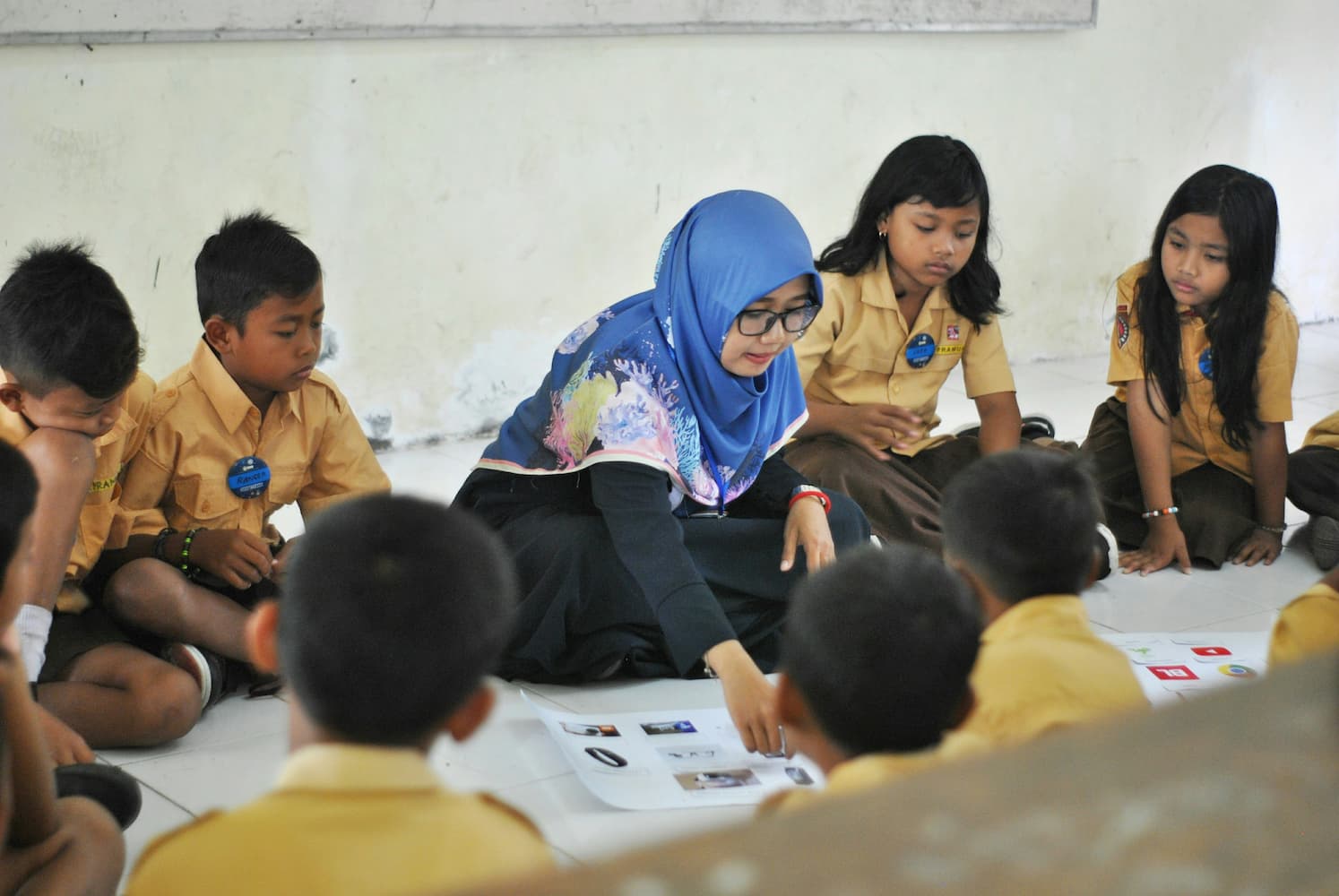
Government leaders from Botswana, Nigeria, South Africa and Pakistan shared first-hand experiences of implementing foundational learning reforms at scale at a What Works Hub for Global Education Community of Practice workshop on 14 September 2026, setting the scene for the What Works Hub for Global Education Conference which began the next day.
Over 100 government leaders, researchers, practitioners and partners came together in person and online for the workshop, exploring what it takes for government systems to deliver foundational learning at scale.
The workshop put government experience at the centre of the discussion, creating an opportunity to learn directly from policymakers leading foundational learning reforms in different contexts and to examine the practical challenges of embedding effective approaches within education systems.
Opening the event, Grace Muzila, former Permanent Secretary of Botswana’s Ministry of Education and Skills Development, challenged participants to focus not only on policies and processes, but on whether reforms ultimately improve outcomes for children.
“A process is only as good as its ultimate outcome,” she said. “It is never enough to simply clear the field and scatter the seeds. You must measure your success by the harvest you bring home.”
Government leaders then shared practical lessons from reforms underway across Nigeria, South Africa and Khyber Pakhtunkhwa, Pakistan.
Dr Folake Olatunji-David, Director of Basic Education at Nigeria’s Federal Ministry of Education, discussed efforts to strengthen foundational learning across multiple parts of the education system, including teacher training, curriculum, assessment, data and coordination between partners, with the objective of aligning the different levers in the system.
Kholosa Nonkenge, Deputy Director of Research Coordination, Monitoring and Evaluation in South Africa’s Department of Basic Education, shared lessons from adapting a structured pedagogy programme to different provincial contexts. When implementation expanded to a province with large numbers of multi-grade schools, the programme had to respond to needs that had not previously been encountered. This highlighted the need to learn – and adapt if necessary – throughout the implementation process.
“We couldn’t ignore those schools, so we had to iterate and adapt by creating materials for multi-grade teachers,” she explained.
Muhammad Khalid, Secretary of the Elementary & Secondary Education Department in the Government of Khyber Pakhtunkhwa, Pakistan, reflected on the importance of government ownership in moving reforms beyond successful pilots and embedding them at scale.
“If there is political ownership, or if it is part of a politically driven roadmap, then the reform can more easily be sustained and implemented at scale,” he said.
The workshop also created space for participants to examine these experiences in depth through country-focused table discussions, exploring how system levers can support implementation at scale, how governments can build commitment and alignment around foundational learning, and how learning and adaptation can be embedded throughout implementation. Each table focused on a government research and implementation partnership, supported by the What Works Hub for Global Education.
A closing reflection panel brought together Rukmini Banerji, Senior Advisor at Pratham Education Foundation; Tahir Andrabi, Professor of Economics at Pomona College; Emily Gray, Senior Education Adviser and Head of the SCALE Delivery Unit at the UK Foreign, Commonwealth & Development Office; and Noam Angrist, Academic Director of the What Works Hub for Global Education. Chaired by Armando Ali, CEO of PAL Network, the panel reflected on insights emerging from the government experiences. Rukmini Banerji discussed the importance of “betting” on middle tier officials and ensuring they “taste success early”. “You want them to have that first-hand feeling of change that drives things ahead”, she added.
Tahir Andrabi highlighted the importance of allowing flexibility in how reforms are implemented in classrooms. Drawing on the example of classroom timetabling, he reflected on how teachers may resist prescribed approaches while adopting similar practices when given the freedom to adapt them to their own contexts. His reflections underscored the importance of balancing consistency in the core components of a reform with flexibility in how they are put into practice.
This event is part of a series of events and webinars led by the Hub’s Community of Practice. The discussions feed into the Hub’s wider work on strengthening government systems to enable improvements in children’s learning at scale.
The workshop was convened through the What Works Hub for Global Education Community of Practice, a global network of more than 700 members across 30 countries. The Community of Practice brings together policymakers, practitioners, researchers, funders and civil society to exchange practical lessons about turning evidence into policy and widespread practice for foundational learning.
Join the What Works Hub for Global Education Community of Practice