
Insight note
Achieving universal foundational learning could increase global GDP by $196 trillion over 20 years
Michelle Kaffenberger, Brad Wong, Bryce Everett and Victoria Egbetayo
Kaffenberger, M., Wong, B., Everett, B. & Egbetayo, V. 2026. Achieving universal foundational learning could increase global GDP by $196 trillion over 20 years. What Works Hub for Global Education. Insight note. RI_2026/001. https://doi.org/10.35489/BSG-WhatWorksHubforGlobalEducation-RI_2026/001
This study models the global impacts of achieving universal foundational learning, defined as 90% of children able to read at minimum proficiency by age 10, across 114 countries between 2031 and 2050. The analysis estimates the effects on economic growth, tax revenue generation, education, employment, health and gender equality. The results indicate that if universal foundational learning were achieved it would generate $196 trillion in additional economic output – equivalent to GDP per capita being more than 27% higher by 2050 and over $21 trillion in extra tax revenue (2023 USD). These economic and fiscal outcomes are paired with major human development benefits: 368 million more children completing primary school, 423 million progressing to secondary, 49 million more young people in persistent employment, 12 million child deaths averted, and 16 million fewer child marriages over 2031–2050. The findings highlight that universal foundational learning is not only a core education goal but also provides substantial cross-sectoral co-benefits, accelerating progress toward multiple Sustainable Development Goals.
References
Angrist, N. et al. (2021) “Measuring human capital using global learning data,” Nature, 592(7854), pp. 403–408. Available at: https://doi.org/10.1038/s41586-021-03323-7.
Angrist, N. et al. (2023) “Improving Learning in Low- and Lower-Middle-Income Countries,” Journal of Benefit-Cost Analysis, pp. 1–26. Available at: https://doi.org/10.1017/bca.2023.26.
Azevedo, J.P. et al. (2021) Will Every Child Be Able to Read by 2030? Defining Learning Poverty and Mapping the Dimensions of the Challenge. Working Paper. Washington, DC: World Bank. Available at: https://doi. org/10.1596/1813-9450-9588.
Cueto, S., León, J. and Felipe, C. (2020) “Predictors of school dropout across Ethiopia, India, Peru and Vietnam,” Documentos de Investigación [Preprint]. Available at: https://ideas.repec.org//p/gad/ doctra/dt109.html (Accessed: October 3, 2025).
Gakidou, E. et al. (2010) “Increased educational attainment and its effect on child mortality in 175 countries between 1970 and 2009: a systematic analysis,” The Lancet, 376(9745), pp. 959–974. Available at: https://doi.org/10.1016/S0140-6736(10)61257-3.
Girls Not Brides (2025) Child marriage atlas – Girls Not Brides. Available at: https://www.girlsnotbrides. org/learning-resources/child-marriage-atlas/atlas/ (Accessed: June 13, 2025).
Glewwe, P. (1999) “Why Does Mother’s Schooling Raise Child Health in Developing Countries? Evidence from Morocco,” The Journal of Human Resources, 34(1), pp. 124–159. Available at: https://doi. org/10.2307/146305.
Glewwe, P. and Muralidharan, K. (2016) “Improving Education Outcomes in Developing Countries,” in Handbook of the Economics of Education. Elsevier, pp. 653–743. Available at: https://doi.org/10.1016/ B978-0-444-63459-7.00010-5.
Hanushek, E.A. and Woessmann, L. (2008) “The Role of Cognitive Skills in Economic Development,” Journal of Economic Literature, 46(3), pp. 607–668. Available at: https://doi.org/10.1257/jel.46.3.607.
Hanushek, E.A. and Woessmann, L. (2012) “Do better schools lead to more growth? Cognitive skills, economic outcomes, and causation,” Journal of Economic Growth, 17(4), pp. 267–321. Available at: https://doi.org/10.1007/s10887-012-9081-x.
Heath, R. and Mobarak, M.A. (2015) “Manufacturing growth and the lives of Bangladeshi women,” Journal of Development Economics, 115, pp. 1–15. Available at: https://doi.org/10.1016/j.jdeveco.2015.01.006.
ILO (2024) Global Employment Trends for Youth 2024. Decent work, brighter futures. Geneva, Switzerland: ILO. Available at: https://www.ilo.org/sites/default/files/2024-11/GET_2024_EN_web4.pdf.
Kaffenberger, M., Melville, S. and Agarwal, M. (2025) The benefits of foundational learning to individuals and society: A review of the evidence. What Works Hub for Global Education. Available at: . https://doi. org/10.35489/BSGWhatWorksHubforGlobalEducation-RI_2025/003.
Kaffenberger, M. and Pritchett, L. (2021) “Effective investment in women’s futures: Schooling with learning,” International Journal of Educational Development, 86, p. 102464. Available at: https://doi.org/10.1016/j. ijedudev.2021.102464.
Kaffenberger, M., Sobol, D. and Spindelman, D. (2023) “The role of learning in school persistence and dropout: A longitudinal mixed methods study in four countries,” International Journal of Educational Research, 121, p. 102232. Available at: https://doi.org/10.1016/j.ijer.2023.102232.
Lee, J. and Newhouse, D. (2013) Cognitive Skills and Youth Labor Market Outcomes. World Bank.
No, F., Sam, C. and Hirakawa, Y. (2012) “Revisiting primary school dropout in rural Cambodia,” Asia Pacific Education Review, 13(4), pp. 573–581. Available at: https://doi.org/10.1007/s12564-012-9220-2.
Parsons, J. et al. (2015) “Economic Impacts of Child Marriage: A Review of the Literature,” The Review of Faith & International Affairs, 13(3), pp. 12–22. Available at: https://doi.org/10.1080/15570274.2015.1075757.
Riahi, K. et al. (2017) “The Shared Socioeconomic Pathways and their energy, land use, and greenhouse gas emissions implications: An overview,” Global Environmental Change, 42, pp. 153–168. Available at: https://doi.org/10.1016/j.gloenvcha.2016.05.009.
Shrestha, V. (2019) “Can Basic Maternal Literacy Skills Improve Infant Health Outcomes? Evidence from the Education Act in Nepal,” Journal of Human Capital, 13(3), pp. 434–478. Available at: https://doi. org/10.1086/704320.
Stern, J.M.B. et al. (2024) “Persistence and Emergence of Literacy Skills: Long-Term Impacts of an Effective Early Grade Reading Intervention in South Africa,” Journal of Research on Educational Effectiveness [Preprint]. Available at: https://www.tandfonline.com/doi/abs/10.1080/19345747.2024.2417288 (Accessed: October 3, 2025).
UN Population Division (2024) “World Population Prospects.” Available at: https://population.un.org/ dataportal/home.
UNESCO (2025) “Out of School Rate.” Available at: https://education-estimates.org/out-of-school/.
UNICEF (2023) “UNICEF Child Marriage.” Available at: https://data.unicef.org/topic/gender/child- marriage/.
Wodon, Q. et al. (2018) Missed Opportunities: The High Cost of Not Educating Girls. Washington DC: World Bank.
World Bank (2023) The State of Global Learning Poverty 2022 Update. Washington DC: World Bank. Available at: https://thedocs.worldbank.org/en/ doc/34035a49acb5700ce8b118aeda81a5cb-0510022023/original/TheStateOfLearningPoverty- Feb2023Update-03-08-23.pdf.
World Bank (2025) “World Development Indicators.” Available at: https://databank.worldbank.org/ source/world-development-indicators.
World Bank and UNESCO Institute of Statistics (2022) “Learning Poverty Global Database.” Available at: https://data360.worldbank.org/en/dataset/WB_LPGD.
Zuilkowski, S.S., Jukes, M.C.H. and Dubeck, M.M. (2016) “‘I failed, no matter how hard I tried’: A mixed- methods study of the role of achievement in primary school dropout in rural Kenya,” International Journal of Educational Development, 50, pp. 100–107. Available at: https://doi.org/10.1016/j. ijedudev.2016.07.002.
Kaffenberger, M., Wong, B., Everett, B. & Egbetayo, V. 2026. Achieving universal foundational learning could increase global GDP by $196 trillion over 20 years. What Works Hub for Global Education. Insight note. RI_2026/001. https://doi.org/10.35489/BSG-WhatWorksHubforGlobalEducation-RI_2026/001


Discover more
What we do
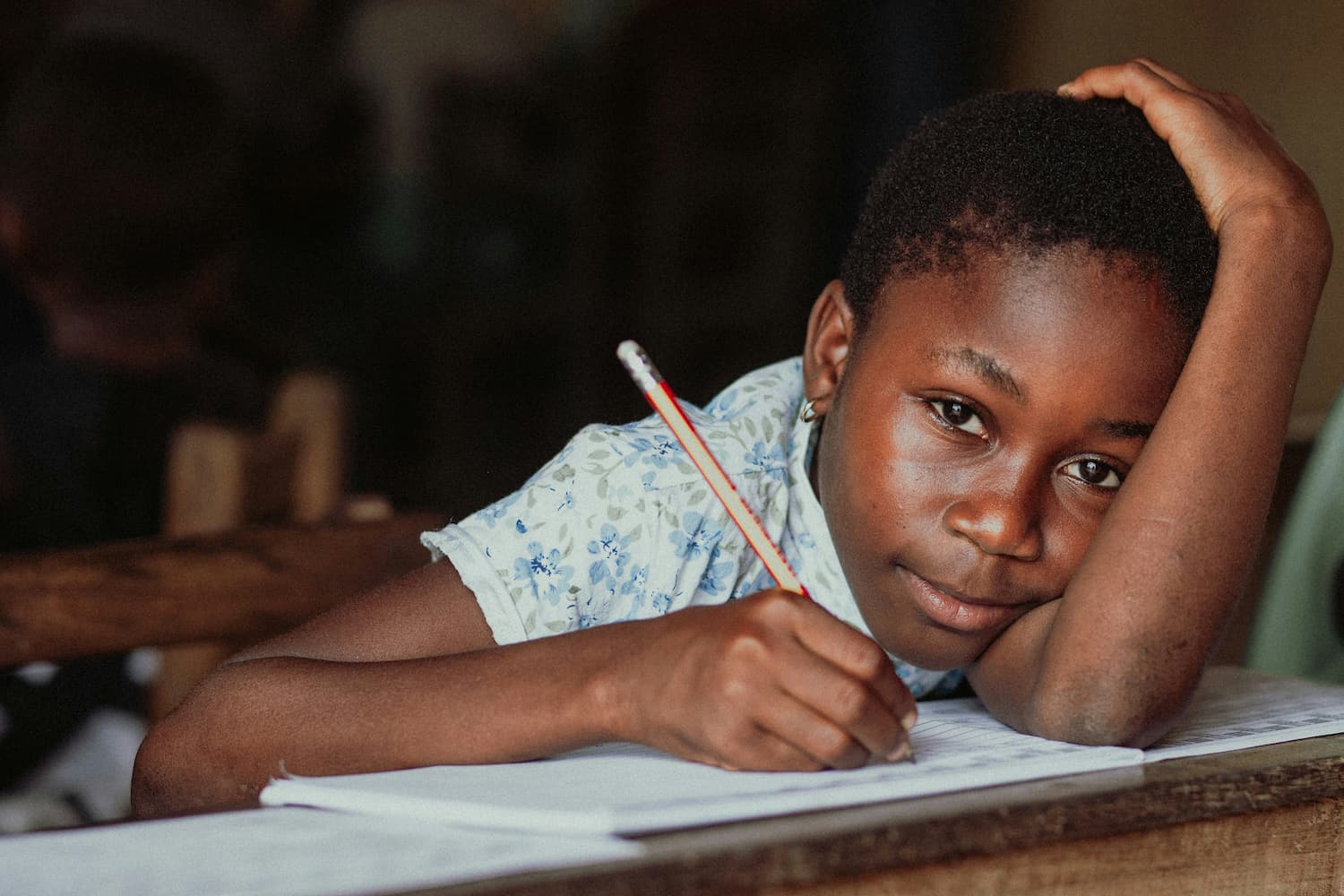
Our work will directly affect up to 3 million children, and reach up to 17 million more through its influence.
Who we are
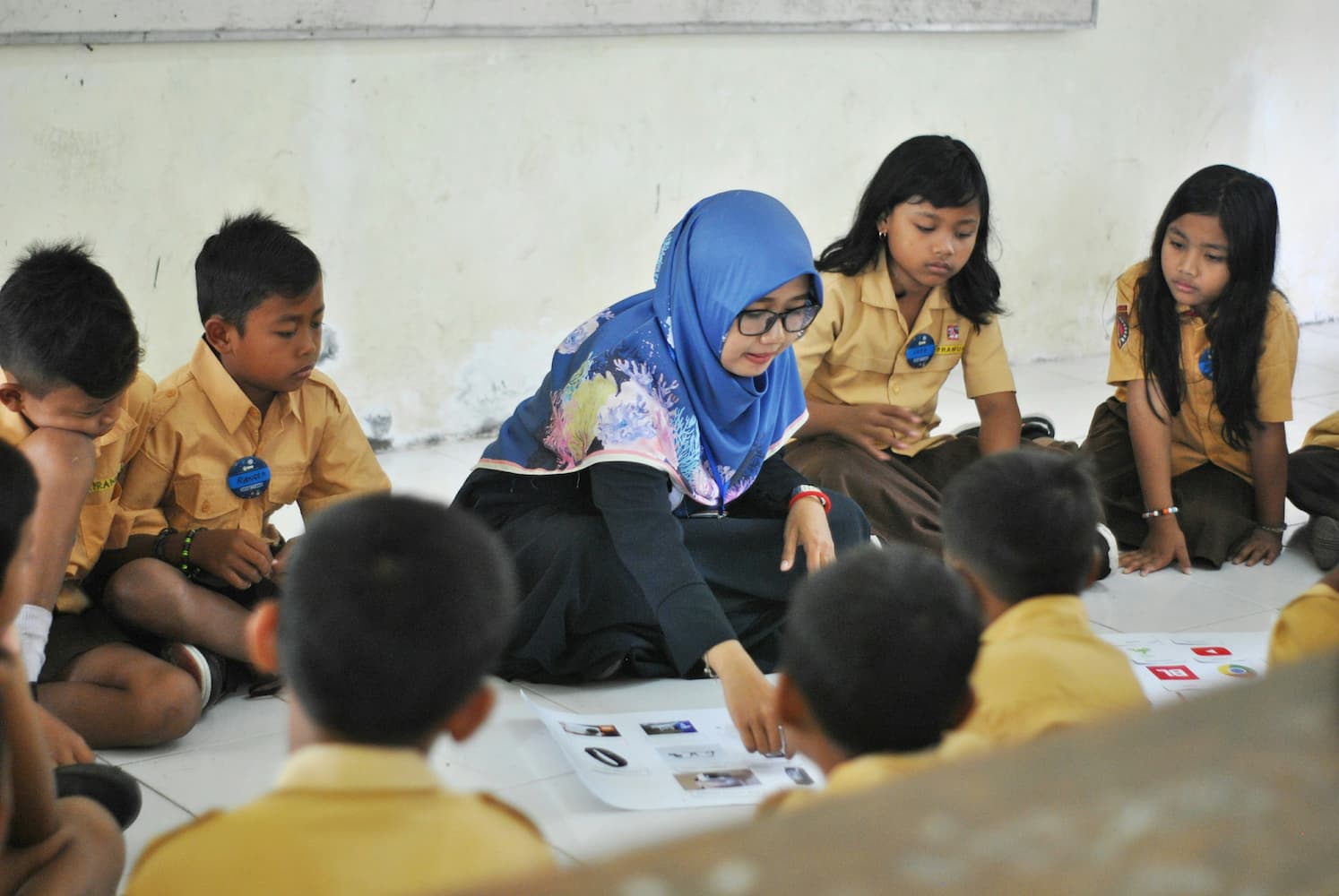
A group of strategic partners, consortium partners, researchers, policymakers, practitioners and professionals working together.
Get involved
Share our goal of literacy, numeracy and other key skills for all children? Follow us, work with us or join us at an event.