
Insight note
Improving foundational literacy outcomes: a brief on the components and cost of a ‘just enough’ model for government-led programming
Christine Beggs, Hetal Thukral and Clio Dintilhac
Beggs, C., Thukral, H. & Dintilhac, C. 2025. Improving foundational literacy outcomes: a brief on the components and cost of a ‘just enough’ model for government-led programming. What Works Hub for Global Education. Insight note. RP_2025/002. https://doi.org/10.35489/BSG-WhatWorksHubforGlobalEducation-RP_2025/002
Abstract
For many years, education systems have grappled with a persistent learning crisis, whereby large numbers of students complete schooling without achieving foundational literacy and numeracy skills. This insight note argues that in the current setting of reduced funding and persistently low learning outcomes, there is an urgent need to define a minimum, or ‘just enough’, foundational literacy model – one that is cost-effective and can be delivered through government systems at scale. In response to this need, the authors present a proposed model in this brief alongside estimations of its cost as well as broader strategies to improve cost efficiencies and outcomes.
The insight note proceeds as follows:
- Section 1 summarises the key findings of the brief;
- Section 2 introduces the background and the methodology of the study;
- Section 3 provides the illustrative baseline reference context;
- Section 4 presents the model, including the efficiencies and effectiveness strategies included in the model;
- Section 5 shows the expected cost of the model based on illustrative design parameters and estimated unit prices with best practices applied, and
- Section 6 explores the efficiencies for consideration that are not included in the ‘just enough’ model.
References
Barth, C. (2021). READ@HOME guidance note: Technical specifications for the production of reading books. World Bank.
Beggs, C. H. (2024, January 11). Scoping and strategy report to improve the quantity, quality and utility of cost evidence for foundational learning programs. Report to the Gates Foundation.
Bun, P., et al. (2023, August 30). SHARE LIBROS (Learning to Improve Book Resource Operational Systems) Cambodia, technical study report.
Cilliers et al. (2021). Can Virtual Replace In-person Coaching? Experimental Evidence on Teacher Professional Development and Student Learning. RISE Working Paper Series. 20/050. https://doi.org/10.35489/BSG-RISE-WP_2020/050.
Department of Basic Education. (2015). DBE service delivery improvement plan (SDIP).
Department of Basic Education. (2019). A 25 year review of progress in the basic education sector.
Gates Foundation & What Works Hub for Global Education. (2024, September 24). Roundtable on cost evidence to support foundational learning programs at scale summary notes.
International Initiative for Impact Evaluation (3ie). (2015). Interventions for improving learning outcomes and access to education in low- and middle-income countries: A systematic review (3ie Systematic Review 24). B. Snilstveit et al.
King, S., & Sibal, M. (2024, April 5). Early grade reading baseline evaluation report – Adamawa State. Leveraging Education Assistance Resources in Nigeria (LEARN) to Read.
Lee, J., et al. (2023). SHARE Ghana Transition-to-English Plus (T2E+) impact evaluation, endline report (Version 1). University of Notre Dame. https://doi.org/10.7274/05741r69h49
Lee, J., et al. (2023, September 5). SHARE Ghana Transition-to-English Plus (T2E+) impact evaluation, endline report.
Popova, A., et al. (2016, September). Training teachers on the job: What works and how to measure it (World Bank Policy Research Working Paper 7834). World Bank.
Research Triangle Institute. (2021, April). Literacy and Retention Activity (LARA) Project end report.
Smart, A. (2021). Teachers’ guides: Isn’t that what they should be? IARTEM e-journal, 13(1), 1–26.
Social Sciences & Humanities Open. (2020). Examining “best practices” for literacy coaching and monitoring: Evidence from Northern Nigeria and Ghana, 2, 100014.
Taylor, S., & Fleisch, B. (2020). Evidence one year after implementation end: Year 4 report of the Second Early Grade Reading Study in South Africa.
The Science of Teaching. (n.d.). Structured pedagogy. https://scienceofteaching.site/structured-pedagogy/ (Accessed May 30, 2025)
Wolf, S., et al. (n.d.). Impacts of targeted instruction with mobile-based support on teachers and students in rural Côte d’Ivoire. Pre-print Version 2, 1–66.
World Bank. (2023). Education finance watch 2023: Special edition for the African Union year of education 2024.
World Bank. (n.d.). World development indicators. https://databank.worldbank.org/source/world-development-indicators (Accessed May 30, 2025)
Zhou, T., et al. (2024). Early Grade Reading Programme I evaluation findings summary report. Department of Basic Education.



Discover more

What we do
Our work will directly affect up to 3 million children, and reach up to 17 million more through its influence.
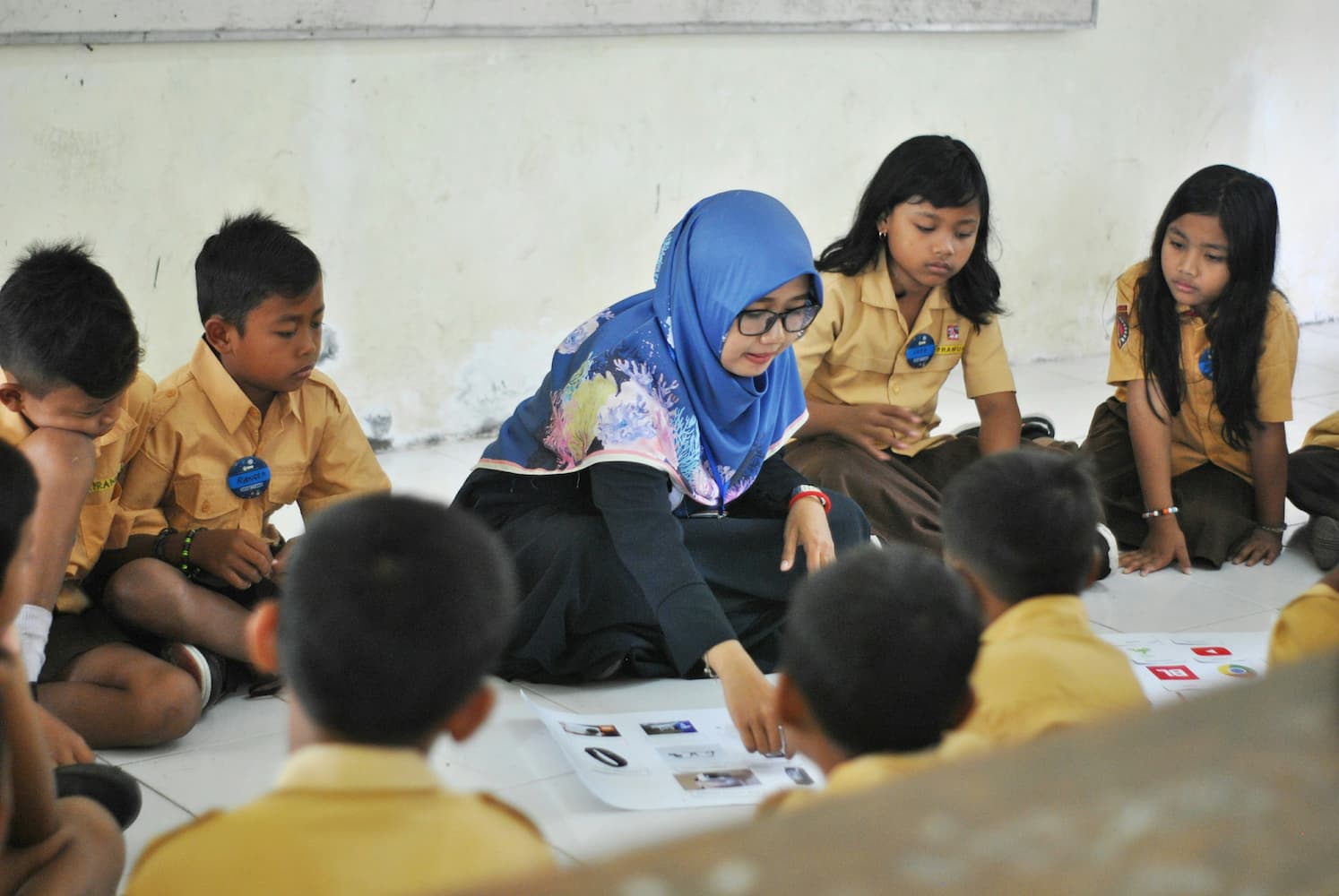
Who we are
A group of strategic partners, consortium partners, researchers, policymakers, practitioners and professionals working together.
Get involved
Share our goal of literacy, numeracy and other key skills for all children? Follow us, work with us or join us at an event.