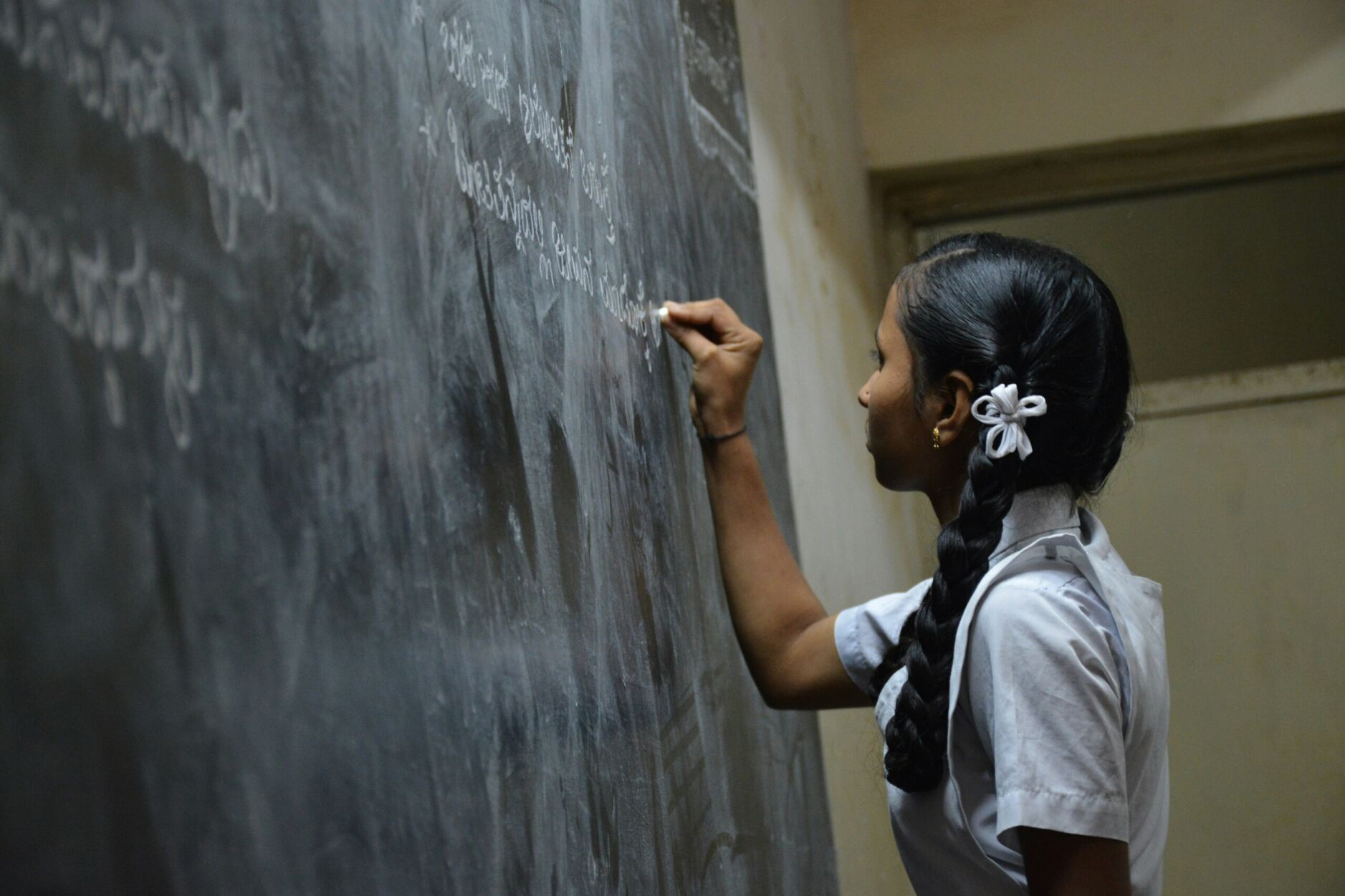
Education system resilience
Supporting children’s learning amidst school disruptions
Whether due to increasingly frequent climate shocks such as heat waves and floods, or to conflict, epidemics, or other large-scale disasters, interruptions to children’s schooling are a fact of life. In the Philippines, for example, natural disasters and extreme heat mean that over 10,000 classrooms are damaged each year, and 11 million students experienced between 20 and 45 days of school closures during the 2023–24 school year. Such disruptions can have long-term consequences. In Pakistan, a 2005 earthquake caused nearby schools to close for an average of 14 weeks. Four years later, children who had been affected by the earthquake were two years behind the learning levels of their unaffected peers.
But school closures need not mean that children stop learning. Education systems can and should build resilience such that children continue to develop foundational learning amid shocks, whether due to climate-related events or otherwise. There is a growing body of evidence not only on how interruptions to schooling affect children’s learning – but also on effective and innovative approaches for children to continue learning during school closures and/or to catch up quickly once they return to school.
This Compendium: Building education system resilience to external shocks
To support our sector in building education system resilience such that children continue learning amid such shocks, we’ve built a set of resources and examples on this topic, which you can browse below.
If you would like to contribute to the compendium, please email wwhge.proposals@bsg.ox.ac.uk with your proposed contribution. All submissions will be reviewed by a committee prior to inclusion in the compendium. To learn more about submitting and other aspects of the Compendiums, see our Compendiums: Frequently Asked Questions page.
Resources
Building resilient education systems: Evidence from large-scale randomized trials in five countries
Noam Angrist, Micheal Ainomugisha, Sai Pramod Bathena, Peter Bergman, Colin Crossley, Claire Cullen, Thato Letsomo, Moitshepi Matsheng, Rene Marlon Panti, Shwetlena Sabarwal, Tim Sullivan
Across five countries, randomized trials show that scalable remote tutoring—especially via phone calls—can deliver large, cost-effective learning gains during education disruptions, even when implemented by governments at scale.
Education system resilience: Committing, Measuring, and Aligning for Learning
Michelle Kaffenberger
Evidence from 11 countries shows that learning losses from COVID-19 school closures varied widely, underscoring the need for resilient education systems that can address increased learning gaps after disruptions.
New data and evidence on climate-resilient education
Haogen Yao, Noam Angrist, Sarah Lane Smith and Katerina Ananiadou
The blog highlights new global data showing widespread climate-related school disruptions and calls for stronger evidence and systems to build climate-resilient education that keeps children learning during extreme weather events.
Foundational learning and climate resilience: Two sides of the same coin
Emma Gremley
The blog argues that foundational learning and climate resilience are inseparable, urging education systems to integrate crisis-proof financing and planning so children continue learning despite climate-related disruptions.
The impact of climate change on education and what to do about it
Sergio Venegas Marin, Lara Schwarz and Shwetlena Sabarwal
The report highlights that climate change is increasingly disrupting education through extreme weather, making urgent government action essential to protect learning as a foundation for poverty reduction.
Covid-19 learning loss and recovery: Panel data evidence from India
Abhijeet Singh, Mauricio Romero and Karthik Muralidharan
A panel survey of 19,000 children in rural Tamil Nadu finds large COVID-19 learning losses that were mostly reversed within six months of reopening—especially for disadvantaged students—with government remediation driving a significant share of the recovery.
Human capital accumulation and disasters: Evidence from the Pakistan earthquake of 2005
Tahir Andrabi, Benjamin Daniels and Jishnu Das
Evidence from Pakistan’s 2005 earthquake shows that even well-compensated disasters can cause lasting losses in children’s physical and educational outcomes, particularly among those with less-educated mothers.
We have to protect the kids
Tahir Andrabi, Benjamin Daniels and Jishnu Das
The Insight Note argues that without urgent action to support children’s health and learning after crises like COVID-19 and disasters, early shocks can cause deep, long-lasting losses in human capital that persist into adulthood.
Related content
A clarion call for efficient and sustainable solutions to achieve foundational learning
Compendiums